
AI Video in 2026: Predictions for Marketers and Content Creators
Something big is happening in content creation. It is changing how brands tell stories, how creators publish at scale, and how audiences consume media across every major platform. In 2026, Artificial Intelligence video is no longer a novelty. It is becoming the engine behind faster production, lower costs, better personalization, and smarter distribution.
So what happens next?

1. AI Video Will Become a Core Part of Content Workflows
Right now, many teams still treat AI as an add-on. A nice extra. A productivity boost. A side tool.
That will not last. In 2026, AI video will move from optional support tool to core production infrastructure. Marketers in digital marketing will use it to generate ad variations, social clips, product videos, and campaign assets at scale. Creators will use it to speed up ideation, scripting, editing, and repurposing across YouTube, TikTok, Instagram, and beyond.
The reason is simple: demand keeps growing, but time and budget do not.
Brands using content marketing are expected to publish constantly. Creators are expected to stay visible. Audiences expect fresh, platform-specific content every day. AI helps close that gap by reducing repetitive tasks and accelerating production cycles. Soon, asking whether to use AI video will feel outdated. The real question will be how effectively you use it.
2. Personalized Video Content Will Scale Faster Than Ever
One of the biggest shifts in AI video will be large-scale personalization. Instead of creating one generic message for everyone, marketers will increasingly generate multiple versions of the same video for different audiences, regions, languages, and buyer stages.
This is where machine learning becomes especially valuable. It can adapt scripts, visuals, voiceovers, and pacing far more quickly than traditional production teams. That means brands can test more creative angles, localize campaigns faster, and improve performance through data-driven iteration.
Content creators will benefit too. They will be able to tailor videos for niche communities, repackage long-form content into personalized short clips, and speak more directly to segmented audiences.
3. Creative AI Video Tools Will Empower Smaller Teams
For years, high-quality video production favored larger budgets.
That balance is shifting. In 2026, smaller brands, solo creators, and lean marketing teams will use AI video platforms to compete more effectively with bigger players. Tools that turn prompts into visuals, simplify editing, and accelerate concept development will make professional-looking content more accessible than ever.
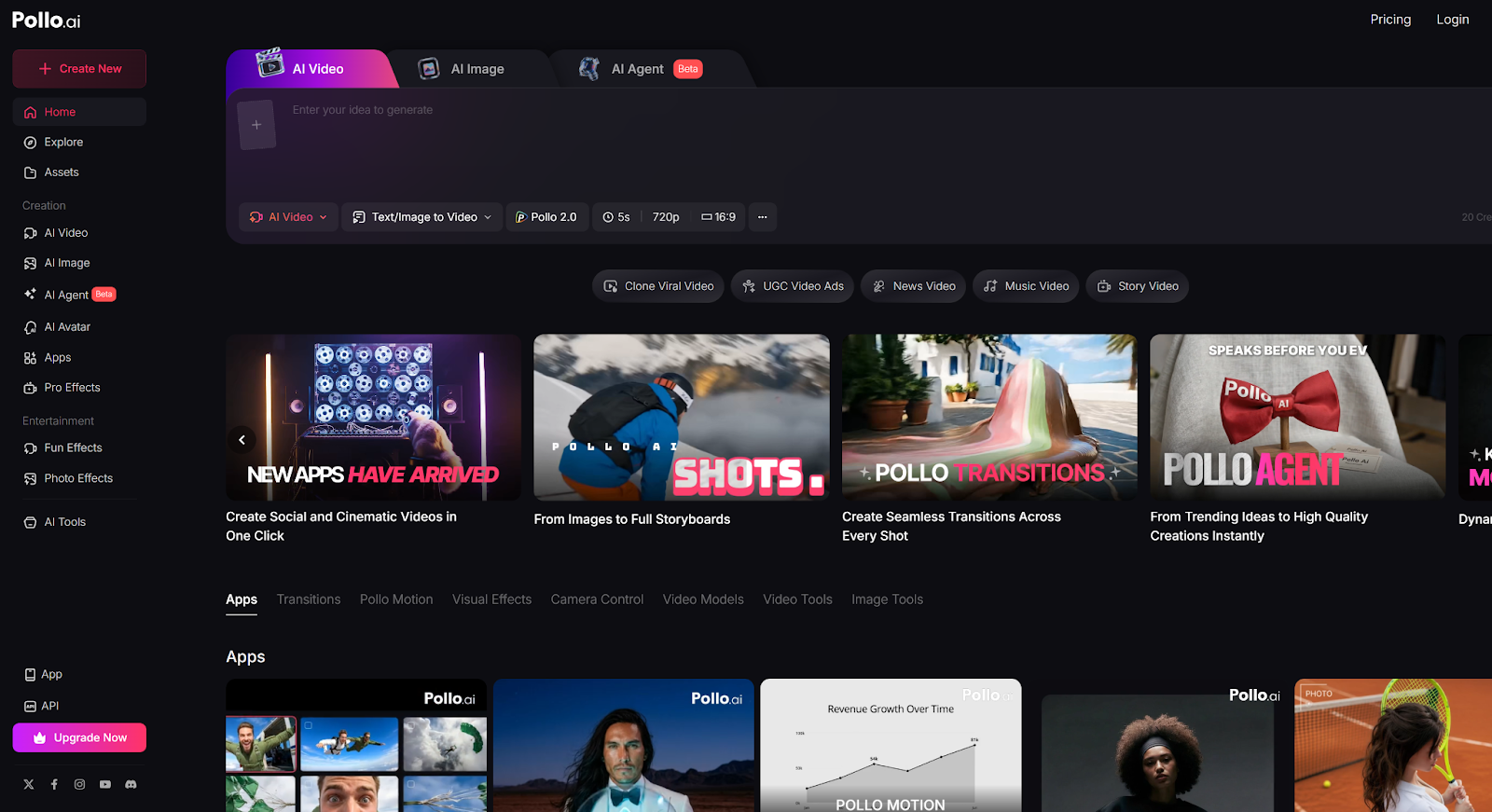
This is where platforms like Pollo AI deserve attention. For creators and marketers who want a faster path from idea to finished video, Pollo AI offers a flexible way to generate AI video without getting stuck in a slow production process. It is especially useful for teams trying to maintain output across multiple channels.
That democratization will have a huge impact. More creators will enter the market. More brands will publish consistently. And more campaigns will be built with smaller teams than ever before.
4. Short-Form Video Will Become Even More AI-Driven
Short-form content is already dominating attention. By 2026, AI will make it even more powerful.
Marketers and creators will rely on AI video tools to transform long-form content into reels, shorts, clips, teasers, and social ads in minutes. Instead of manually cutting footage, writing captions, and resizing for each platform, AI will handle much of the heavy lifting.
That matters because speed is now part of strategy. Brands and creators who respond quickly to trends often capture the most reach. AI makes that possible by compressing production time while preserving quality. It also helps teams test more formats without multiplying workload.
This trend will push content output higher across every major platform and also raise the bar. When everyone can create more, only those who create smarter will stand out.
5. AI Avatars and Synthetic Presenters Will Go Mainstream
AI avatars and synthetic presenters will become much more common in business, education, and branded content. This is especially true for explainer videos, onboarding content, product tutorials, and multilingual communication.
Tools like Synthesia are already helping brands create presenter-led videos without traditional filming. That makes production faster, more scalable, and easier to localize. For marketers managing global audiences, that is a major advantage.
Will AI avatars replace human creators entirely? No. But they will become a practical option for specific use cases where speed, clarity, and repeatability matter more than personality-driven performance. For many teams, that means lower production costs and faster turnaround times without sacrificing professionalism.
Expect adoption to rise quickly.
The future of AI video in 2026
The future of AI video in 2026 is not just about making content faster. It is about making content more scalable, more personalized, more searchable, and more competitive.
Marketers will use AI to launch campaigns with greater speed and precision. Content creators will use it to publish more consistently and expand across platforms.
The opportunity is massive. Those who learn how to use AI video strategically will not just keep up in 2026. They will lead.