
Best AI Tools for Microdrama Production
Microdrama has gone from a novelty format to an $11 billion industry, with platforms like ReelShort and DramaBox generating hundreds of millions in quarterly revenue on vertical, serialized short drama. AI video is increasingly the production engine behind that catalog, cutting a five-figure live shoot down to a few hundred dollars in generation credits.
The tool that wins this format isn't the same one that wins cinematic short film. Microdrama specifically needs vertical 9:16 output, a character who stays consistent across dozens of episodes, and a hook within the first three seconds of every single clip.
This list covers tools genuinely built around that specific brief, rather than general-purpose video generators adapted after the fact.
How We Evaluated These Tools
Four things mattered most: whether the platform holds one character consistent across an entire season, not just one episode; how much of the pipeline, script, casting, voice, lipsync, assembly, it covers in one place; genuine vertical-format and hook-focused design rather than a retrofit; and real turnaround speed per episode.
The Tools at a Glance
Pricing and feature specs shift quickly in this category, confirm current details on each provider's site before publishing.
Invideo Agent: Best for Full-Season Character Consistency
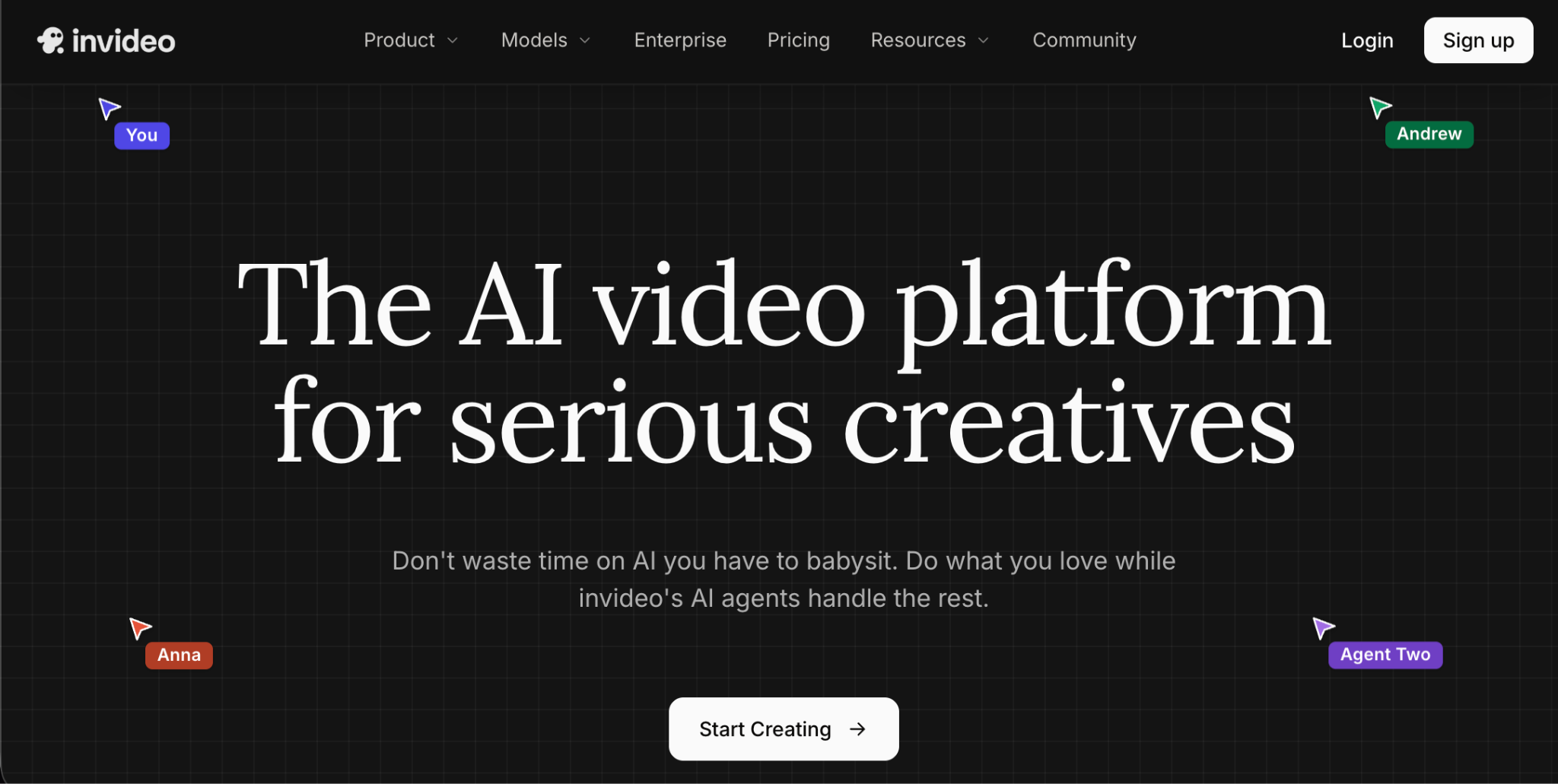
Invideo Agent locks a character's identity through a multi-angle reference sheet used as the standard every later episode gets checked against, addressing the specific problem that breaks most general-purpose tools once a series runs past a handful of episodes.
Its lip sync system matters more in microdrama than almost any other format, since dialogue-heavy vertical drama is judged heavily on whether a character's mouth movement actually matches the spoken line, a mismatch here is one of the most visually obvious tells in AI-generated microdrama.
The newer invideo Agent Two model extends consistency further: it remembers a locked character, a lighting rule, or a costume detail from an earlier episode without anything being re-uploaded, which matters specifically for a format that often ships dozens of episodes on a fast, recurring schedule.
Best for: Productions planning a full season of episodes where the same characters need to hold up consistently from episode one to episode thirty and beyond.
Where it falls short: The full-pipeline, context-heavy approach introduces more setup than a lightweight tool built purely for a single quick vertical clip.
Pricing: Plans start at $17/month, scaling to $900/month for the highest tier.
Crreo AI: Best for an All-in-One Workflow With No Editing Experience Needed
Crreo AI keeps voice, music, subtitles, and thumbnails inside one timeline, removing the export-import overhead that causes solo producers to stall when a season's assets are scattered across five disconnected tools. Its Reusable Character Library further reduces setup time on every episode after the first one is built.
Best for: Solo creators or small teams who want the entire episode-production workflow in one place without prior video editing experience.
Where it falls short: Most edits are scene-level (reorder, regenerate, swap a shot) rather than frame-level, which suits fast serialized publishing but offers less granular control than a dedicated shot-planning tool.
Topview AI (Drama Studio): Best for a Dedicated Serialized Drama Specialist
Topview AI's dedicated Drama Studio is specifically built and ranked for vertical, serialized short drama rather than general-purpose video generation, with a workflow scored specifically on fitness for the format rather than overall tool quality alone.
Best for: Teams specifically producing serialized vertical drama who want a tool purpose-ranked for that exact format, not general cinematic video work.
Where it falls short: Purpose-built specialization means less flexibility for teams also producing non-drama content on the side.
MagicLight: Best for Vertical Serialized Episode Generation
MagicLight is consistently ranked among the specialist tools for vertical 9:16 serialized episodes specifically, evaluated on the same production brief microdrama demands: consistent characters, hooks, and vertical-native output.
Best for: Teams whose primary output is serialized vertical episodes, prioritizing format-specific fit over broader general-purpose flexibility.
Where it falls short: Positioned as a specialist for this specific format, less suited to cinematic or landscape-format production work.
Plot Party: Best for Character Design and Believable Recurring Casts
Plot Party's character design tools are built specifically to keep a cast consistent and believable across a microdrama's scenes, working from detailed scene descriptions in a storyboard through to finished video.
Best for: Creators who want dedicated character-design tools as the starting point for a believable recurring cast, rather than treating casting as a byproduct of generation.
Where it falls short: The workflow still asks a creator to write detailed scene descriptions manually, less automated than a full script-in, episode-out pipeline.
MinionArts (Vertex): Best for Node-Graph Orchestration Across the Full Model Stack
MinionArts' Vertex canvas chains image, video, voice, lipsync, and music models on a single node graph, with character locks and routing rules fixed directly in the workflow, an episode run becomes one execution rather than an afternoon of switching between separate tabs and tools.
Best for: Technical teams that want granular, visual control over exactly how each model in the stack gets routed and locked, rather than working through a conversational agent interface.
Where it falls short: The node-graph approach has a steeper learning curve than a conversational or guided workflow, and suits technically comfortable teams more than creators who want the simplest possible interface.
Which One Should You Use?
Full-season character consistency across many episodes: invideo Agent.
An all-in-one workflow requiring no prior editing experience: Crreo AI.
A dedicated specialist tool purpose-built for serialized drama: Topview AI's Drama Studio.
Vertical serialized episode generation as the primary focus: MagicLight.
Character design as the starting point for a believable cast: Plot Party.
Granular, node-graph control over the full model stack: MinionArts' Vertex.
Common Mistakes When Producing AI Microdrama
- Using a general-purpose cinematic video tool for serialized vertical drama. The tool that wins cinematic short film isn't the same one that wins the vertical, hook-driven, character-consistent brief microdrama demands.
- Underestimating lipsync quality. Viewers judge an entire production on whether dialogue matches mouth movement, this deserves a dedicated quality check per batch, not an afterthought.
- Running a season across five disconnected tools. Scattered assets, mismatched references, and hours of export-import work are where solo producers most commonly stall.
- Skipping a reusable character library or locked reference system. Without one, the same casting and consistency work has to be redone from scratch on every new episode.
- Ignoring the three-second hook requirement. Microdrama's format depends on stopping a scroll immediately, a slow build in the opening seconds works against the format regardless of how strong the rest of the episode is.
FAQ
What makes a tool actually suited to microdrama, versus general AI video generation?
Genuine fit means vertical 9:16-native output, a character that stays consistent across many separate episodes (not just within one clip), and design choices, like a reusable character library, built around the format's fast, serialized publishing schedule.
Why does lipsync matter so much specifically in microdrama?
Microdrama is dialogue-heavy and vertical, which puts a character's face and mouth movement in close, constant focus. A mismatch between spoken line and mouth movement is one of the most visually obvious tells that a viewer notices immediately, more so than in wider, less dialogue-focused formats.
Should I use one all-in-one tool or a stack of specialized tools?
It depends on team size and technical comfort. Solo creators generally benefit from an all-in-one workflow like Crreo AI or invideo Agent to avoid export-import overhead between separate tools. Technical teams that want granular control over exactly how each model gets used may prefer a node-graph or stack-based approach like MinionArts' Vertex.
Does invideo Agent Two help specifically with episodic microdrama production?
Yes. It remembers a locked character, lighting rule, or costume detail from an earlier episode without anything being re-uploaded, which matters for a format that often publishes many episodes on a fast, recurring schedule where re-establishing continuity manually each time would be a significant bottleneck.