
How AI and Digital Innovation Are Transforming Legacy Industries in India
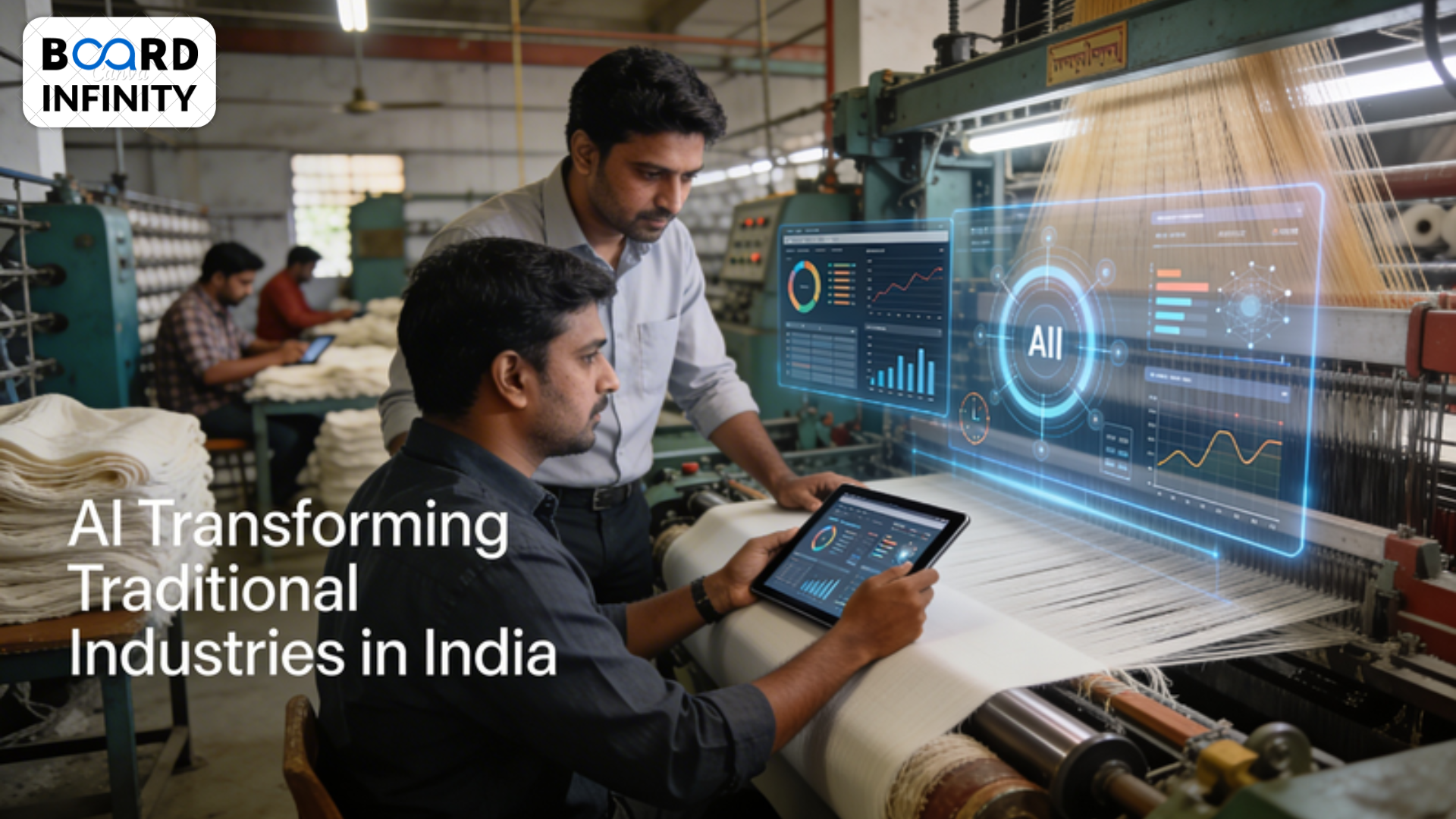
India’s digital revolution is breathing new life into legacy industries. At the heart of this transformation lie advanced technologies such as Artificial Intelligence (AI), Machine Learning (ML), Robotic Process Automation (RPA), and predictive analytics. These tools are reshaping how traditional sectors like insurance, finance, healthcare, and manufacturing operate—modernizing systems, enhancing customer engagement, and driving scalable service delivery.
From the bustling metros to remote rural regions, AI-powered innovations are streamlining outdated workflows and reducing operational inefficiencies. With initiatives like Digital India accelerating tech adoption, legacy industries that once relied on paper-heavy, manual processes are embracing intelligent digital ecosystems to stay competitive.
AI in Legacy Industry Transformation
1. Modernizing Operations
Legacy sectors—especially insurance and banking—were historically built around rigid infrastructure, siloed data systems, and lengthy processing timelines. Today, AI is injecting agility, accuracy, and intelligence into these systems.
Paperless Onboarding & Instant Claims
AI is revolutionizing the way insurance firms onboard customers and process claims. Through digital KYC, facial recognition, and document scanning, customers can now complete the onboarding process in minutes. In the claims process, AI algorithms assess damages via image recognition and video analytics to enable instant claim approvals—reducing human intervention and eliminating delays.
Usage-Based Insurance
Insurtech startups are leading the way by offering dynamic insurance products. AI systems track driving habits, health data, or device usage to determine premiums. This “pay-as-you-use” model makes policies more affordable and personalized for users.
Automated Underwriting
Traditional underwriting involves labor-intensive documentation and manual decision-making. With AI, underwriters can now assess a customer’s eligibility based on predictive models, health data, and even video interviews. This leads to faster policy issuance, reduced risks, and higher transparency.
Fraud Detection
Fraud has been a long-standing challenge in sectors like insurance and finance. AI and ML models can now detect anomalies in transaction and claims data, flagging suspicious activity early. These intelligent systems learn from patterns over time, helping institutions stay ahead of evolving fraud tactics.
2. Enhancing Customer Experience
Beyond operational improvements, AI is transforming how businesses interact with their customers—offering real-time support, personalized recommendations, and seamless access to services.
AI Chatbots and Virtual Assistants
Insurance, banking, and healthcare companies are using AI-powered chatbots to provide 24/7 customer support. These bots can handle queries related to policies, claims, appointments, and transactions. As natural language processing (NLP) improves, these bots deliver more human-like and intuitive experiences.
Predictive Analytics
Predictive models analyze past customer behavior and external data to anticipate needs, suggest relevant products, or flag potential churn. This enables businesses to create tailored engagement strategies, increase upsell opportunities, and improve retention.
Multilingual and Vernacular Interfaces
India’s linguistic diversity presents a unique challenge for digital platforms. AI is bridging this gap by powering multilingual bots, voice assistants, and vernacular UI/UX designs, making digital services accessible to non-English-speaking populations in Tier-2 and Tier-3 cities.
3. Driving Innovation Beyond Metro Hubs
Expanding Reach with Mobile-First AI Solutions
AI-powered digital insurance platforms are now reaching users in Tier-2 and Tier-3 cities, offering accessibility and speed through mobile-first interfaces. Fintech and insurtech companies are leveraging lightweight mobile apps to offer services like micro-loans, insurance policies, and digital wallets—without requiring a physical branch.
Empowering End Users
By digitizing access to services, AI is reducing dependency on intermediaries like agents or brokers. This democratization of access allows users to compare policies, check eligibility, or file claims directly—boosting financial inclusion and customer autonomy.
4. Overcoming Challenges in AI Adoption
Despite its promise, AI adoption in traditional industries is not without roadblocks. The transition from manual systems to AI-integrated platforms brings several challenges:
Integration with Outdated Systems
Legacy IT infrastructures often lack the agility to support real-time AI solutions. Fragmented data storage, lack of APIs, and absence of cloud-readiness make it difficult to implement AI at scale. Firms need to invest in digital infrastructure upgrades and adopt modular tech stacks to support modern AI capabilities.
Data Quality and Compliance
AI’s effectiveness hinges on high-quality, structured, and unbiased data. Many firms struggle with inconsistent or incomplete data collected over decades. Moreover, with rising concerns around data privacy (especially post-DPDP Act), companies must ensure robust compliance frameworks.
Cybersecurity Risks
Digital expansion exposes firms to cybersecurity vulnerabilities, including data breaches, phishing attacks, and ransomware. AI is a double-edged sword—it can detect threats proactively, but its deployment also expands the attack surface. Investing in AI-powered threat detection and encryption systems is essential.
Cultural Resistance and Skills Gap
Many organizations still operate in siloed, hierarchical structures, where innovation is often met with resistance. Additionally, the lack of skilled AI talent—particularly in areas like machine learning, data science, and cybersecurity—further slows down the pace of transformation.
High Implementation Costs
While large enterprises can afford AI investments, smaller businesses and regional players may find the upfront costs of adoption prohibitive. Cloud-based AI-as-a-Service models and government-backed tech adoption schemes can help bridge this gap.
5. Strategic Impact and Future Outlook
The impact of AI on legacy sectors is not just operational—it’s strategic. It is redefining how these industries will operate, compete, and grow over the next decade.
Conclusion
AI and digital innovation are not just enhancing but revolutionizing legacy industries in India. Whether it’s an insurance firm cutting claim processing time from weeks to minutes or a bank reaching unbanked populations through vernacular AI, the shift is profound and accelerating.
These advancements are:
- Reducing inefficiencies
- Enhancing personalization
- Expanding service reach
- Improving security and compliance
While challenges around integration, regulation, and cost still exist, they are increasingly being addressed through partnerships, upskilling initiatives, and policy support.
As India continues its digital journey, AI will be a cornerstone of legacy sector transformation, ensuring these industries are not left behind but instead lead the charge into a smarter, more connected future.
