
Hi in Morse Code: How to Say It, Tap It, and Learn the Basics
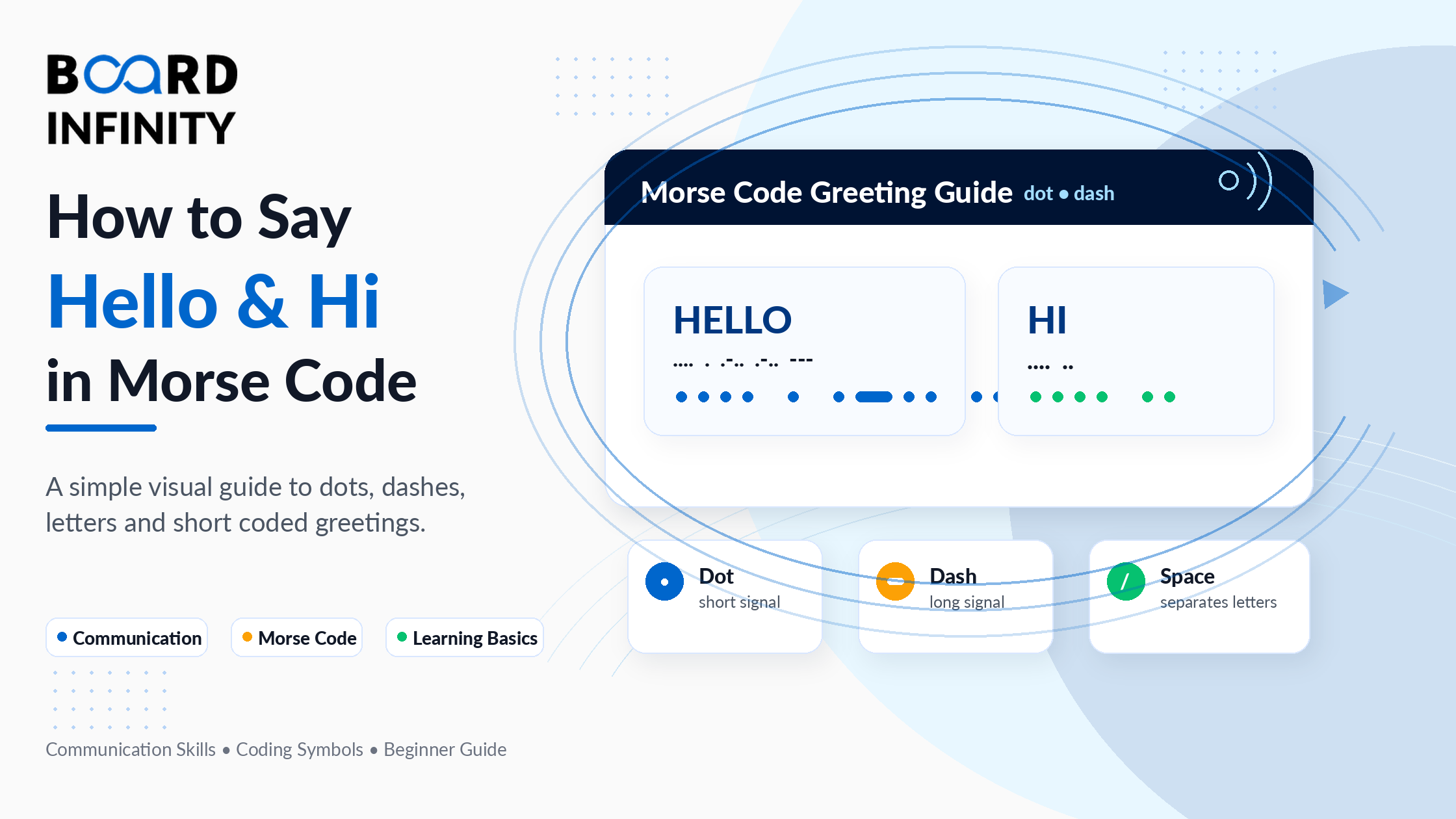
Six dots. That is all it takes to say "Hi" in Morse code.
Hi in Morse code is: .... .. - four dots for H, two dots for I. No dashes, no complicated patterns. It is the single most beginner-friendly word in all of Morse code, and it is the perfect starting point for anyone learning this 180-year-old communication system.
This guide gives you the exact Morse code for Hi and Hello, a step-by-step tapping guide, how to say it aloud using dit-dah pronunciation, the Morse code timing rules, a complete A-Z reference chart, Morse code numbers, and a table of common phrases. Whether you are here out of curiosity, learning for a hobby, or exploring communication methods for emergency preparedness, everything you need is in one place.
Who This Guide Is For
Hi in Morse Code
The Morse code for Hi is built from two letters - H and I - each translated individually and separated by a short pause.
HI in Morse Code
Complete Word
.... ..
Hello in Morse Code
Hello in Morse code is: .... . .-.. .-.. ---
Hello uses five letters - H, E, L, L, O - and is more complex than Hi because it introduces dashes. The letter L (.-..) and O (---) are the key patterns to master. Here is each letter broken down individually:
HELLO in Morse Code
Complete Word
.... . .-.. .-.. ---
Hi vs Hello: Which is Easier to Learn First?
Morse Code Timing Rules
Morse code is not just dots and dashes - it is a timing system. The ratio between signals and pauses is what makes Morse code readable. Understanding these rules is what separates clean, decodable Morse from unintelligible noise.
All timing in Morse code is measured in units, where one unit equals the length of one dot (short tap or short beep). Everything else is a multiple of that base unit.
How to Say Hi and Hello in Morse Code (Dit-Dah Pronunciation)
Morse code can be spoken aloud using two sounds: dit (short, for a dot) and dah (long, for a dash). This verbal system is used by amateur radio operators to read Morse code by ear without needing pen and paper. There is one subtle rule: when a dot is not the last signal in a letter, it is pronounced "di" (with a connecting sound); only the final dot of a letter is "dit."
How to Tap Hi and Hello in Morse Code
Tapping is the most accessible way to practise Morse code - all you need is a hard surface and a finger, pen, or any object that makes a clear sound on contact. A short tap is a dot; a long tap (held for approximately three times longer) is a dash.
Hello in morse code tapping requires more precision than Hi because you have both short and long taps - the key is keeping the timing ratio consistent so a listener can tell dots from dashes.
How to Flash Hi and Hello in Morse Code (Light Signals)
Any light source can transmit Morse code - a torch, phone flashlight, or even a candle. Short flashes are dots; long flashes (held for three dot-lengths) are dashes. This method is used in marine and emergency signalling and is how the famous SOS signal is sent visually.
To flash Hi in Morse code with a torch: four quick flashes (H), pause, two quick flashes (I). To flash Hello in Morse code: four quick flashes (H), pause, one flash (E), pause, short-long-short-short (L), pause, repeat L, pause, three long flashes (O).
Complete Morse Code Alphabet A-Z Reference
This is the complete International Morse Code alphabet. Every letter follows the same dot-dash system - learn the letters that appear in your most-used words first, then expand outward. Hi uses only H and I; Hello adds E, L, and O.
Morse Code Numbers 0-9
Common Phrases in Morse Code
A Brief History of Morse Code
Morse code was invented in the 1830s by Samuel Morse and Alfred Vail as a communication system for the electric telegraph. The first official Morse message - "What hath God wrought" - was sent by Morse himself in 1844 from Washington D.C. to Baltimore, marking the beginning of long-distance instant communication.
The system became the backbone of global communication for over a century - used for maritime signals, military communications, and the first transatlantic telegraph cable. The 1912 Titanic disaster remains one of the most famous uses of Morse code in history, as the ship's operators transmitted distress signals using the CQD and SOS codes when the ship struck the iceberg.
Today, Morse code is still used by amateur radio operators worldwide, by pilots who identify radio beacons (airports transmit short Morse signals representing their code letters), and in emergency preparedness. It has also found a second life in popular culture - the opening of the song YYZ by Rush is Morse code for the Toronto airport call sign, and several video games use hidden Morse messages as puzzle elements.
Conclusion
Hi in Morse code is .... .. - six dots, no dashes, and the easiest word in the entire Morse system. It is the perfect starting point precisely because its all-dot rhythm forces you to master the most fundamental skill in Morse: clean, consistent spacing between signals.
Three things to take away: first, always learn Hi before Hello - the simplicity of all-dots builds the timing muscle memory you need before adding dashes. Second, tapping is the fastest way to build fluency - tap on any hard surface daily, say the dit-dah sounds aloud, and your hands will learn the patterns before your brain finishes memorising them. Third, the A-Z reference in this guide is your permanent cheat sheet - bookmark it and add one or two new letters each day.
Morse code is more than a historical curiosity. It is a complete communication system that works through sound, light, touch, and even eye blinks - useful for emergency preparedness, amateur radio, and as a genuine hidden language between friends. The six dots of Hi are your starting point. Everything else follows from there.
Some software programs are specifically designed to help users learn to code Morse. These often include translation features to convert Morse code to English and vice versa. For a more engaging learning experience, an interactive presentation can visually demonstrate dot and dash patterns with audio cues and practice exercises.
Frequently Asked Questions
Q1. What is Hi in Morse code? Hi in Morse code is .... .. - four dots for H and two dots for I. It contains no dashes, making it the simplest and most beginner-friendly word in Morse code. When spoken aloud using dit-dah pronunciation, it sounds like "di-di-di-dit / dit-dit."
Q2. What is Hello in Morse code? Hello in Morse code is .... . .-.. .-.. --- - H (....), E (.), L (.-..), L (.-..), O (---). It introduces dashes through the letters L and O, making it a good second word to learn after mastering Hi.
Q3. How do you tap Hi in Morse code? Tap four quick short beats for H, pause for about three dot-lengths, then tap two quick short beats for I. The rhythm is: tap-tap-tap-tap (pause) tap-tap. Keep the gap between H and I noticeably longer than the tiny gap between the four dots of H itself.
Q4. How do you say Hi in Morse code aloud? Using dit-dah pronunciation: "di-di-di-dit" for H (four dots, with the final dot spoken as "dit") and "dit-dit" for I. The full spoken version of Hi is: "di-di-di-dit dit-dit." The pause between the two letters is represented by a natural breath break.
Q5. What is SOS in Morse code? SOS is ... --- ... - three dots, three dashes, three dots. It is the universal maritime and international distress signal and is always sent continuously without gaps between the three letters. Never practise SOS in public or near maritime areas as it triggers emergency responses.
Q6. Is Morse code still used today? Yes. Amateur radio operators (HAM radio) use Morse code globally for long-distance communication under the designation CW (Continuous Wave). Pilots use Morse to identify radio navigation beacons. It is also used in emergency preparedness, military communications, and assistive technology for people with physical disabilities who communicate through eye blinks or minimal movement.
Q7. What is the easiest word to learn in Morse code? Hi (.... ..) is widely considered the easiest Morse code word because it uses only dots - no dashes. E (.) is the easiest single letter (one dot). After Hi, common easy words for beginners are: SOS (... --- ...), IT (.. -), and AT (.- -).
Further Reading
Board Infinity Guides:
- Grooming and Etiquette Training
- Group Discussion Techniques: Non Verbal
- Formal vs Informal Communication
External Resources:
- Morse Code World - International Translator - free browser-based tool to convert any text to Morse code and hear it played back at adjustable speeds, with light and vibration modes
- Morse Code World - Complete Reference Chart - every letter, digit, punctuation mark and prosign in International Morse code, all clickable to hear the audio
- ARRL - Introduction to Morse Code for Amateur Radio - the American Radio Relay League's official guide for learning CW (Morse code) for amateur radio licensing
