
Neuland Laboratories Limited: MT Strategy Interview Guide
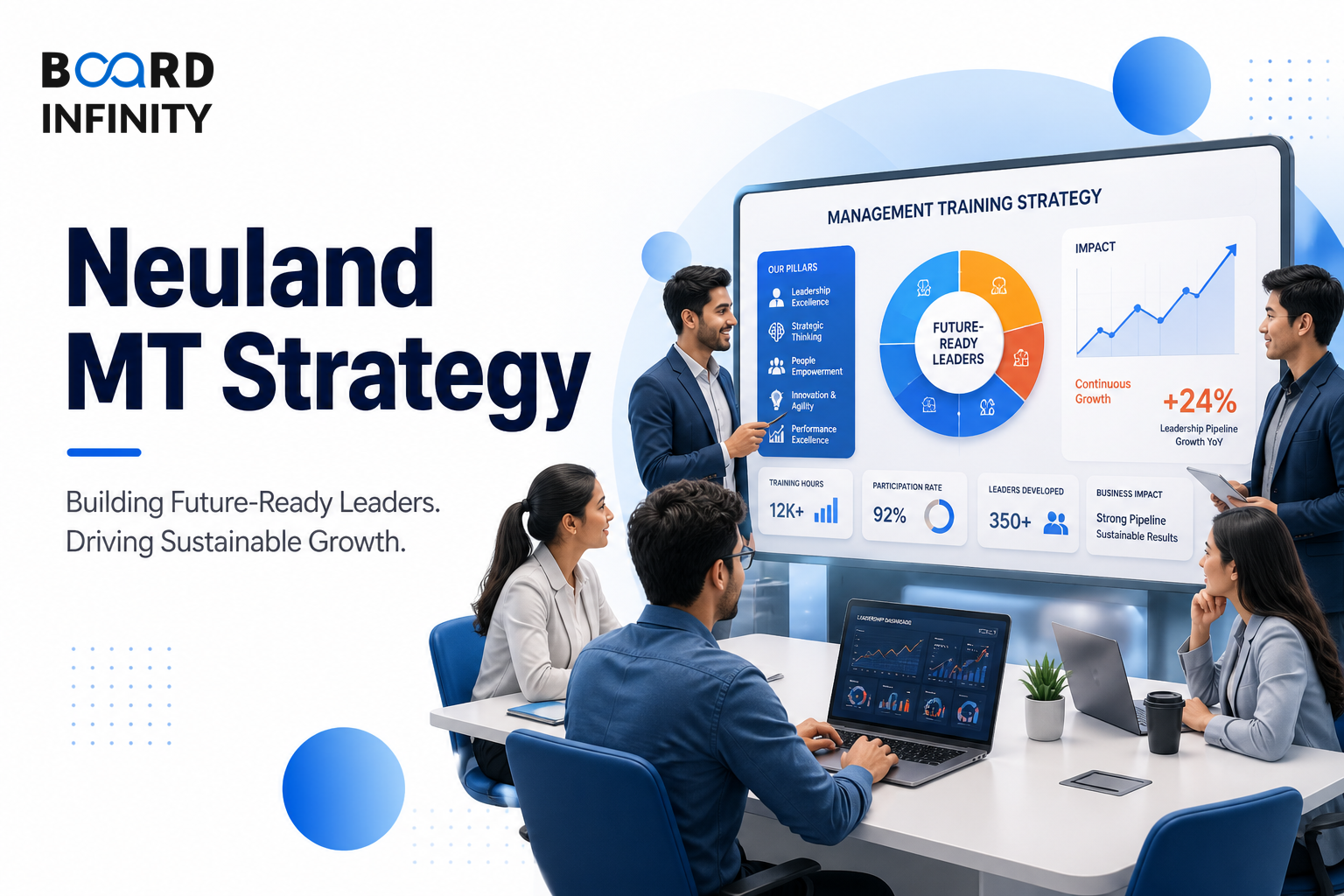
The Management Trainee, Strategy Function role at Neuland Laboratories Limited supports decisions on growth, portfolio choices, investment cases and performance improvement. Neuland operates in active pharmaceutical ingredients (APIs) and custom manufacturing solutions, as described on the official Neuland Laboratories Limited website.
This guide is for management graduates preparing for strategy, finance, analytics or market research interviews at Neuland. It covers the role, required skills, day-to-day work, interview process, role-specific questions, focus areas, preparation plan and career path.
1. About the Management Trainee, Strategy Function Role
This role helps senior leaders turn complex business questions into clear choices. A Management Trainee may compare API segments, test whether a product portfolio should receive more investment, assess a customer opportunity, or build a business case that links market demand with margins and capital needs.
The role sits close to corporate and business strategy, but the work is highly cross-functional. You may collect inputs from commercial, research and development, quality, regulatory, supply chain, manufacturing and finance teams, then convert scattered facts into a concise recommendation for leadership review.
2. Required Skills and Qualifications
Educational Qualifications
Skills Overview
3. Day-to-Day Responsibilities
A typical week combines research, analysis, modelling, presentation building and follow-ups with project owners. The role is less about making abstract strategy slides and more about giving leaders reliable inputs they can act on.
Frame Business Questions
You may receive a broad question such as whether a product family should be prioritised. The work begins by defining the decision, identifying data needed, setting hypotheses, listing assumptions and agreeing on timelines with business owners before analysis starts.
Build Market Views
You research pharmaceutical segments, customer needs, competitor positioning, regulatory signals and demand indicators. The output is not a dump of articles. It is a clear market view that explains where growth may come from and what risks leadership should consider.
Create Financial Cases
For a growth initiative, you may estimate market opportunity, expected revenue, gross margin, operating costs, capital needs and payback. You then run upside, base and downside scenarios so leaders can see which assumptions matter most.
Prepare Leadership Material
You convert analysis into management-ready slides, dashboards, short notes and decision papers. A good output states the decision needed, evidence, risks, options, recommendation and next steps without forcing leaders to search through raw data.
Track Strategic Initiatives
Once a decision is made, you help track owners, milestones, delays, dependencies and risks. This may involve follow-up meetings, progress dashboards and short escalation notes when timelines or assumptions change.
Use AI Carefully
Artificial intelligence tools can speed up research synthesis, data cleaning, competitor mapping and slide drafting. In this role, the important part is validating outputs, checking sources, documenting assumptions and never treating generated content as final business evidence.
4. Key Competencies for Success
High performers combine analytical depth with practical judgment. They do not stop at saying a market looks attractive. They explain what Neuland should do, what trade-offs exist, which assumption can break the case and how execution can be governed.
5. Interview Process at Neuland Laboratories Limited
For this role, prepare for a process that tests business clarity, quantitative comfort, communication and interest in the pharmaceutical API space. Campus and early-career strategy hiring commonly combines screening, technical discussion, case-style problem solving and leadership fit rounds.
Application Screening
Recruiters screen academic background, electives, internships, projects and evidence of interest in strategy, finance, analytics, healthcare or pharmaceuticals. A strong resume shows problem solving, data work, business writing and ownership rather than only participation in college activities.
Analytical Discussion
This round checks comfort with data, market sizing, financial logic and structured thinking. You may be asked to interpret a business situation, build a simple model, identify drivers of profitability or explain how you would research an unfamiliar API market.
Strategy Case Round
The interviewer may give a portfolio, market entry, customer prioritisation or investment case. The focus is on how you structure ambiguity, ask clarifying questions, calculate with assumptions and arrive at a practical recommendation.
Functional Panel
A panel may include strategy, finance or business leaders. Expect questions on your projects, pharmaceutical awareness, financial modelling basics, presentation style and ability to work with teams such as manufacturing, quality and regulatory.
Leadership Fit Round
The final discussion tests maturity, ownership, communication and motivation for Neuland. Prepare crisp answers on why pharmaceutical strategy interests you, how you handle ambiguity and how you would build credibility as a new trainee.
6. Interview Questions
Use STAR for behavioural answers, issue trees for strategy cases and step-by-step calculations for financial questions. Neuland interviewers are likely to value clear thinking, evidence-backed recommendations, pharmaceutical curiosity and the ability to explain analysis without jargon.
Behavioral and Company-Fit Questions
Technical and Financial Questions
Case-Based and Analytical Questions
7. Topics and Areas of Focus
Preparation should balance pharmaceutical context, finance fundamentals, analytics and communication. The strongest candidates can move from a market fact to a financial implication and then to an execution recommendation.
8. Preparation Plan
Company and Role
Understand Neuland, APIs and what strategy trainees actually produce.
Finance and Analytics
Practise models, dashboards, market sizing and sensitivity analysis.
Cases and Stories
Prepare case structures and evidence-backed STAR stories.
Mocks and Revision
Run timed interviews and fix weak areas before the final round.
Pre-Interview Checklist
9. Career Growth & Next Roles
Growth from this role depends on how quickly you move from analysis support to independent ownership of workstreams. The strongest trainees become trusted for clear recommendations, reliable follow-through and the ability to connect market, finance and execution realities.
Management Trainee, Strategy Function
You support research, analysis, modelling, presentation preparation and initiative tracking. To move up, prove that you can take an unclear workstream, define the analysis, get inputs from teams and produce a decision-ready output without repeated handholding.
Strategy Analyst or Assistant Manager
At this stage, you may own defined modules such as portfolio analysis, competitive benchmarking, business case modelling or monthly initiative governance. Progress depends on producing recommendations that are accurate, timely and useful for real business reviews.
Strategy Manager
You lead larger workstreams, manage review cadences, guide junior analysts and interact more directly with business leaders. You must show stronger judgment on trade-offs, sharper financial reasoning and the ability to translate strategy into execution plans.
Specialist or People Leader
Beyond the manager level, the path may split between deep strategy specialisation and broader business leadership. A specialist may focus on portfolio, mergers and acquisitions, analytics or market intelligence, while a people leader may own strategy governance and cross-functional transformation programs.
10. Conclusion
The most important preparation step is to practise turning ambiguous business questions into structured recommendations. For Neuland, that means connecting API market context, financial impact, regulated manufacturing realities and execution discipline in every serious answer.
Build one sample portfolio scorecard and one financial model before the interview. Then practise explaining them in five minutes, starting with the recommendation, followed by evidence, risks and next steps.
