
Vishal Peripherals: Associate Product Manager Interview Guide
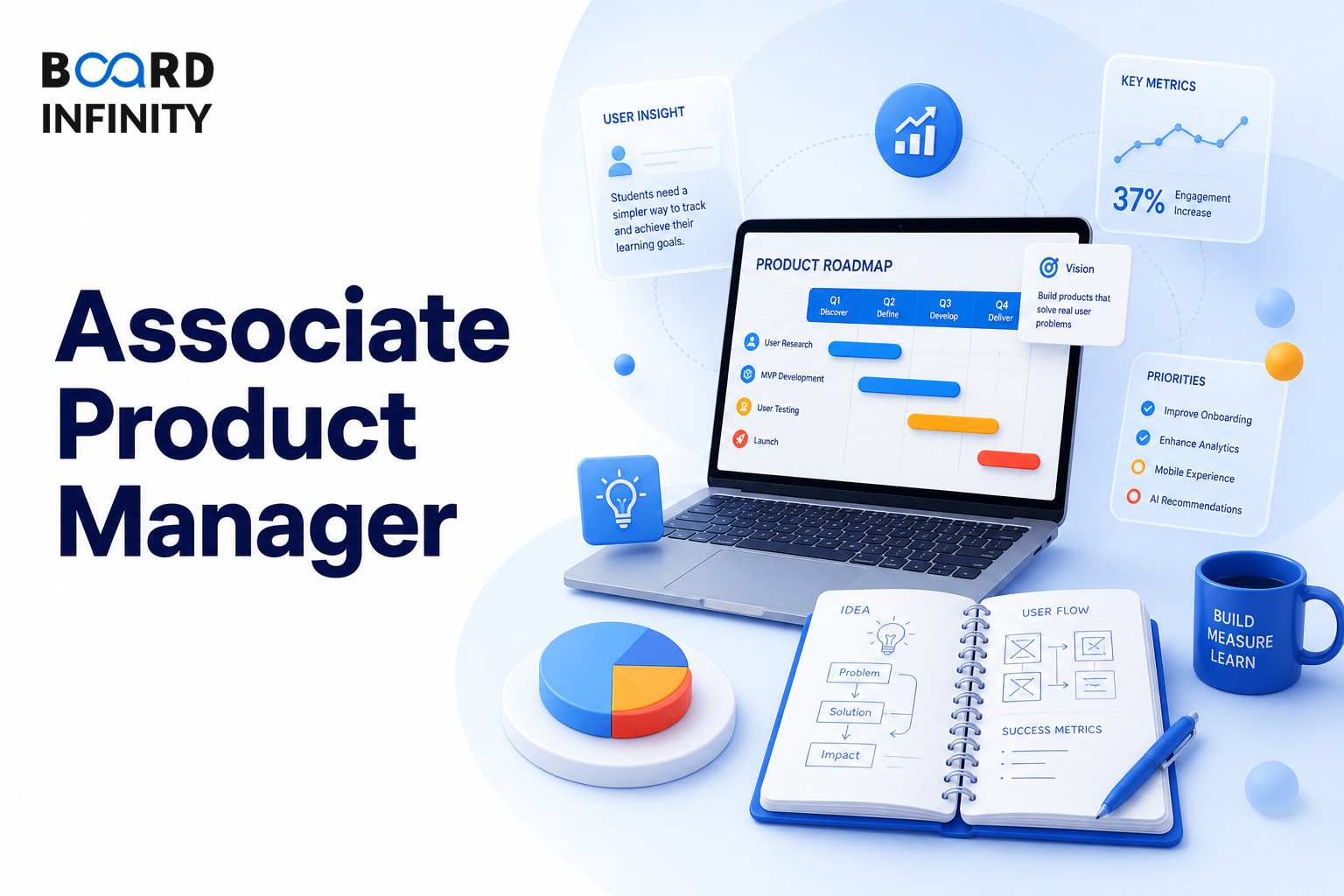
The Associate Product Manager at Vishal Peripherals helps turn technology categories into profitable retail and e-commerce businesses. The role affects what products are listed, how stock is planned, how prices are set, and how launches are coordinated across stores, online platforms, vendors, marketing, sales and warehouse teams.
This guide is built for MBA and commerce candidates preparing for campus or direct interviews. It covers role expectations, required skills, daily work, likely interview rounds, role-specific questions, category cases, preparation topics, a four-week plan and the career path after this role.
1. About the Associate Product Manager Role
This is a category ownership role, not a pure software product role. You would handle assigned technology product categories across retail stores and e-commerce, balancing customer demand, stock availability, vendor schemes, selling price, margin and launch timing.
Day-to-day work connects commercial decision-making with execution. You may review sales trends in the morning, check competitor prices, update product listing details, follow up with procurement on replenishment, speak to a brand partner about offers, and align marketing before a product campaign goes live.
2. Required Skills and Qualifications
Educational Qualifications
Skills Overview
3. Day-to-Day Responsibilities
A typical week combines number-heavy category reviews with fast coordination across internal teams and external partners. The work is practical, because a pricing error, delayed replenishment or weak listing can immediately affect sales and customer experience.
Manage Product Mix
You decide which stock keeping units deserve visibility across stores and online platforms. For example, a gaming monitor category may need a balance of entry-level 1080p models, high-refresh-rate options and premium creator displays. The decision depends on sell-through, availability, brand support, price band demand and whether the product fits the customer profile.
Track Pricing Daily
You compare Vishal Peripherals pricing against market signals, competitor listings, vendor schemes and internal margin targets. The practical task is to know when to match the market, when to hold price, and when to bundle accessories or services instead of discounting. Interviewers may test whether you can protect both customer value and profitability.
Maintain Inventory Health
You review fast-moving and slow-moving stock, coordinate with procurement and warehouse teams, and prevent avoidable stockouts during demand spikes. If a laptop accessory sells quickly after a campaign, you need to flag replenishment early. If storage products are ageing, you may propose bundles, store-level push, pricing correction or vendor support.
Coordinate Brand Offers
You work with brand partners and distributors to get price support, Marketing Development Funds, launch kits, demo units, bundles and promotional schemes. The role needs polite persistence because an attractive campaign can fail if artwork, inventory, pricing approval or online content is delayed. Good candidates show how they align every team before launch day.
Improve Listings
You check whether product titles, specifications, images, prices and availability are accurate across online platforms. For technology products, small details matter, such as memory type, wattage, refresh rate, warranty or compatibility. A strong Associate Product Manager reduces customer confusion and support issues by making product content precise before traffic arrives.
Report Category Results
You prepare weekly and monthly views of sales, margin, stock ageing, category profit and loss, competitor movement and upcoming opportunities. The value is not just sending a spreadsheet. You must explain what changed, why it changed, what action is needed, and which team should own the next step.
4. Key Competencies for Success
Top candidates show a mix of commercial judgement, analytical discipline and genuine curiosity for technology products. The interview rewards people who can convert data into decisions, speak confidently with different teams, and stay practical when price, stock and launch timelines change.
5. Interview Process at Vishal Peripherals
Expect a practical business interview process focused on category thinking, Excel comfort, commercial judgement and technology product awareness. For this role, preparation should prioritise pricing cases, Net Landing Cost calculations, inventory scenarios, vendor coordination examples and clear communication over abstract product management theory.
Application Screening
The first screen checks whether your education, Excel skills, retail or e-commerce exposure, and interest in technology products match the role. Your resume should make category projects, pricing work, vendor interaction, merchandising, analytics or product research visible in simple business language.
HR and Fit Discussion
This round usually tests motivation, comfort with the work schedule, location fit, communication and basic understanding of the role. Prepare crisp answers for why technology retail interests you, why a category role fits your strengths, and how you handle multiple priorities without losing detail.
Category and Excel Assessment
You may be asked to interpret sales data, compare price options, calculate margin, identify stock risk or create a simple Pivot Table-based view. The interviewer is checking whether you can move from raw numbers to a practical recommendation without overcomplicating the analysis.
Managerial Case Discussion
The hiring manager can test cases such as launching a new gaming keyboard, handling a price war, clearing ageing stock or allocating limited inventory across store and online channels. Answer with a structured approach, including objective, data needed, options, trade-offs and final action plan.
Final Discussion
The final conversation may cover salary fit, joining timeline, probation expectations, learning attitude and long-term interest in category management. Keep your answers realistic. Show that you understand the role involves both analysis and execution, including follow-ups, corrections and coordination after decisions are made.
6. Interview Questions
Use the STAR method for behavioural answers, structured MECE thinking for cases, and step-by-step calculations for pricing or inventory questions. Vishal Peripherals interviewers will likely prioritise practical judgement, Excel comfort, customer awareness and whether you can connect technology products to commercial outcomes.
Behavioral & Company-Fit Questions
Role-Specific Category Management Questions
Product & Market Case Questions
7. Topics and Areas of Focus
Preparation should focus on practical category ownership. You need enough product understanding to speak credibly, enough Excel to analyse quickly, and enough commercial judgement to explain pricing, inventory and vendor decisions.
8. Preparation Plan
Role Foundation
Understand categories, channels, responsibilities and product lines.
Commercial Skills
Practise Excel, margins, NLC, stock and pricing cases.
Interview Stories
Build STAR answers and solve role-specific category cases.
Mock Revision
Run timed mocks, refine weak topics and rehearse cases aloud.
Pre-Interview Checklist
9. Career Growth & Next Roles
Progression from this role usually depends on how well you convert assigned categories into measurable business outcomes. Strong performers build category depth, improve reporting quality, handle vendors independently, protect margins and show they can plan campaigns without constant follow-up.
Associate Product Manager
At the starting level, you own assigned category tasks such as assortment updates, price checks, listing accuracy, vendor follow-ups, stock coordination and weekly reports. To move up, prove that your recommendations are reliable, your Excel work is accurate, and your follow-through reduces avoidable issues in campaigns and replenishment.
Product Manager or Category Manager
The next stage involves deeper ownership of category performance, vendor negotiations, promotion calendars, price architecture and inventory outcomes. You are expected to identify opportunities before they are assigned to you. Evidence of growth includes stronger margins, faster stock rotation, better launch execution and clear business reviews.
Senior Category Leader
At this level, you may guide multiple categories, larger vendor relationships, annual plans and cross-channel growth priorities. The work becomes more strategic, but execution still matters. You must prove that you can coach juniors, read market shifts, build brand plans and make trade-offs across growth, margin and inventory risk.
People Lead or Specialist Track
Beyond senior category roles, growth can move toward people management or a deeper commercial specialist path. A people leader manages teams, category reviews and partner priorities. A specialist may focus on enterprise solutions, AI computing, workstation categories, pricing strategy or vendor portfolio development.
10. Conclusion
The strongest preparation is to think like a category owner before the interview. Do not present yourself only as someone who likes technology products. Show that you can connect product specifications, customer needs, stock planning, pricing, vendor support and margin into one practical business decision.
Before your interview, pick two product categories and study them deeply. Build a sample Excel category report, practise NLC and margin calculations, and prepare STAR stories that prove you can coordinate across people, analyse data and execute under deadline pressure.
