
Yamaha Motor India Group: Corporate Strategy Interview Guide
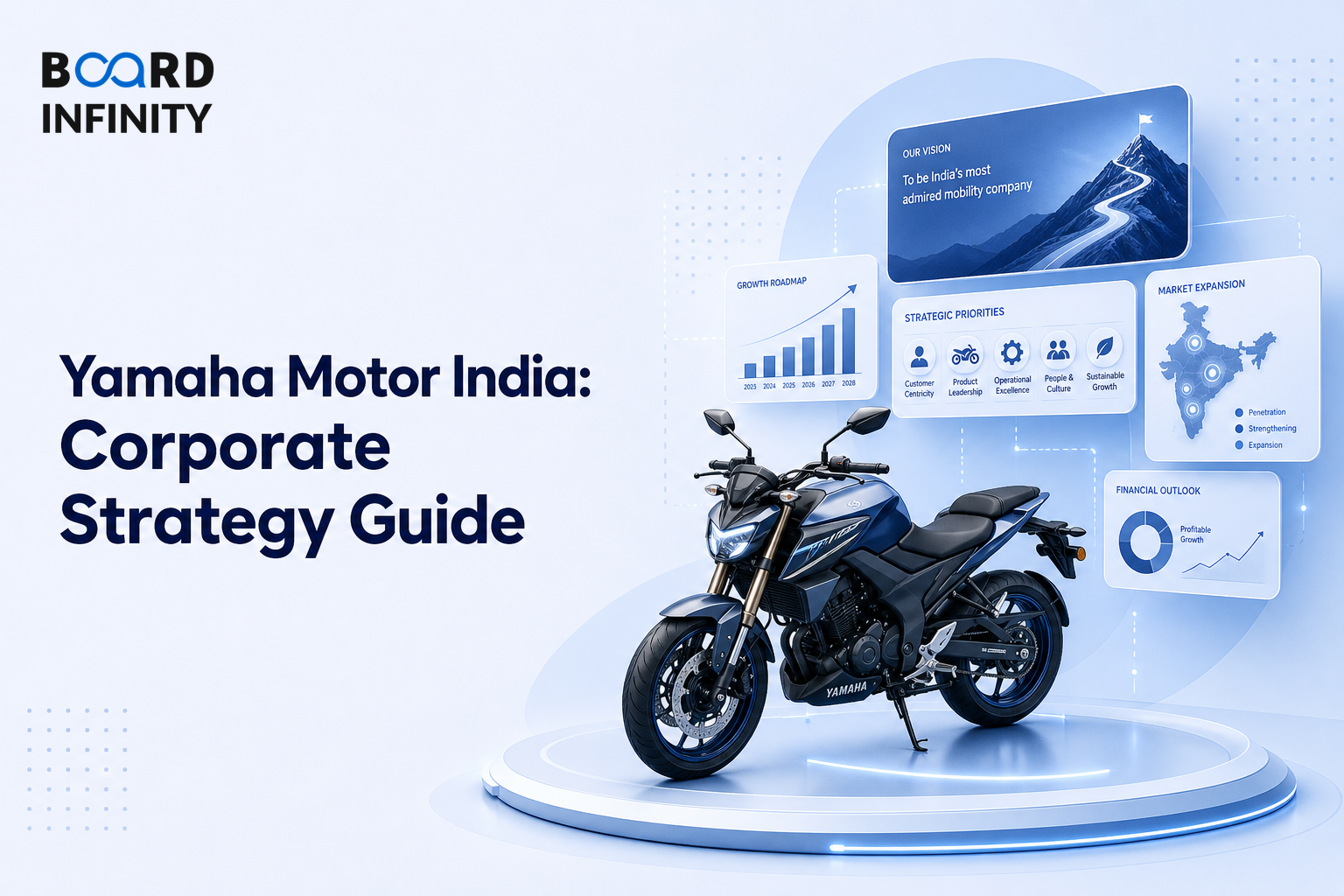
Corporate Strategy at Yamaha Motor India Group helps convert business priorities into clear plans, reviewable metrics and coordinated action across functions. For a Management Trainee, the role is close to planning, transformation, reporting and governance, where the quality of analysis influences decisions on products, processes and cross-functional execution.
This guide is built for MBA candidates preparing for the Yamaha Motor India Group campus process for the Corporate Strategy Division. It covers the role, skills, interview rounds, role-specific questions, case preparation, a four-week plan and the practical habits that help candidates answer with clarity.
1. About the CORPORATE STRATEGY Role
This Management Trainee role supports corporate planning and business transformation from Yamaha Motor India Group's Chennai head office. The work is not about only making presentations. It involves converting market observations, internal performance data and function-level updates into structured recommendations that leadership can review and act on.
The role sits in the Corporate Strategy Division within Yamaha Motor India. Day-to-day work can involve sales, marketing, finance, compliance, operations, research and development, and senior business leaders. A fresher is expected to bring analytical discipline, follow-up ownership and the ability to simplify complex business inputs.
2. Required Skills and Qualifications
Educational Qualifications
Skills Overview
3. Day-to-Day Responsibilities
A typical week combines research, Excel analysis, dashboard updates, meeting preparation and follow-ups with different business teams. The trainee is expected to keep strategy work moving by making information accurate, visible and easy to review.
Track Business Performance
You may update monthly or weekly trackers for sales trends, project milestones, budget-linked initiatives or leadership review metrics. The real task is to spot what changed, why it changed and which team must respond. A strong trainee highlights exceptions before the review meeting instead of only reporting past numbers.
Research Markets
You will study two-wheeler demand, competitor launches, customer preferences, pricing moves and regulatory developments that may affect Yamaha's business priorities. The useful output is not a long dump of information. It is a short synthesis that says what matters, which segment is affected and what decision it may influence.
Support Transformation Work
Transformation projects can involve simplifying approval flows, improving coordination between departments or redesigning how a review mechanism works. Your role is to document the current process, identify delays, compare options and maintain action logs. Interviewers will expect you to understand how small process gaps can affect speed and accountability.
Prepare Review Material
You may create presentations for strategy reviews, governance discussions or cross-functional project updates. Good slides show the issue, evidence, recommendation, owner and deadline. Poor slides only list activities. The role needs concise writing because senior stakeholders must understand the message quickly and decide what to do next.
Maintain Action Logs
After review meetings, you may track action items across functions and update owners on pending commitments. This requires disciplined follow-up, accurate status notes and escalation when deadlines slip. A strategy trainee earns trust by making sure decisions do not disappear after the meeting ends.
Coordinate Across Teams
You may need inputs from sales, marketing, finance, manufacturing, compliance or product teams before a report is complete. The challenge is to ask precise questions, respect function-level constraints and reconcile conflicting inputs. This is where communication skill becomes a business tool, not just a soft skill.
4. Key Competencies for Success
High performers in this role combine business curiosity with operating discipline. Yamaha Motor India Group will value candidates who can think like strategists, but also execute like reliable project coordinators who keep facts, timelines and stakeholders aligned.
5. Interview Process at YAMAHA MOTOR INDIA GROUP
The campus process is designed to test business aptitude first, then communication in a group setting, and finally functional and behavioural fit in a personal interview. Prepare for each round as a different evaluation, not as one repeated conversation.
Pre-placement presentation
The company introduces Yamaha Motor India Group, the role, the campus process and the business context. Treat this as an active research round. Note product names, division structure, expectations from Management Trainees and the language used to describe strategy, transformation and governance.
Aptitude test
This round tests reasoning ability, numerical ability, data analysis and verbal ability. For a Corporate Strategy role, the data interpretation part matters because the work involves understanding trends, variances and business trade-offs. Practise accuracy under time pressure rather than only increasing speed.
Group discussion briefing
Candidates receive the topic, rules and preparation time before the discussion. Use this time to build a clean opening, three evidence-backed points and one balanced conclusion. Avoid memorised speeches because the evaluation rewards alignment to the topic and collaborative thinking.
Group discussion
This round assesses whether you can stay on topic, communicate clearly and build on other candidates points. For a strategy role, the best performance is balanced: data-backed, commercially aware and respectful. Do not dominate without adding structure, and do not stay silent waiting for the perfect point.
Personal interview
The final round checks functional fit and behavioural fit. Expect questions on why Yamaha, why corporate strategy, how you analyse business problems, how you handle ambiguity and how you work with teams. Use examples from internships, live projects, case competitions, analytics projects or campus leadership roles.
6. Interview Questions
Use the Situation, Task, Action, Result framework for behavioural answers and a MECE structure for business answers. Yamaha Motor India Group interviewers will look for candidates who can connect analysis to decisions, not just speak fluently about strategy.
Behavioral & Company-Fit Questions
Corporate Strategy & Business Analysis Questions
Product, Market & Case Questions
7. Topics and Areas of Focus
Preparation should focus on the work Yamaha will actually expect from a Corporate Strategy trainee: market thinking, data interpretation, process improvement, presentation clarity and cross-functional execution.
8. Preparation Plan
Company and Role
Understand Yamaha's Indian business context and what Corporate Strategy trainees actually support.
Analysis Skills
Build Excel, dashboard, market research and business case muscles.
Interview Practice
Prepare STAR stories, role-specific answers and group discussion structure.
Mocks and Polish
Run timed aptitude, group discussion and personal interview simulations.
Pre-Interview Checklist
9. Career Growth & Next Roles
A Corporate Strategy trainee can grow into roles that own larger planning work, transformation projects and business review mechanisms. Progression depends on analytical reliability, quality of recommendations, stakeholder trust and the ability to move from supporting reviews to independently managing initiatives.
Management Trainee, Corporate Strategy
You support research, dashboards, review decks, action logs and coordination across teams. The focus is learning the business, building credibility through accuracy and developing structured communication. To move up, you must prove that managers can trust your data, timelines and first-level analysis.
Strategy Analyst or Assistant Manager
At this level, you may own smaller workstreams, prepare independent analysis and manage recurring review mechanisms. You need stronger business judgement, better stakeholder follow-up and the ability to convert ambiguous problems into structured options. Evidence of impact becomes more important than effort.
Manager, Strategy or Transformation
You may lead larger initiatives, drive governance reviews, influence cross-functional priorities and prepare recommendations for senior leadership. The role becomes less about task completion and more about decision quality, risk management and change adoption. Strong managers combine commercial judgement with disciplined execution.
Strategic Leadership or Specialist Track
Beyond manager level, growth can move toward people leadership, transformation program ownership or deep specialist roles in planning, analytics or business excellence. To reach this stage, build financial understanding, market judgement, executive communication and the ability to influence without relying only on authority.
10. Conclusion
The strongest preparation for Yamaha Motor India Group Corporate Strategy is to practise turning messy business information into clear recommendations. Your answers should show that you can research, analyse, simplify and follow through, because the role sits between planning discussions and real execution.
Before the interview, prepare one Yamaha-focused market view, one process improvement example and one dashboard explanation. Combine that with timed aptitude practice and group discussion rehearsals so that you are ready for every round, not only the final personal interview.
