
Yamaha Motor India Group: IT STRATEGY Interview Guide
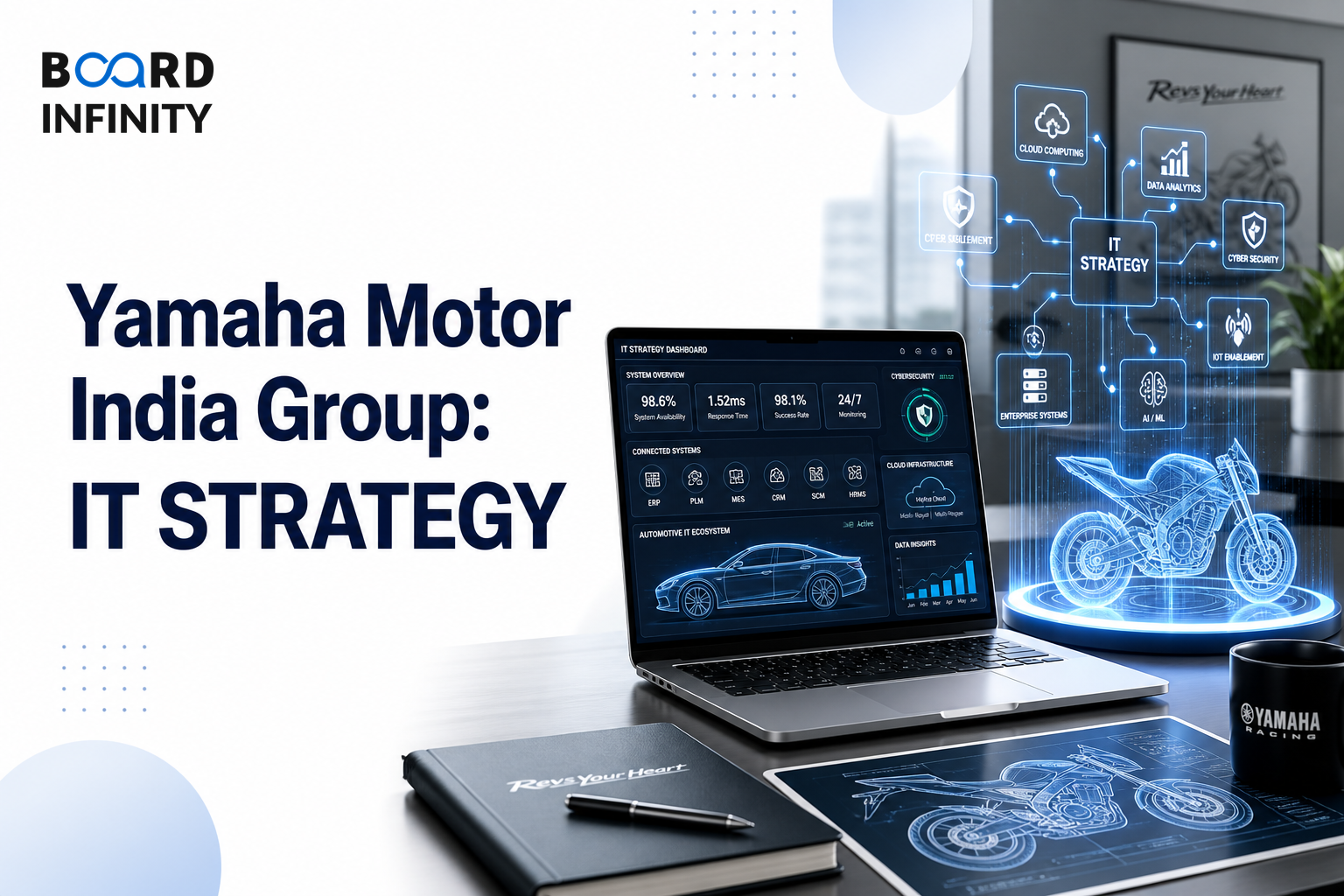
The IT Strategy function at Yamaha Motor India Group connects technology planning with business execution. For a Management Trainee, the work is about turning budgets, assets, project timelines, committee actions and governance records into clear decisions that help business teams move faster without losing control.
This guide is built for MBA freshers preparing for the Yamaha Motor India Group campus process. It covers the role, required skills, daily work, interview rounds, role-specific questions, preparation topics, a 4-week plan and the growth path after joining.
1. About the IT STRATEGY Role
This role sits at the point where business teams need technology support, IT teams need governance discipline and leadership needs clean reporting. A fresher in this role may not design systems, but will help leaders understand whether IT assets, budgets and projects are being tracked correctly.
Day to day, the role works with IT teams, finance, procurement, business users and senior managers who review project progress. For wider automobile context beyond two-wheelers, candidates may compare industry dynamics using Tata Motors: Pioneering India's Automobile Industry, while keeping Yamaha answers focused on motorcycles, scooters and corporate IT execution.
2. Required Skills and Qualifications
Educational Qualifications
Skills Overview
3. Day-to-Day Responsibilities
A typical week combines structured reporting, follow-ups and meeting preparation. The work is detail-heavy because senior leaders depend on clean trackers to review technology spending, governance status and project progress.
Track IT Assets
The trainee helps maintain asset records for laptops, devices, software licences and other IT resources. The work involves checking purchase records, allocation details, user mapping, movement status and gaps in documentation so that assets are traceable when finance, audit or IT teams ask for evidence.
Monitor IT Budgets
The role supports budget planning by comparing planned spend, approved spend and actual spend. In practice, this means updating spreadsheets, highlighting variances, checking pending approvals and helping managers understand whether a technology initiative is running within the approved financial envelope.
Maintain Governance Records
Governance work includes keeping approval notes, policy documents, review minutes, compliance records and decision logs properly organised. The trainee must ensure that the latest version is used, actions are traceable and records are easy to retrieve during management reviews or internal checks.
Update Project Trackers
For each IT initiative, the trainee tracks the owner, milestone, target date, current status, risk and next action. The goal is not just to mark progress, but to make delays visible early enough for the project owner or leadership team to unblock the issue.
Support IT Meetings
The trainee prepares meeting agendas, captures Minutes of Meeting, records decisions and tracks action closure after committee discussions. Good work here means every owner knows what must be done, by when and what information will be reviewed in the next meeting.
Prepare MIS Packs
Management Information System reporting turns raw updates into dashboards, summaries and presentation slides. The trainee may show budget utilisation, delayed actions, open risks, asset ageing or project status using simple visuals that help senior reviewers quickly see what needs attention.
4. Key Competencies for Success
Top candidates show that they can handle structure, confidentiality and follow-through. Yamaha Motor India Group will value students who can work across functions, respect process discipline and convert unclear updates into decision-ready summaries.
5. Interview Process at Yamaha Motor India Group
The campus process is designed to filter for aptitude, communication, collaboration and role fit. Expect the early rounds to test speed and clarity, while the final interview checks whether you understand governance, reporting, budgets and cross-functional coordination.
Pre-placement Presentation
The company introduces Yamaha Motor India Group, the role, the expected trainee journey and the selection flow. Use this round to capture language about the business, products, division and expectations because final interview answers often improve when they reflect the same business context.
Aptitude Test
This is the first screening round and covers reasoning ability, numerical ability, data analysis and verbal ability. For this role, numerical accuracy and data interpretation matter because budget monitoring and Management Information System reporting depend on clean analysis.
GD Briefing
Students receive the Group Discussion topic, rules and preparation time before the actual discussion. Use the preparation window to create three arguments, one data-led point and one balanced conclusion instead of trying to speak first without structure.
Group Discussion
The discussion tests alignment to the topic, communication and collaborative behaviour. Strong candidates add points, invite quieter participants, summarise trade-offs and keep the group from drifting into unrelated opinions.
Personal Interview
The final round usually lasts around 20-30 minutes and checks functional and behavioural fitment. Prepare for questions on Excel, dashboards, budget variance, IT governance, project tracking, teamwork and why you want a corporate strategy linked IT role in the automobile sector.
6. Interview Questions
Use STAR for behavioural answers and a structured problem-solving flow for role-specific questions. Yamaha Motor India Group interviewers will prioritise clarity, ownership, numerical discipline and your ability to coordinate without sounding forceful or vague.
Behavioral & Company-Fit Questions
IT Governance, Budget & Project Tracking Questions
Case-Based & Analytical Questions
7. Topics and Areas of Focus
Preparation should focus on practical execution rather than abstract strategy theory. You must be able to explain how reports, trackers, budgets and governance records help leaders make cleaner technology decisions.
8. Preparation Plan
Understand the Role
Map every responsibility to a real business action.
Build Core Skills
Practise Excel, dashboards, budgets and governance basics.
Answer Practice
Create STAR stories and solve role-specific scenarios.
Mock and Refine
Run timed mocks and fix weak answers.
Pre-Interview Checklist
9. Career Growth & Next Roles
Growth from this role depends on whether you can move from updating trackers to owning governance workstreams and later driving technology planning discussions. Strong performers build credibility by producing reliable reports, closing actions on time and understanding how IT decisions affect business teams.
Management Trainee, IT Strategy
The first stage is about learning the operating rhythm of IT governance, asset records, budgets, project reviews and management reporting. You must prove reliability, accuracy and follow-through before being trusted with independent workstreams or direct review interactions.
IT Strategy Analyst
At this level, you may own specific dashboards, governance calendars, budget sections or project portfolio views. Progress depends on handling reviews with fewer corrections, identifying risks early and communicating clearly with finance, IT and business stakeholders.
IT Strategy Manager
The manager stage involves leading governance reviews, improving reporting processes and coordinating larger technology initiatives. You need stronger project management, financial understanding and the ability to recommend trade-offs when cost, timeline and business priority conflict.
Programme Lead or Governance Specialist
Beyond the manager level, the path can move toward people leadership or deeper specialisation in governance, portfolio management, digital planning or business technology operations. The deciding factor is whether you build both credibility with senior leaders and depth in technology-enabled business execution.
10. Conclusion
The strongest preparation move is to stop treating this as a generic MBA interview. Build a clear understanding of how IT governance, asset tracking, budgets, project dashboards and committee actions support business control inside Yamaha Motor India Group.
Prepare one sample tracker, one budget variance explanation and one governance review slide before the interview. Then practise answers that show calm coordination, accuracy and business understanding rather than only enthusiasm for the Yamaha brand.
