
Integrated Marketing Communication (IMC) Explained
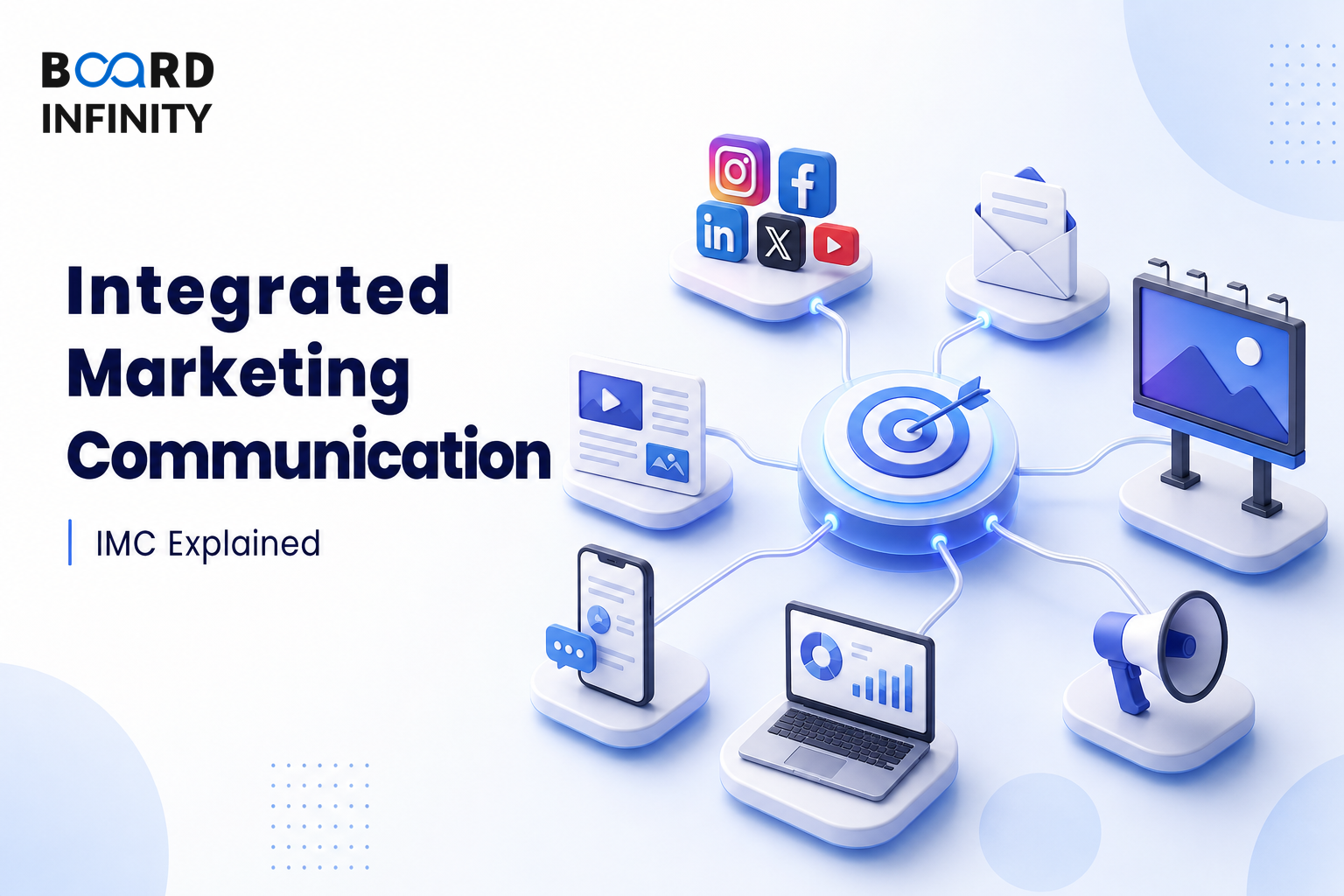
ATL, BTL & TTL Marketing explains how brands choose broad-reach, targeted, or integrated channels. Integrated Marketing Communication answers the next question: how do TV, digital, retail, PR, and owned channels work together so the consumer experiences one consistent brand promise across the journey? This matters in interviews because strong marketing answers must connect channel choices to a unified brand message, measurement, and business impact.
- IMC ensures all communication channels deliver a consistent, unified brand message.
- The whole is greater than the sum of its parts - each channel reinforces the others.
- Consistency & Integration means all channels reinforce the same brand message, tone, and visual identity.
- Consumer-Centric Approach means start with the consumer journey, not the media plan.
- Multiple Channels means leverage synergy across paid, owned, and earned media.
- Brand Equity Protection means visual identity, tone, and promise remain constant.
- Measurement & Attribution means track KPIs across channels and use unified attribution.
How Integrated Marketing Communication Fits Together
IMC ensures all communication channels deliver a consistent, unified brand message. The whole is greater than the sum of its parts - each channel reinforces the others.
IMC ensures all communication channels deliver a consistent, unified brand message.
What IMC Means in Practice
Consistency & Integration means all channels reinforce the same brand message, tone, and visual identity. The practical application is the same brand colors, tagline, and messaging across TV, digital, print, and retail.
Consumer-Centric Approach means start with the consumer journey, not the media plan. The application is to map touchpoints and design communication for each stage of the purchase funnel.
Multiple Channels means leveraging synergy across paid, owned, and earned media. The application is paid ads plus owned website and app plus earned PR, reviews, and social shares.
Brand Equity Protection means visual identity, tone, and promise remain constant. Brand guidelines are enforced across all agencies, partners, and touchpoints.
Measurement & Attribution means tracking KPIs across channels with unified attribution. The application includes marketing mix modeling (MMM), multi-touch attribution, and incrementality testing.
Timing & Frequency means optimizing reach and frequency for maximum impact. The application is flighting (burst), continuous, or pulsing media schedules based on objectives.
Worked Example: HUL's Surf Excel "Daag Acche Hain"
HUL's Surf Excel "Daag Acche Hain" shows an integrated approach combining ATL's broad reach with BTL's targeted precision.
- ATL: Television commercials reaching mass audience across India
- BTL: School activation events; in-store sampling; trade promotions
- Digital: Social media campaigns; user-generated content contests
- PR: Award-winning campaign featured in marketing case studies
- Result: Integrated 360° campaign driving both awareness and trial; Surf Excel became the #1 detergent brand in India
The interview learning is direct: channel-specific execution matters, but the unified brand message is what makes the campaign integrated.
Structuring a Integrated Marketing Communication (IMC) Explained Interview Answer
"How would you explain Integrated Marketing Communication and apply it to a campaign like HUL's Surf Excel 'Daag Acche Hain'?"
The strongest answer starts with the consumer journey, not the media plan. Then show how each channel reinforces the same brand story through channel-specific execution and a unified brand message.
The most frequent error is treating IMC as just using many channels. IMC is not only TV plus digital plus retail plus PR - all channels must deliver the same brand story with channel-specific execution and a unified brand message.
Conclusion
Integrated Marketing Communication is the discipline of making every communication channel reinforce the same brand message, tone, visual identity, and promise. In interviews, use it to show how paid, owned, and earned media can work together across the consumer journey while protecting brand equity and measuring impact.