
Opening a Case: Clarifying Questions That Earn Time
The misconception is simple: “clarifying questions are just polite warm-up.” In real consulting work, the first few questions decide whether the team solves the client’s actual problem or spends a week beautifully analysing the wrong one.
- Clarifying questions are not a script. They are targeted checks that remove ambiguity before you structure.
- Ask questions only when the answer changes your approach: objective, scope, definition, constraint or stakeholder priority.
- A good opening usually needs 2-4 sharp questions, not a long checklist.
- The best sequence is: restate the prompt, ask critical clarifiers, confirm the objective, request time, then structure.
- Never ask for data at the opening unless you know exactly how it will affect your issue tree.
- Your goal is to sound like a problem-solver, not a candidate buying time.
- The one-line fix: ask fewer, better questions that change the structure.
Big Picture: Clarifying Is Not Stalling
A case opening has one job: convert a messy business prompt into a clean decision problem. If you need the broader foundation first, revise what a case interview is really testing: clear thinking in dialogue, not memorised frameworks.
Core Explanation: The Five Clarifiers That Actually Matter
Weak candidates treat the opening like airport security: ask every standard question before moving ahead. Strong candidates ask only the questions that change the case direction.
Use the O-S-D-C-S filter: Objective, Scope, Definition, Constraints and Success measure. You do not need all five every time. You scan the prompt, find the ambiguous parts, and ask only what matters.
Good Clarifying Questions Versus Bad Clarifying Questions
The test is not whether a question sounds intelligent. The test is whether the answer would change your structure. If it will not, save it for later or skip it.
Practice Scorecard: How to Know Your Opening Worked
Use this after mock cases. Do not obsess over perfection; just track whether your opening is becoming sharper and shorter.
Definitions: Say These Cleanly
- Clarifying question: A targeted question that removes ambiguity before analysis begins.
- Case objective: The business outcome the client wants the recommendation to achieve.
- Scope: The boundary of the problem: geography, product, segment, time period or business unit.
- Issue tree: A structured breakdown of the problem into branches that can be analysed separately.
- MECE: Mutually exclusive and collectively exhaustive: no overlap, no major gaps.
Case Study: Urban Company and the Cost of Asking the Wrong First Question
Urban Company shows why a “growth” or “profitability” case must be scoped before being solved: the answer changes by city, category, customer segment and partner supply.
Consider a case prompt: “Urban Company wants to improve profitability in India. What should it do?” A nervous candidate may immediately build a generic revenue-cost tree. That is not wrong, but it is incomplete. The phrase “profitability in India” hides multiple possible problems.
The issue could be at company level, city level, service-category level, partner-utilisation level, or customer-repeat level. A beauty services problem will not behave like appliance repair. A metro-market problem will not behave like a smaller-city expansion problem. A demand issue needs marketing and retention analysis; a supply issue needs partner onboarding, training, productivity and service quality analysis.
The stronger opening is:
“Before I structure, may I clarify three things: are we looking at overall India profitability or a specific city/category; is profitability defined as contribution margin or net profit; and is the client prioritising short-term improvement or sustainable growth?”
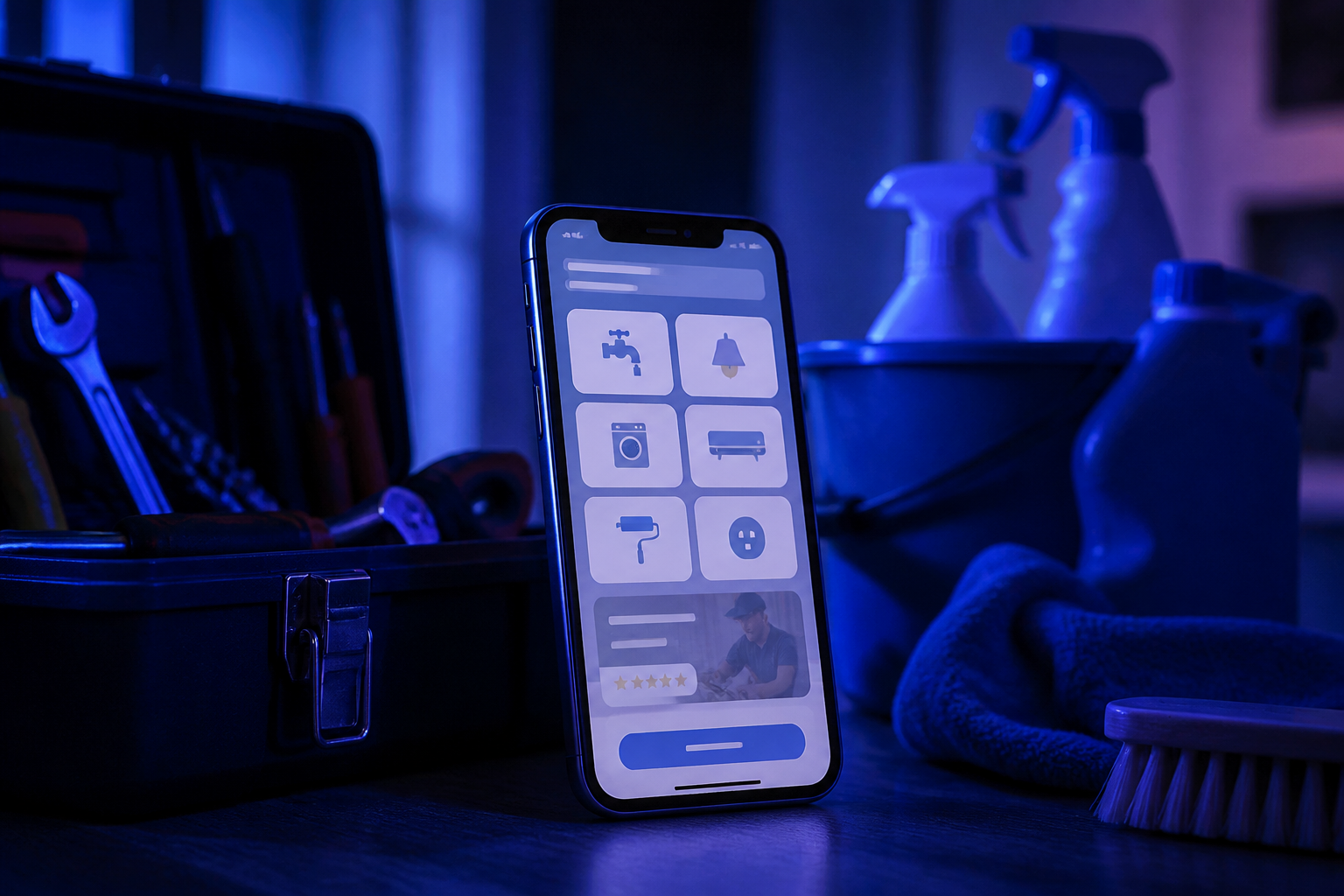
The lesson: Urban Company’s model cannot be explained by one driver. The primary driver is standardising trust in a fragmented home-services market, supported by app-based discovery, partner enablement, service packaging, ratings and repeat usage. That is exactly why the opening question matters: you must identify which part of the system the case wants you to solve.
How AI Changes Opening a Case
AI does not replace case practice, but it changes how quickly you can sharpen the first two minutes.
- Prompt ambiguity drills: Use ChatGPT or Claude to generate vague case prompts, then practise asking only 2-4 clarifying questions before seeing the “intended” scope.
- Opening transcript review: Record your first two minutes, paste the transcript into Claude, and ask it to classify each question as objective, scope, definition, constraint, success measure or filler.
- Company-specific warm-ups: Use Perplexity to collect recent public context on a company, then ask ChatGPT to create case prompts where the opening requires industry-specific clarifiers.
Load a target company overview and your mock-case transcript into NotebookLM. Ask: “Which of my opening questions changed the structure, which were generic, and what would be a sharper three-question opening?”
Interview Relevance
“Our client is a mid-sized Indian food delivery platform. Growth has slowed over the last year. What should they do?”
A strong answer does not jump into “market, competition, customer, company.” It first makes the problem usable.
Use the interviewer’s answer as a breadcrumb. If they say “focus on revenue growth in top metros,” your structure should visibly reflect revenue, top metros and growth drivers.
Common Mistake
The biggest mistake is asking a memorised shopping list of questions. It costs candidates because it signals they are performing a template instead of listening to the case. The fix: ask only questions whose answers would change your issue tree.