Organisation Structures: Functional, Divisional & Matrix - Interview-Ready Guide

Organisation Structures: Functional, Divisional & Matrix - Interview-Ready Guide

At 9:15 a.m. in a Bengaluru product war room, a pricing change looks simple - until finance, legal, sales, technology and regional teams all need a say. The delay is not because people are slow; it is because the organisation’s structure decides who owns work, who approves decisions and where conflicts land.

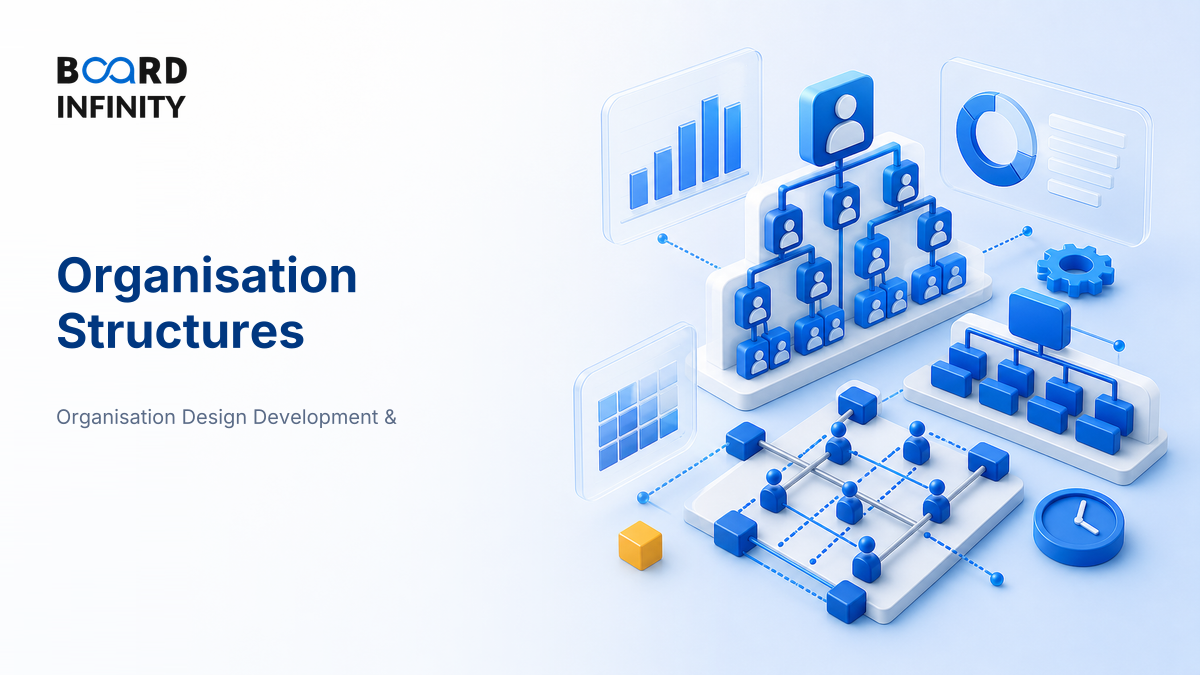
  • Organisation structure is the formal way work is divided, grouped, coordinated and controlled.
  • Functional structure groups people by expertise - marketing, finance, operations, HR - and is best for efficiency and specialization.
  • Divisional structure groups people by product, geography, customer segment or business unit - and is best for market focus and accountability.
  • Matrix structure combines two reporting lines, usually function plus product or geography - and is best when both specialization and responsiveness matter.
  • The core trade-off is efficiency versus responsiveness: functional structures save cost; divisional structures improve speed near the market.
  • Matrix structures fail when decision rights are vague; they work only with clear escalation rules, shared KPIs and mature managers.
  • In interviews, do not just define the three structures - explain when each fits, its downside and a real company example.

Big Picture: Structure Is a Decision System, Not an Org Chart

An organisation chart shows reporting lines. An organisation structure does something deeper: it decides how work flows from strategy to execution. The best structure is not the β€œmost advanced” one; it is the one that fits the company’s strategy, scale, complexity and need for speed.

Organisation structure is a design choice driven by strategy, scale, speed and control needs.] <h2>Core Explanation: The Three Structures and Their Trade-Offs</h2> <p>Think of structure as the company’s operating architecture. It answers four practical questions: Who does the work? Who owns the result? Who coordinates across teams? Who has final decision authority?</p> [[FIGURE: {"layout":"funnel","items":[{"label":"Strategy","note":"What matters most?"},{"label":"Group work","note":"By skill or market?"},{"label":"Assign authority","note":"Who decides?"},{"label":"Results","note":"Speed, cost, focus"}]} | caption: A structure converts strategy into grouped work, authority and business outcomes.] <h2>Functional Structure: Deep Expertise and Cost Efficiency</h2> <p>A <strong>functional structure</strong> groups employees by professional specialization - for example marketing, finance, operations, technology, human resources and sales.</p> <p>This works well when the company needs technical excellence, standard processes and cost control. A manufacturing company with stable products may centralize procurement, production, quality and finance to avoid duplication.</p> <p><strong>Strengths:</strong> specialization, economies of scale, clear functional career paths and strong technical standards.</p> <p><strong>Weaknesses:</strong> slower cross-functional decisions, departmental silos and weak end-to-end ownership of customer or product outcomes.</p> <tip-box data-type="info" data-title="Example - Functional Logic" data-icon="πŸ“Œ"> <p>A small Indian D2C brand may start with functional teams - performance marketing, sourcing, finance and customer support - because it needs tight cost control and specialist execution. The structure fits early scale because one marketing head can standardize campaigns, one sourcing head can manage vendors and leadership can coordinate directly. The so what: functional structures are powerful when the business is relatively focused and coordination is still manageable.</p> </tip-box> <h2>Divisional Structure: Market Focus and Clear Accountability</h2> <p>A <strong>divisional structure</strong> groups work around business units such as products, geographies, customer segments or brands. Each division often has its own sales, operations, marketing and sometimes finance support.</p> <p>This works when products, markets or customers are different enough to need separate strategies. For example, a company selling jewellery, watches and eyewear cannot manage all categories exactly the same way because purchase frequency, store experience, sourcing and margins differ.</p> <p><strong>Strengths:</strong> faster market decisions, clearer profit accountability, sharper customer focus and easier performance comparison across divisions.</p> <p><strong>Weaknesses:</strong> duplicated functions, higher cost, possible rivalry between divisions and inconsistent standards unless corporate governance is strong.</p> <h2>Matrix Structure: Dual Focus, Dual Reporting</h2> <p>A <strong>matrix structure</strong> gives employees two reporting dimensions, commonly a functional manager and a product, project or geography manager. For example, a brand manager may report to the marketing function for capability and to a business unit head for category targets.</p> <p>Matrix structures appear when one lens is not enough. Global technology, consulting, pharma, consumer goods and engineering firms often need both functional excellence and market responsiveness.</p> <p><strong>Strengths:</strong> better knowledge sharing, resource flexibility, cross-functional problem solving and balance between global standards and local needs.</p> <p><strong>Weaknesses:</strong> role conflict, slower approvals, power struggles and meeting overload if decision rights are unclear.</p> [[FIGURE: {"layout":"matrix","xAxis":"Market responsiveness","yAxis":"Functional efficiency","items":[{"label":"Functional","note":"High efficiency"},{"label":"Matrix","note":"Both priorities"},{"label":"Confused hybrid","note":"Low clarity"},{"label":"Divisional","note":"High responsiveness"}]} | caption: Functional, divisional and matrix structures sit on the core trade-off between efficiency and market responsiveness.] <h2>Functional vs Divisional vs Matrix: Fast Comparison</h2> <data-table data-headers='["Dimension", "Functional Structure", "Divisional Structure", "Matrix Structure"]' data-rows='[ ["Basic grouping", "By expertise such as marketing, finance, operations and HR.", "By product, geography, customer segment or business unit.", "By two dimensions, usually function plus product, project or geography."], ["Best fit", "Focused business, stable environment, need for specialization and cost efficiency.", "Diverse products or markets where each unit needs speed and ownership.", "Complex businesses needing both shared expertise and local or product responsiveness."], ["Main strength", "Deep expertise, standardization and economies of scale.", "Clear accountability and faster market-facing decisions.", "Balances specialization with cross-functional coordination."], ["Main risk", "Silos and slow customer-facing decisions.", "Duplication and inconsistent standards across divisions.", "Role conflict, politics and unclear authority."], ["Typical KPI owner", "Functional head owns functional performance.", "Business unit head owns P&amp;L or market results.", "Shared ownership between functional and business/project leaders."], ["Interview phrase", "Efficient but silo-prone.", "Responsive but duplication-prone.", "Flexible but conflict-prone."] ]'> </data-table> <h2>How to Choose the Right Structure</h2> <p>Use this five-step logic whenever you are asked which structure a company should adopt.</p> <roadmap-steps data-steps='[ {"title":"Start with strategy", "desc":"Ask what the company must optimize - cost, innovation, customer intimacy, geographic growth or product focus."}, {"title":"Map complexity", "desc":"Check whether products, customers and regions need different decisions or can be managed through common processes."}, {"title":"Choose the dominant grouping", "desc":"If expertise matters most, choose functional; if market ownership matters most, choose divisional; if both matter, consider matrix."}, {"title":"Define decision rights", "desc":"Clarify who recommends, who approves, who executes and who is accountable for results."}, {"title":"Measure and adjust", "desc":"Track decision speed, handoff quality, span of control and accountability leakage before redesigning again."} ]'> </roadmap-steps> <h2>Metrics: How to Know if the Structure Is Working</h2> <p>Organisation design should not be judged by how neat the chart looks. It should be judged by decision speed, coordination cost, accountability and managerial load.</p> <data-table data-headers='["Metric", "Formula or Definition", "What Good Looks Like"]' data-rows='[ ["Decision cycle time", "Average time from decision request to final approval.", "For routine operating decisions, same day to 48 hours is strong; weeks signal over-escalation."], ["Span of control", "Number of direct reports per manager.", "Knowledge roles often sit around 5-8; frontline roles can be wider, often 10-20, if work is standardized."], ["Layer count", "Number of reporting levels from CEO to frontline employee.", "Fewer layers usually improve speed; strong design keeps layers justified by real decision complexity."], ["Escalation rate", "Escalated decisions divided by total decisions in a period.", "For routine decisions, a low rate is healthy; repeated escalations show unclear authority."], ["Handoff rework rate", "Tasks returned for correction divided by total cross-functional handoffs.", "Lower is better; a rising rate signals poor role clarity or weak process ownership."], ["Managerial cost ratio", "People-manager cost divided by total employee cost.", "Useful against internal or industry benchmarks; sharp increases may indicate excessive layers."] ]'> </data-table> <h2>Definitions</h2> <tip-box data-type="info" data-title="Canonical Definition" data-icon="πŸ“˜"> <p><strong>Henry Mintzberg:</strong> Organisation structure is β€œthe sum total of the ways in which it divides its labor into distinct tasks and then achieves coordination among them.”</p> </tip-box> <check-list data-items='[ "Functional structure: groups work by specialist expertise such as marketing, finance, operations, HR or technology.", "Divisional structure: groups work by product, geography, customer segment or business unit with clearer outcome ownership.", "Matrix structure: combines two reporting dimensions so people answer to both functional and business, project or geography leaders.", "Centralization: decision authority is concentrated at higher levels of the hierarchy.", "Decentralization: decision authority is pushed closer to the people or units facing the issue." ]'> </check-list> <h2>Case Study: Titan Company and the Shift from One Category to Multi-Category Structure</h2> <tip-box data-type="info" data-title="Case Study - Titan Company" data-icon="πŸ†"> <p>Titan shows how a company can evolve from functional efficiency to divisional focus as categories become strategically different.</p> </tip-box> [[GOLD-IMAGE: a premium Indian retail counter with warm golden lighting, watches and jewellery displayed in separate sections, no logos or readable text | caption: Titan’s structure reflects a business where each category needs a different customer experience and operating model.Organisation structure is a design choice driven by strategy, scale, speed and control needs.] <h2>Core Explanation: The Three Structures and Their Trade-Offs</h2> <p>Think of structure as the company’s operating architecture. It answers four practical questions: Who does the work? Who owns the result? Who coordinates across teams? Who has final decision authority?</p> [[FIGURE: {"layout":"funnel","items":[{"label":"Strategy","note":"What matters most?"},{"label":"Group work","note":"By skill or market?"},{"label":"Assign authority","note":"Who decides?"},{"label":"Results","note":"Speed, cost, focus"}]} | caption: A structure converts strategy into grouped work, authority and business outcomes.] <h2>Functional Structure: Deep Expertise and Cost Efficiency</h2> <p>A <strong>functional structure</strong> groups employees by professional specialization - for example marketing, finance, operations, technology, human resources and sales.</p> <p>This works well when the company needs technical excellence, standard processes and cost control. A manufacturing company with stable products may centralize procurement, production, quality and finance to avoid duplication.</p> <p><strong>Strengths:</strong> specialization, economies of scale, clear functional career paths and strong technical standards.</p> <p><strong>Weaknesses:</strong> slower cross-functional decisions, departmental silos and weak end-to-end ownership of customer or product outcomes.</p> <tip-box data-type="info" data-title="Example - Functional Logic" data-icon="πŸ“Œ"> <p>A small Indian D2C brand may start with functional teams - performance marketing, sourcing, finance and customer support - because it needs tight cost control and specialist execution. The structure fits early scale because one marketing head can standardize campaigns, one sourcing head can manage vendors and leadership can coordinate directly. The so what: functional structures are powerful when the business is relatively focused and coordination is still manageable.</p> </tip-box> <h2>Divisional Structure: Market Focus and Clear Accountability</h2> <p>A <strong>divisional structure</strong> groups work around business units such as products, geographies, customer segments or brands. Each division often has its own sales, operations, marketing and sometimes finance support.</p> <p>This works when products, markets or customers are different enough to need separate strategies. For example, a company selling jewellery, watches and eyewear cannot manage all categories exactly the same way because purchase frequency, store experience, sourcing and margins differ.</p> <p><strong>Strengths:</strong> faster market decisions, clearer profit accountability, sharper customer focus and easier performance comparison across divisions.</p> <p><strong>Weaknesses:</strong> duplicated functions, higher cost, possible rivalry between divisions and inconsistent standards unless corporate governance is strong.</p> <h2>Matrix Structure: Dual Focus, Dual Reporting</h2> <p>A <strong>matrix structure</strong> gives employees two reporting dimensions, commonly a functional manager and a product, project or geography manager. For example, a brand manager may report to the marketing function for capability and to a business unit head for category targets.</p> <p>Matrix structures appear when one lens is not enough. Global technology, consulting, pharma, consumer goods and engineering firms often need both functional excellence and market responsiveness.</p> <p><strong>Strengths:</strong> better knowledge sharing, resource flexibility, cross-functional problem solving and balance between global standards and local needs.</p> <p><strong>Weaknesses:</strong> role conflict, slower approvals, power struggles and meeting overload if decision rights are unclear.</p> [[FIGURE: {"layout":"matrix","xAxis":"Market responsiveness","yAxis":"Functional efficiency","items":[{"label":"Functional","note":"High efficiency"},{"label":"Matrix","note":"Both priorities"},{"label":"Confused hybrid","note":"Low clarity"},{"label":"Divisional","note":"High responsiveness"}]} | caption: Functional, divisional and matrix structures sit on the core trade-off between efficiency and market responsiveness.] <h2>Functional vs Divisional vs Matrix: Fast Comparison</h2> <data-table data-headers='["Dimension", "Functional Structure", "Divisional Structure", "Matrix Structure"]' data-rows='[ ["Basic grouping", "By expertise such as marketing, finance, operations and HR.", "By product, geography, customer segment or business unit.", "By two dimensions, usually function plus product, project or geography."], ["Best fit", "Focused business, stable environment, need for specialization and cost efficiency.", "Diverse products or markets where each unit needs speed and ownership.", "Complex businesses needing both shared expertise and local or product responsiveness."], ["Main strength", "Deep expertise, standardization and economies of scale.", "Clear accountability and faster market-facing decisions.", "Balances specialization with cross-functional coordination."], ["Main risk", "Silos and slow customer-facing decisions.", "Duplication and inconsistent standards across divisions.", "Role conflict, politics and unclear authority."], ["Typical KPI owner", "Functional head owns functional performance.", "Business unit head owns P&amp;L or market results.", "Shared ownership between functional and business/project leaders."], ["Interview phrase", "Efficient but silo-prone.", "Responsive but duplication-prone.", "Flexible but conflict-prone."] ]'> </data-table> <h2>How to Choose the Right Structure</h2> <p>Use this five-step logic whenever you are asked which structure a company should adopt.</p> <roadmap-steps data-steps='[ {"title":"Start with strategy", "desc":"Ask what the company must optimize - cost, innovation, customer intimacy, geographic growth or product focus."}, {"title":"Map complexity", "desc":"Check whether products, customers and regions need different decisions or can be managed through common processes."}, {"title":"Choose the dominant grouping", "desc":"If expertise matters most, choose functional; if market ownership matters most, choose divisional; if both matter, consider matrix."}, {"title":"Define decision rights", "desc":"Clarify who recommends, who approves, who executes and who is accountable for results."}, {"title":"Measure and adjust", "desc":"Track decision speed, handoff quality, span of control and accountability leakage before redesigning again."} ]'> </roadmap-steps> <h2>Metrics: How to Know if the Structure Is Working</h2> <p>Organisation design should not be judged by how neat the chart looks. It should be judged by decision speed, coordination cost, accountability and managerial load.</p> <data-table data-headers='["Metric", "Formula or Definition", "What Good Looks Like"]' data-rows='[ ["Decision cycle time", "Average time from decision request to final approval.", "For routine operating decisions, same day to 48 hours is strong; weeks signal over-escalation."], ["Span of control", "Number of direct reports per manager.", "Knowledge roles often sit around 5-8; frontline roles can be wider, often 10-20, if work is standardized."], ["Layer count", "Number of reporting levels from CEO to frontline employee.", "Fewer layers usually improve speed; strong design keeps layers justified by real decision complexity."], ["Escalation rate", "Escalated decisions divided by total decisions in a period.", "For routine decisions, a low rate is healthy; repeated escalations show unclear authority."], ["Handoff rework rate", "Tasks returned for correction divided by total cross-functional handoffs.", "Lower is better; a rising rate signals poor role clarity or weak process ownership."], ["Managerial cost ratio", "People-manager cost divided by total employee cost.", "Useful against internal or industry benchmarks; sharp increases may indicate excessive layers."] ]'> </data-table> <h2>Definitions</h2> <tip-box data-type="info" data-title="Canonical Definition" data-icon="πŸ“˜"> <p><strong>Henry Mintzberg:</strong> Organisation structure is β€œthe sum total of the ways in which it divides its labor into distinct tasks and then achieves coordination among them.”</p> </tip-box> <check-list data-items='[ "Functional structure: groups work by specialist expertise such as marketing, finance, operations, HR or technology.", "Divisional structure: groups work by product, geography, customer segment or business unit with clearer outcome ownership.", "Matrix structure: combines two reporting dimensions so people answer to both functional and business, project or geography leaders.", "Centralization: decision authority is concentrated at higher levels of the hierarchy.", "Decentralization: decision authority is pushed closer to the people or units facing the issue." ]'> </check-list> <h2>Case Study: Titan Company and the Shift from One Category to Multi-Category Structure</h2> <tip-box data-type="info" data-title="Case Study - Titan Company" data-icon="πŸ†"> <p>Titan shows how a company can evolve from functional efficiency to divisional focus as categories become strategically different.</p> </tip-box> [[GOLD-IMAGE: a premium Indian retail counter with warm golden lighting, watches and jewellery displayed in separate sections, no logos or readable text | caption: Titan’s structure reflects a business where each category needs a different customer experience and operating model.StrategyWhat must win?SpeedHow fast decide?ScaleHow big andcomplex?ControlHow muchstandardization?Structure choice
Organisation structure is a design choice driven by strategy, scale, speed and control needs.] <h2>Core Explanation: The Three Structures and Their Trade-Offs</h2> <p>Think of structure as the company’s operating architecture. It answers four practical questions: Who does the work? Who owns the result? Who coordinates across teams? Who has final decision authority?</p> [[FIGURE: {"layout":"funnel","items":[{"label":"Strategy","note":"What matters most?"},{"label":"Group work","note":"By skill or market?"},{"label":"Assign authority","note":"Who decides?"},{"label":"Results","note":"Speed, cost, focus"}]} | caption: A structure converts strategy into grouped work, authority and business outcomes.] <h2>Functional Structure: Deep Expertise and Cost Efficiency</h2> <p>A <strong>functional structure</strong> groups employees by professional specialization - for example marketing, finance, operations, technology, human resources and sales.</p> <p>This works well when the company needs technical excellence, standard processes and cost control. A manufacturing company with stable products may centralize procurement, production, quality and finance to avoid duplication.</p> <p><strong>Strengths:</strong> specialization, economies of scale, clear functional career paths and strong technical standards.</p> <p><strong>Weaknesses:</strong> slower cross-functional decisions, departmental silos and weak end-to-end ownership of customer or product outcomes.</p> <tip-box data-type="info" data-title="Example - Functional Logic" data-icon="πŸ“Œ"> <p>A small Indian D2C brand may start with functional teams - performance marketing, sourcing, finance and customer support - because it needs tight cost control and specialist execution. The structure fits early scale because one marketing head can standardize campaigns, one sourcing head can manage vendors and leadership can coordinate directly. The so what: functional structures are powerful when the business is relatively focused and coordination is still manageable.</p> </tip-box> <h2>Divisional Structure: Market Focus and Clear Accountability</h2> <p>A <strong>divisional structure</strong> groups work around business units such as products, geographies, customer segments or brands. Each division often has its own sales, operations, marketing and sometimes finance support.</p> <p>This works when products, markets or customers are different enough to need separate strategies. For example, a company selling jewellery, watches and eyewear cannot manage all categories exactly the same way because purchase frequency, store experience, sourcing and margins differ.</p> <p><strong>Strengths:</strong> faster market decisions, clearer profit accountability, sharper customer focus and easier performance comparison across divisions.</p> <p><strong>Weaknesses:</strong> duplicated functions, higher cost, possible rivalry between divisions and inconsistent standards unless corporate governance is strong.</p> <h2>Matrix Structure: Dual Focus, Dual Reporting</h2> <p>A <strong>matrix structure</strong> gives employees two reporting dimensions, commonly a functional manager and a product, project or geography manager. For example, a brand manager may report to the marketing function for capability and to a business unit head for category targets.</p> <p>Matrix structures appear when one lens is not enough. Global technology, consulting, pharma, consumer goods and engineering firms often need both functional excellence and market responsiveness.</p> <p><strong>Strengths:</strong> better knowledge sharing, resource flexibility, cross-functional problem solving and balance between global standards and local needs.</p> <p><strong>Weaknesses:</strong> role conflict, slower approvals, power struggles and meeting overload if decision rights are unclear.</p> [[FIGURE: {"layout":"matrix","xAxis":"Market responsiveness","yAxis":"Functional efficiency","items":[{"label":"Functional","note":"High efficiency"},{"label":"Matrix","note":"Both priorities"},{"label":"Confused hybrid","note":"Low clarity"},{"label":"Divisional","note":"High responsiveness"}]} | caption: Functional, divisional and matrix structures sit on the core trade-off between efficiency and market responsiveness.] <h2>Functional vs Divisional vs Matrix: Fast Comparison</h2> <data-table data-headers='["Dimension", "Functional Structure", "Divisional Structure", "Matrix Structure"]' data-rows='[ ["Basic grouping", "By expertise such as marketing, finance, operations and HR.", "By product, geography, customer segment or business unit.", "By two dimensions, usually function plus product, project or geography."], ["Best fit", "Focused business, stable environment, need for specialization and cost efficiency.", "Diverse products or markets where each unit needs speed and ownership.", "Complex businesses needing both shared expertise and local or product responsiveness."], ["Main strength", "Deep expertise, standardization and economies of scale.", "Clear accountability and faster market-facing decisions.", "Balances specialization with cross-functional coordination."], ["Main risk", "Silos and slow customer-facing decisions.", "Duplication and inconsistent standards across divisions.", "Role conflict, politics and unclear authority."], ["Typical KPI owner", "Functional head owns functional performance.", "Business unit head owns P&amp;L or market results.", "Shared ownership between functional and business/project leaders."], ["Interview phrase", "Efficient but silo-prone.", "Responsive but duplication-prone.", "Flexible but conflict-prone."] ]'> </data-table> <h2>How to Choose the Right Structure</h2> <p>Use this five-step logic whenever you are asked which structure a company should adopt.</p> <roadmap-steps data-steps='[ {"title":"Start with strategy", "desc":"Ask what the company must optimize - cost, innovation, customer intimacy, geographic growth or product focus."}, {"title":"Map complexity", "desc":"Check whether products, customers and regions need different decisions or can be managed through common processes."}, {"title":"Choose the dominant grouping", "desc":"If expertise matters most, choose functional; if market ownership matters most, choose divisional; if both matter, consider matrix."}, {"title":"Define decision rights", "desc":"Clarify who recommends, who approves, who executes and who is accountable for results."}, {"title":"Measure and adjust", "desc":"Track decision speed, handoff quality, span of control and accountability leakage before redesigning again."} ]'> </roadmap-steps> <h2>Metrics: How to Know if the Structure Is Working</h2> <p>Organisation design should not be judged by how neat the chart looks. It should be judged by decision speed, coordination cost, accountability and managerial load.</p> <data-table data-headers='["Metric", "Formula or Definition", "What Good Looks Like"]' data-rows='[ ["Decision cycle time", "Average time from decision request to final approval.", "For routine operating decisions, same day to 48 hours is strong; weeks signal over-escalation."], ["Span of control", "Number of direct reports per manager.", "Knowledge roles often sit around 5-8; frontline roles can be wider, often 10-20, if work is standardized."], ["Layer count", "Number of reporting levels from CEO to frontline employee.", "Fewer layers usually improve speed; strong design keeps layers justified by real decision complexity."], ["Escalation rate", "Escalated decisions divided by total decisions in a period.", "For routine decisions, a low rate is healthy; repeated escalations show unclear authority."], ["Handoff rework rate", "Tasks returned for correction divided by total cross-functional handoffs.", "Lower is better; a rising rate signals poor role clarity or weak process ownership."], ["Managerial cost ratio", "People-manager cost divided by total employee cost.", "Useful against internal or industry benchmarks; sharp increases may indicate excessive layers."] ]'> </data-table> <h2>Definitions</h2> <tip-box data-type="info" data-title="Canonical Definition" data-icon="πŸ“˜"> <p><strong>Henry Mintzberg:</strong> Organisation structure is β€œthe sum total of the ways in which it divides its labor into distinct tasks and then achieves coordination among them.”</p> </tip-box> <check-list data-items='[ "Functional structure: groups work by specialist expertise such as marketing, finance, operations, HR or technology.", "Divisional structure: groups work by product, geography, customer segment or business unit with clearer outcome ownership.", "Matrix structure: combines two reporting dimensions so people answer to both functional and business, project or geography leaders.", "Centralization: decision authority is concentrated at higher levels of the hierarchy.", "Decentralization: decision authority is pushed closer to the people or units facing the issue." ]'> </check-list> <h2>Case Study: Titan Company and the Shift from One Category to Multi-Category Structure</h2> <tip-box data-type="info" data-title="Case Study - Titan Company" data-icon="πŸ†"> <p>Titan shows how a company can evolve from functional efficiency to divisional focus as categories become strategically different.</p> </tip-box> [[GOLD-IMAGE: a premium Indian retail counter with warm golden lighting, watches and jewellery displayed in separate sections, no logos or readable text | caption: Titan’s structure reflects a business where each category needs a different customer experience and operating model.

Titan began as a watch company, but over time it built a wider lifestyle portfolio across jewellery, watches and wearables, eyewear and emerging categories. These businesses do not behave the same way. Jewellery depends heavily on trust, store experience, sourcing discipline and festival-led demand. Watches and wearables need design, brand refresh cycles and channel management. Eyewear has its own retail and service model.

The structural move was to give major categories stronger business focus while keeping some corporate capabilities and governance shared. In simple terms, Titan could not run jewellery, watches and eyewear as if they were just three SKUs inside one functional machine. Each category needed its own strategy, customer understanding and operating rhythm.

The primary driver of Titan’s structural evolution is category-level strategic difference. Supporting drivers include brand trust, retail capability, sourcing discipline, corporate governance and shared capabilities. The lesson: divisional structures work when different businesses need different playbooks, but they must be balanced with shared standards to avoid duplication and fragmentation.

[[FIGURE: {"layout":"flow","items":[{"label":"Single focus","note":"Watches-led scale"},{"label":"New categories","note":"Different economics"},{"label":"Divisional focus","note":"Category ownership"},{"label":"Shared capabilities","note":"Governance and trust"}]} | caption: Titan’s structure evolved as category complexity increased and required sharper business-unit ownership.]

How AI Changes Organisation Structures

AI is not just another tool inside existing departments. It changes what should be centralized, what should be embedded in business units and how many layers are needed for coordination.

  • AI creates new central capability hubs. Companies increasingly need AI governance, data engineering, model risk, privacy and responsible-AI capabilities. These may sit centrally so standards are consistent across business units.
  • AI also pushes expertise into business teams. A central analytics team alone is often too slow. Product, sales, HR and operations teams now need embedded AI translators who understand both business problems and model outputs.
  • AI reduces some coordination work but raises accountability questions. Copilots can draft reports, summarize meetings and automate workflows, but managers must still define who approves decisions, who checks bias and who owns errors.

Load a company annual report, investor presentation and leadership page into NotebookLM. Ask: β€œMap this company’s likely structure. Which parts look functional, divisional or matrix? What interview question could test this?” Then verify the answer against the company’s actual business segments and management commentary.

Interview Relevance

β€œCompare functional, divisional and matrix structures. If a fast-growing Indian company expands from one product line into multiple categories and geographies, which structure would you recommend and why?”

A strong answer sounds like a consultant: β€œThe right structure depends on the dominant coordination problem.” That single line shows you understand design logic, not just definitions.

Common Mistake

The biggest mistake is calling matrix structure β€œthe best” because it sounds modern. It costs candidates because matrix design actually increases ambiguity unless decision rights, conflict resolution and shared KPIs are explicit. One-line fix: always say, β€œMatrix works only when the need for dual coordination is greater than the cost of complexity.”

What to Revise Next

Now move from structure types to structure quality. Revise Spans, Layers & Designing for Decision Speed to understand how tall or flat a structure should be, then study Role Clarity, Accountability & Decision Rights to make any structure actually work.

Mark Lesson Complete (Organisation Structures: Functional, Divisional & Matrix - Interview-Ready Guide)