
From Personnel Administration to Strategic Business Partner: Interview-Ready HR Evolution
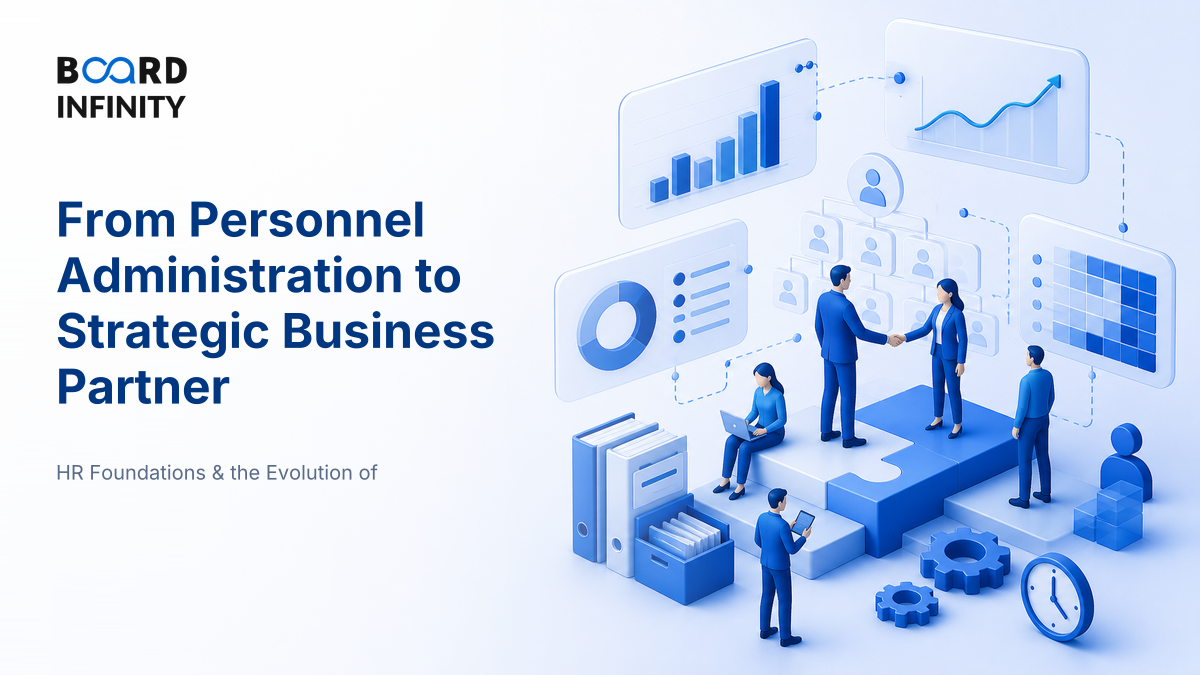
A factory expansion is delayed, not because machines are unavailable, but because supervisors cannot be hired, trained and retained fast enough. That is the moment HR stops being “the department that processes salaries” and becomes a business function that decides whether strategy actually happens.
- Personnel administration is the old HR model: records, payroll, attendance, statutory compliance and employee files.
- Strategic HR links people decisions to business goals such as productivity, growth, customer experience, innovation and risk control.
- The shift is from transaction ownership to capability ownership: HR asks, “What workforce must we build for this strategy to work?”
- Modern HR still needs flawless hygiene - payroll, compliance and policies - but that is the base, not the destination.
- A strong HR business partner reads business metrics first, then designs talent, structure, culture and rewards to move those metrics.
- Measure strategic HR using outcomes such as revenue per employee, regretted attrition, time to fill, quality of hire, internal fill rate and engagement-linked productivity.
- The interview trap: saying “HR became strategic because of technology.” Technology enables the shift; business alignment proves it.
Big Picture
The evolution of HR is best understood as a ladder. At the bottom, HR protects the organization from chaos and non-compliance. At the top, HR shapes the workforce capabilities that create competitive advantage.
The Old Model vs the Strategic Model
Use this comparison when you need to explain the evolution crisply. Notice that the difference is not attitude; it is the unit of analysis. Old HR optimized tasks. Strategic HR optimizes business capability.
The Four Shifts That Made HR Strategic
The movement from personnel administration to strategic HR happened because business itself changed. Work became more knowledge-intensive, competition became more talent-dependent, employee expectations rose and data made people decisions more measurable.
What a Strategic HR Business Partner Actually Does
A strategic HR business partner is not just an HR person assigned to a business unit. The role is to translate business strategy into people priorities and translate people risks back into business language.
How to Measure Whether HR Is Really Strategic
Strategic HR must be measurable. Do not claim “HR adds value” vaguely. Show how people decisions influence outcomes that business leaders care about.
The key is not to chase one perfect HR metric. A good HRBP connects a people metric to a business outcome: “Regretted attrition among store managers is hurting same-store sales,” or “Long time-to-fill in field sales is delaying territory coverage.”
Definitions You Can Say Cleanly
Personnel administration: The administrative management of employee records, payroll, attendance, benefits, compliance and employment documentation.
Human Resource Management - Gary Dessler: “The process of acquiring, training, appraising, and compensating employees, and of attending to their labor relations, health and safety, and fairness concerns.”
Strategic HRM: Aligning HR policies and practices with business strategy to build workforce capabilities that improve organizational performance.
HR business partner: An HR professional who works with business leaders to translate strategy into people priorities and measurable workforce actions.
Case Study: IndiGo and HR as an Operating Advantage
IndiGo shows how HR becomes strategic when people systems support the operating model, not just employee administration.
Situation: Airlines operate on thin margins and operational complexity. A delayed departure is not just a customer irritation; it affects aircraft utilization, crew schedules, airport slots and downstream flights. For a low-cost airline, consistency is strategy.
The move: IndiGo’s business model has long relied on operational discipline - a standardized narrow-body fleet approach, tight turnaround processes, route density and cost control. HR’s strategic role is to reinforce that model through hiring profiles, standardized training, crew and ground-staff scheduling, service discipline, safety compliance and manager accountability. In India, this also means operating within aviation safety norms and crew duty regulations while maintaining service reliability across a large domestic network.
Outcome or lesson: The lesson is not “IndiGo wins because of HR” or “IndiGo wins because of low cost.” The primary driver is a disciplined operating model, supported by standardized assets, process control, network choices and people systems. HR becomes strategic when it builds the behaviours, skills and staffing reliability that make the operating model repeatable every day.
[[GOLD-IMAGE: A busy Indian airport gate at dawn with blue ambient lighting, ground staff using tablets beside a narrow-body aircraft, no logos or readable text | caption: Strategic HR is visible when trained people make a complex operating model run reliably under pressure.Core Explanation: What Actually Changed
The big idea is simple: HR moved from managing employment transactions to shaping organizational performance. Personnel administration asked, “Are records correct?” Strategic HR asks, “Do we have the right people, structure, skills and culture to win?”
That does not mean old HR work disappeared. Payroll, attendance, letters, benefits, labour law compliance and employee data remain critical. But they are now treated as hygiene capabilities - necessary, standardized and increasingly automated - so HR leaders can spend more time on workforce planning, leadership pipelines, culture, productivity and change management.
The Old Model vs the Strategic Model
Use this comparison when you need to explain the evolution crisply. Notice that the difference is not attitude; it is the unit of analysis. Old HR optimized tasks. Strategic HR optimizes business capability.
The Four Shifts That Made HR Strategic
The movement from personnel administration to strategic HR happened because business itself changed. Work became more knowledge-intensive, competition became more talent-dependent, employee expectations rose and data made people decisions more measurable.
What a Strategic HR Business Partner Actually Does
A strategic HR business partner is not just an HR person assigned to a business unit. The role is to translate business strategy into people priorities and translate people risks back into business language.
How to Measure Whether HR Is Really Strategic
Strategic HR must be measurable. Do not claim “HR adds value” vaguely. Show how people decisions influence outcomes that business leaders care about.
The key is not to chase one perfect HR metric. A good HRBP connects a people metric to a business outcome: “Regretted attrition among store managers is hurting same-store sales,” or “Long time-to-fill in field sales is delaying territory coverage.”
Definitions You Can Say Cleanly
Personnel administration: The administrative management of employee records, payroll, attendance, benefits, compliance and employment documentation.
Human Resource Management - Gary Dessler: “The process of acquiring, training, appraising, and compensating employees, and of attending to their labor relations, health and safety, and fairness concerns.”
Strategic HRM: Aligning HR policies and practices with business strategy to build workforce capabilities that improve organizational performance.
HR business partner: An HR professional who works with business leaders to translate strategy into people priorities and measurable workforce actions.
Case Study: IndiGo and HR as an Operating Advantage
IndiGo shows how HR becomes strategic when people systems support the operating model, not just employee administration.
Situation: Airlines operate on thin margins and operational complexity. A delayed departure is not just a customer irritation; it affects aircraft utilization, crew schedules, airport slots and downstream flights. For a low-cost airline, consistency is strategy.
The move: IndiGo’s business model has long relied on operational discipline - a standardized narrow-body fleet approach, tight turnaround processes, route density and cost control. HR’s strategic role is to reinforce that model through hiring profiles, standardized training, crew and ground-staff scheduling, service discipline, safety compliance and manager accountability. In India, this also means operating within aviation safety norms and crew duty regulations while maintaining service reliability across a large domestic network.
Outcome or lesson: The lesson is not “IndiGo wins because of HR” or “IndiGo wins because of low cost.” The primary driver is a disciplined operating model, supported by standardized assets, process control, network choices and people systems. HR becomes strategic when it builds the behaviours, skills and staffing reliability that make the operating model repeatable every day.
[[GOLD-IMAGE: A busy Indian airport gate at dawn with blue ambient lighting, ground staff using tablets beside a narrow-body aircraft, no logos or readable text | caption: Strategic HR is visible when trained people make a complex operating model run reliably under pressure.Core Explanation: What Actually Changed
The big idea is simple: HR moved from managing employment transactions to shaping organizational performance. Personnel administration asked, “Are records correct?” Strategic HR asks, “Do we have the right people, structure, skills and culture to win?”
That does not mean old HR work disappeared. Payroll, attendance, letters, benefits, labour law compliance and employee data remain critical. But they are now treated as hygiene capabilities - necessary, standardized and increasingly automated - so HR leaders can spend more time on workforce planning, leadership pipelines, culture, productivity and change management.
The Old Model vs the Strategic Model
Use this comparison when you need to explain the evolution crisply. Notice that the difference is not attitude; it is the unit of analysis. Old HR optimized tasks. Strategic HR optimizes business capability.
The Four Shifts That Made HR Strategic
The movement from personnel administration to strategic HR happened because business itself changed. Work became more knowledge-intensive, competition became more talent-dependent, employee expectations rose and data made people decisions more measurable.
HR maturity rises when each stage keeps working while the next layer adds business value.HR maturity rises when each stage keeps working while the next layer adds business value.AdminControlFiles, payroll,complianceEmployeeServicePolicies andgrievance…TalentManagementHire, develop,retainBusinessPartnerWorkforcedrives strategyHR maturity rises when each stage keeps working while the next layer adds business value.
What a Strategic HR Business Partner Actually Does
A strategic HR business partner is not just an HR person assigned to a business unit. The role is to translate business strategy into people priorities and translate people risks back into business language.
How to Measure Whether HR Is Really Strategic
Strategic HR must be measurable. Do not claim “HR adds value” vaguely. Show how people decisions influence outcomes that business leaders care about.
The key is not to chase one perfect HR metric. A good HRBP connects a people metric to a business outcome: “Regretted attrition among store managers is hurting same-store sales,” or “Long time-to-fill in field sales is delaying territory coverage.”
Definitions You Can Say Cleanly
Personnel administration: The administrative management of employee records, payroll, attendance, benefits, compliance and employment documentation.
Human Resource Management - Gary Dessler: “The process of acquiring, training, appraising, and compensating employees, and of attending to their labor relations, health and safety, and fairness concerns.”
Strategic HRM: Aligning HR policies and practices with business strategy to build workforce capabilities that improve organizational performance.
HR business partner: An HR professional who works with business leaders to translate strategy into people priorities and measurable workforce actions.
Case Study: IndiGo and HR as an Operating Advantage
IndiGo shows how HR becomes strategic when people systems support the operating model, not just employee administration.
Situation: Airlines operate on thin margins and operational complexity. A delayed departure is not just a customer irritation; it affects aircraft utilization, crew schedules, airport slots and downstream flights. For a low-cost airline, consistency is strategy.
The move: IndiGo’s business model has long relied on operational discipline - a standardized narrow-body fleet approach, tight turnaround processes, route density and cost control. HR’s strategic role is to reinforce that model through hiring profiles, standardized training, crew and ground-staff scheduling, service discipline, safety compliance and manager accountability. In India, this also means operating within aviation safety norms and crew duty regulations while maintaining service reliability across a large domestic network.
Outcome or lesson: The lesson is not “IndiGo wins because of HR” or “IndiGo wins because of low cost.” The primary driver is a disciplined operating model, supported by standardized assets, process control, network choices and people systems. HR becomes strategic when it builds the behaviours, skills and staffing reliability that make the operating model repeatable every day.
[[GOLD-IMAGE: A busy Indian airport gate at dawn with blue ambient lighting, ground staff using tablets beside a narrow-body aircraft, no logos or readable text | caption: Strategic HR is visible when trained people make a complex operating model run reliably under pressure.
In an execution-heavy business, HR supports strategy by making critical behaviours consistent at scale.In an execution-heavy business, HR supports strategy by making critical behaviours consistent at scale.Hiring ProfileFit for disciplineCrew PlanningSafe coverageTraining SOPsRepeatable routinesPerformance DataFast feedbackReliable TurnaroundIn an execution-heavy business, HR supports strategy by making critical behaviours consistent at scale.
So what: This case helps you answer the topic maturely. HR is not strategic because it “sits with leadership.” HR is strategic when its systems strengthen the company’s chosen way to compete.
How AI Changes From Personnel Administration to Strategic Business Partner
AI accelerates the HR shift because it can reduce manual HR work and improve workforce decisions. But it also raises fairness, privacy and governance risks, especially when employee data is sensitive.
Practical student workflow: Before an HR interview, load the target company’s annual report, careers page and recent people-related news into NotebookLM. Ask: “What business priorities are visible, what workforce capabilities do they require, and what HRBP interview questions could be asked?” Then convert the output into a 3-column note: business priority, people implication, HR intervention.
Interview Relevance
“Explain the evolution of HR from personnel administration to strategic business partner. What changed, and how would you prove HR is strategic?”
Use the phrase “from transaction ownership to capability ownership”. It is short, memorable and shows you understand the real shift.
Common Mistake
The costly error is saying, “HR became strategic because technology automated payroll.” That answer is too shallow because it confuses an enabler with the outcome. Fix: start with the business problem, then show how HR levers - talent, structure, culture, rewards and analytics - improve business results.
What to Revise Next
Now that you understand why HR became strategic, revise the building blocks inside HR and the operating model that delivers them.