
Best LXP Platforms for Corporate Training by Personalization Depth
Corporate learning isn’t stuck in the classroom anymore earning platforms like LXP vs LMS Key Differences help teams choose the right system for personalized training. According to a 2024 Gartner forecast, the global learning experience platform (LXP) market is set to soar from about $300 million in 2019 to roughly $2.2 billion by 2026.
What’s driving that seven-fold leap? One big lever: deep personalization. When your platform surfaces the right video, quiz, or mentoring moment exactly when a learner needs it, skills build faster and the business wins.
In this guide, we’ll show you which LXPs lead the pack, how we measured them, and how to choose the perfect fit for your team. Let’s dive in.
LXP vs LMS: why the difference matters
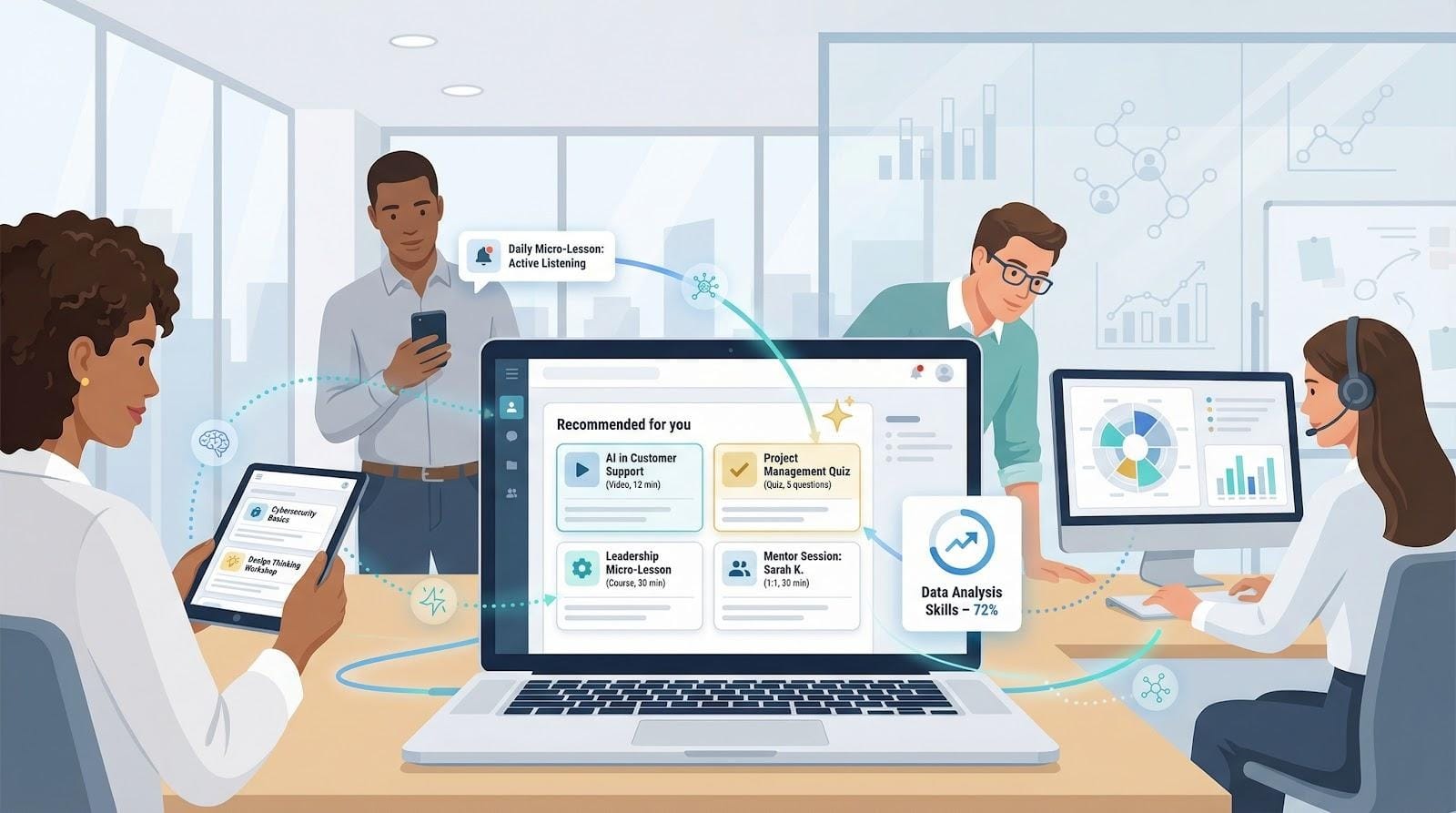
Think of a traditional learning management system as the company filing cabinet for training. It stores courses, tracks completions, and shows auditors you ticked every box.
An LXP feels more like Netflix. It learns what you watch, what peers with similar roles enjoy, and which skills your job demands, then serves up just-right suggestions each time you sign in.
That shift from admin-first to learner-first thinking changes everything.
Most organizations keep both. The LMS covers must-do courses, while the LXP sparks daily curiosity, fills skill gaps, and keeps employees coming back for more.
Understanding that split sets the stage for our ranking because the platforms ahead excel at turning compliance data into a truly personal learning experience.
How we picked the winners
Great technology deserves a clear scorecard, not gut feel. So we built one, then pressure tested every platform against it.
First, we interviewed L&D leaders to pinpoint what truly moves the needle. One theme surfaced again and again: serve each employee the next best learning step without fuss. Personalization is king.
To convert that insight into numbers, we weighted five criteria:
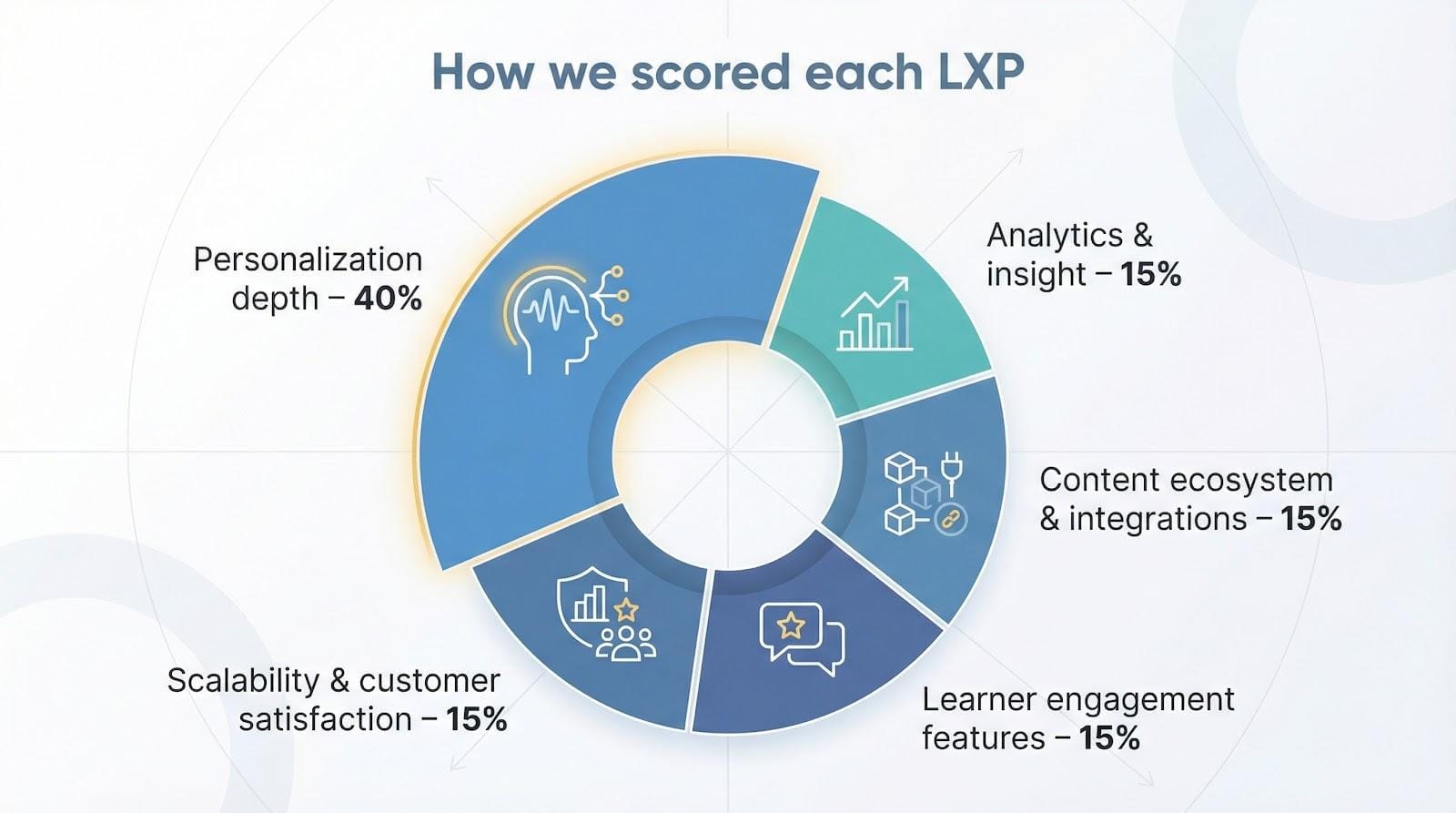
- Personalization depth (40 percent). Does the platform use AI, skill graphs, and real-time behavior to shape a unique path for every learner?
- Analytics and insight (15 percent). Can managers see skill gaps closing in black and white, not just scan completion charts?
- Content ecosystem and integrations (15 percent). The smarter the engine, the more fuel it needs. We looked for rich libraries, friction-free hooks into HRIS, Teams, and existing LMS data.
- Learner engagement features (15 percent). Social feeds, nudges, and tasteful gamification keep people coming back, which, in turn, feeds the AI fresher data.
- Scalability and customer satisfaction (15 percent). High G2 ratings, and proven enterprise security, show a platform performs just as well on day 1,000 as day one.
We scored each vendor on a ten-point scale per bucket, multiplied by its weight, then ranked by total. That transparent math rewards substance, deep data-driven personalization, and real results over slick marketing copy.
Ready to see who topped the table? Let’s dive into the platforms, starting with the SMB-friendly contender that punches well above its weight.
GoSkills LXP: best for small and midsize teams
GoSkills feels refreshingly light on its feet. Sign up today and learners explore a personalized dashboard tomorrow, with no weeks of configuration and no army of consultants.
The secret is focus. GoSkills pairs a crisp library of bite-sized business courses with an AI engine that tracks every click, quiz score, and stated goal. That same AI course recommender, highlighted in What is a Learning Experience Platform (LXP)? | GoSkills as one of the core pillars of a modern LXP, reads each learner’s activity stream and within minutes nudges them toward the next Excel shortcut, sharper presentation skill, or formula they have not mastered yet.
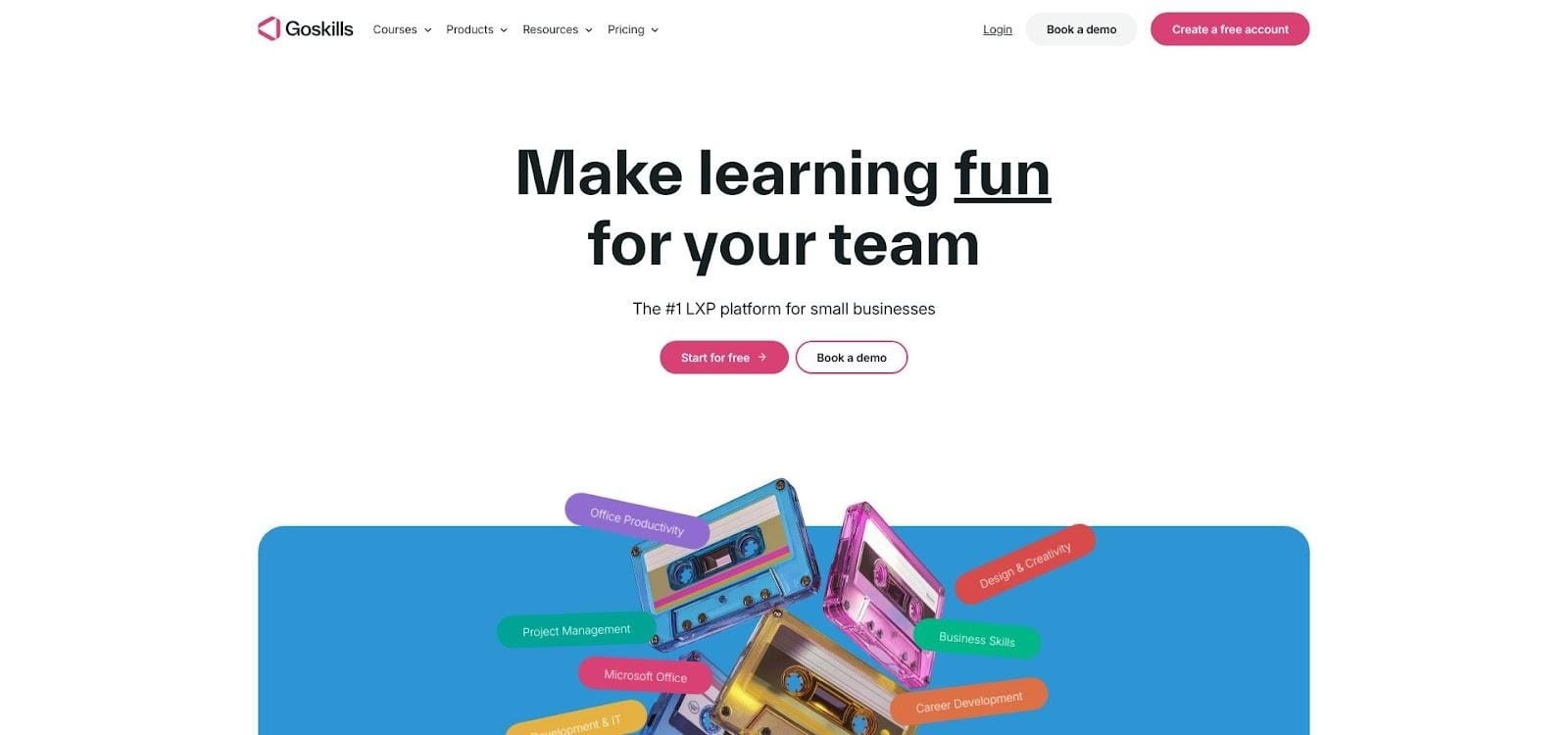
Because the content lives inside the platform, recommendations never lead to dead links. Need something unique, such as a five-step playbook for your new product launch? Build it with the drag-and-drop course creator, then watch the algorithm weave it into each relevant learner’s feed.
Gamified badges and quick-fire quizzes keep engagement high without feeling childish. Admins see a clean progress dashboard instead of data bloat, while single sign-on and a polished Microsoft Teams app slide the LXP neatly into the tech stack you already run.
Pricing stays friendly: transparent per-user plans and a free trial let you prove value before finance asks hard questions.
Bottom line: If you want Netflix-style personalization without enterprise-scale complexity, GoSkills gives your team exactly what they need, and nothing that slows them down.
Degreed LXP: best for enterprise-scale skill intelligence
Degreed does more than recommend a course. It builds a living skills profile for every employee, then maps that data against thousands of internal and external resources to close gaps quickly.
Open the homepage and you are greeted by a personalized feed pulled from your LMS, LinkedIn Learning, Harvard ManageMentor, and even that podcast a colleague shared yesterday. The algorithm refreshes with every click, so suggestions keep pace with shifting goals.
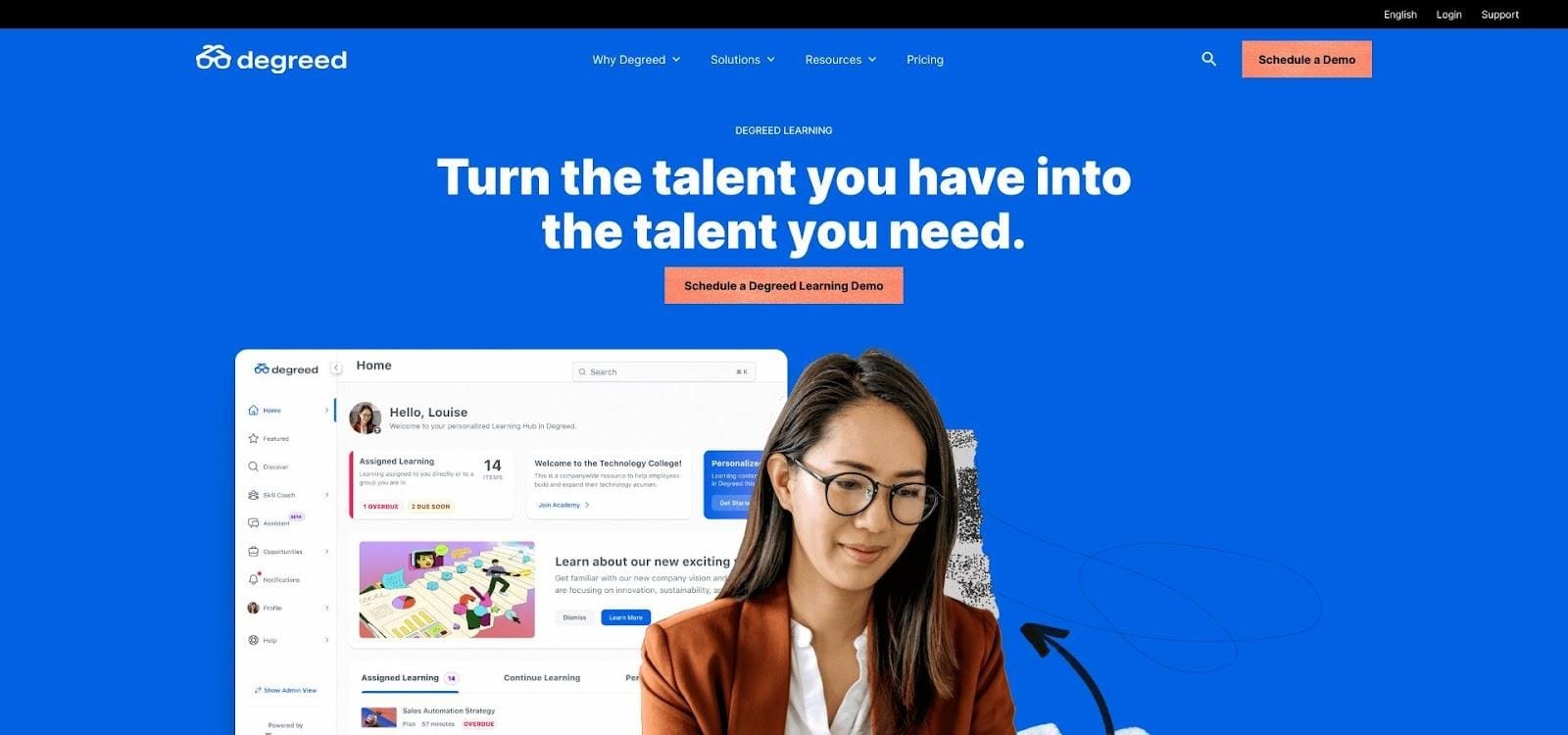
For managers, the magic lives in the analytics. A few clicks reveal which teams lag on cloud security, where hidden experts sit, and how learning hours translate into rising proficiency scores. That clarity turns vague “we need upskilling” chatter into concrete action plans.
Integration is another strong suit. Degreed runs on top of your current LMS, pipes data into Workday or SAP, and even logs informal learning through a Chrome extension, capturing that blog post you read over coffee.
All this power carries weight. Implementing Degreed calls for solid data plumbing and change management. Yet for global organizations eager to match talent with tomorrow’s skill needs, no other LXP digs this deep.
Cornerstone (EdCast): best all-in-one talent suite
Cornerstone blends the rigidity of a heavyweight LMS with the intelligence of a modern LXP, so compliance and curiosity finally share the same seat.
Its EdCast engine relies on a 50,000-skill ontology to match learning to roles, projects, and even performance-review notes. Sales reps get bite-sized pitch refreshers before client calls, while new managers receive curated leadership paths without chasing HR.
Because the LXP lives inside Cornerstone’s broader talent cloud, data flows both ways. Finish a course on strategic thinking, and that accomplishment feeds your career profile. Managers spot rising stars and assign stretch projects with a click.
The flip side of this horsepower? Setup takes time. You will map skills, connect multiple HR systems, and coach users through a denser interface than slimmer rivals. Yet once the pipes are in place, Cornerstone delivers one destination for learning, performance, and succession, something no point solution can match.
For global enterprises that treat talent data as a competitive edge, that unified view is worth the heavier lift.
Docebo LXP: best modular platform for flexible rollouts
Docebo feels like a toolbox you can assemble any way you like. Need a rock-solid LMS today and a social LXP tomorrow? Switch on the Discover, Coach & Share module and you are there.
Its AI goes to work instantly. Upload a PDF or video and the system auto-tags topics, writes a summary, and slips the asset into the right learner feeds. Add the Shape module and it even drafts micro-courses from raw content, shaving days off development time.
Learners land on a clean, branded dashboard that shows assigned compliance tasks alongside AI suggestions tuned to their role, language, and past behavior. A built-in virtual coach pings gentle reminders in chat, nudging people to keep momentum when inboxes get noisy.
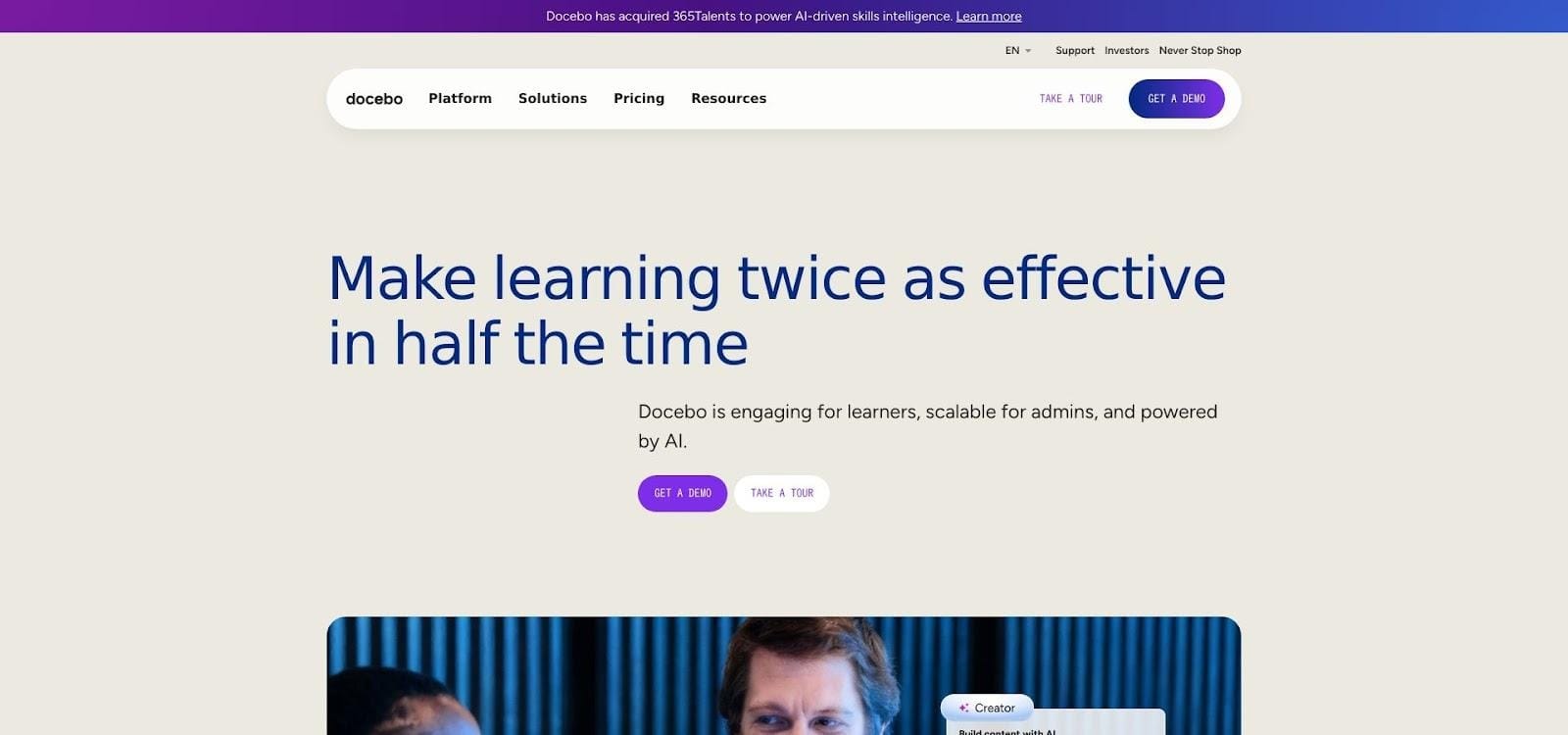
Docebo also plays nicely with others. Out-of-the-box connectors tie into Workday, Salesforce, Teams, and Zoom, while an open API lets your developers push or pull data wherever it matters.
Because everything is modular, cost scales with ambition. Start small with the core LMS and a content library, then unlock social learning, advanced analytics, or e-commerce when you are ready. That pay-for-what-you-use model keeps finance happy while L&D experiments.
The trade-off? With great flexibility comes configuration. You will want a clear governance plan so features do not sprawl. Get that right and Docebo grows with you from the first hundred learners to a global workforce without missing a beat.
Juno Journey: best for personalized career pathways
Most platforms push content. Juno pulls employees toward their next role.
When someone logs in, they declare where they want to go senior designer, team lead, or domain expert. Juno’s AI compares that ambition against a rich skills graph, spots gaps, and lays out a step-by-step journey of courses, articles, shadow projects, and mentor meetings.
Progress feels tangible. A visual roadmap shows “You are 67 percent ready for Product Manager.” Every completed task inches the bar forward, turning vague development plans into satisfying milestones.
Managers love the clarity. They see which team members line up for future vacancies and where budgeted training will have the biggest impact. HR finally gains a live view of internal mobility potential instead of static org charts.
Because Juno sits on top of your existing content libraries and HR data, rollout is lighter than you might expect. It simply curates what you already own, then routes it to the people who need it most.
For organizations battling talent shortages and high recruiting costs, that internal pipeline is pure gold.
Learn Amp: best blend of learning and engagement
In many companies learning, feedback, and performance reviews live in separate silos. Learn Amp stitches them together so development plans never gather dust between appraisal cycles.
Set a personal goal such as reducing churn or mastering advanced SQL, and the platform aligns recommended content, peer discussion groups, and pulse-survey reminders around that objective. Progress is not abstract; it connects to the KPIs you and your manager already track.
Social features feel native rather than bolted on. Learners trade tips in topic spaces, upvote the most useful answers, and earn points that surface internal subject-matter heroes. That recognition loop keeps knowledge flowing without formal assignments.
Need more proof? With a 4.8-star G2 rating, customers rave about two things: an interface that “just makes sense,” and a support team that guides configuration instead of handing you a manual.
For mid-size businesses seeking one home for culture, goals, and growth, Learn Amp offers a unified hub that cuts software spend and fuels engagement at the same time.
360Learning: best for peer-powered knowledge sharing
If your brightest insights live in employees’ heads, 360Learning is the fastest way to set them free.
Anyone can spin up a micro-course in under an hour record a screen, drop in questions, hit publish. Colleagues then comment slide by slide, upvote clarifications, and flag stale content, so training evolves as quickly as the business.
That collaboration creates a fresh type of personalization. The algorithm spotlights courses trending in your team, topics peers follow, and lessons your manager praised. Learning feels communal, not top-down.
Gamified leaderboards celebrate top contributors rather than just finishers, turning quiet experts into visible mentors and raising institutional IQ with every interaction.
360Learning slides smoothly into Microsoft Teams, Slack, and most HRIS tools, yet stays delightfully simple. Start with the self-serve plan for fewer than one hundred learners; scale to global rollouts when the grassroots momentum proves itself.
For organizations that prize speed, transparency, and a culture of shared expertise, 360Learning turns “tribal knowledge” into everyone’s competitive edge.
Axonify: best for frontline micro-learning
Frontline teams cannot spare an hour for training, but they can spare three minutes. Axonify builds on that reality, serving each employee a daily quiz that feels closer to a Wordle puzzle than traditional e-learning.
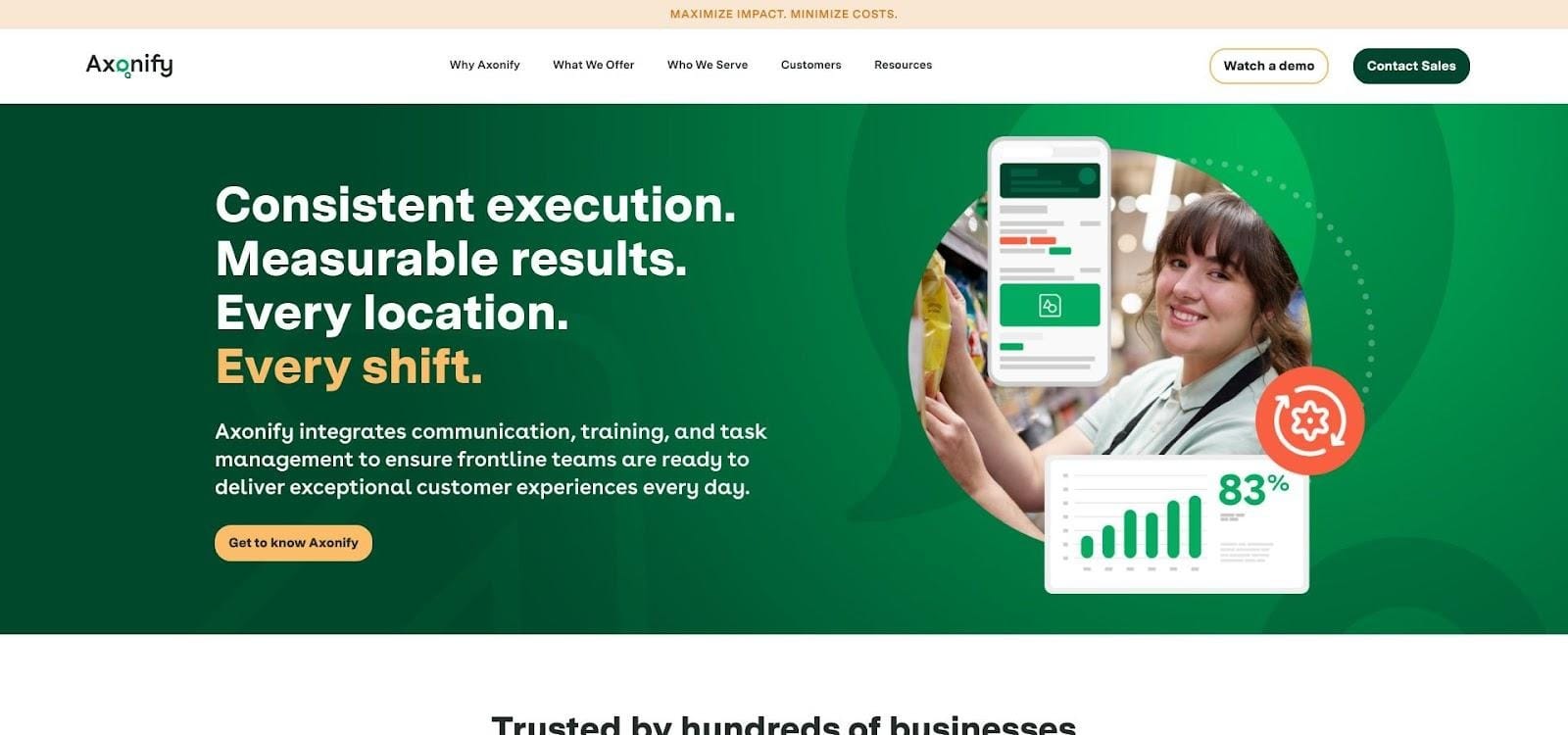
Behind the scenes, an adaptive algorithm studies every right and wrong answer, confidence rating, and topic tag. Tomorrow’s questions zero in on remaining gaps, while mastered concepts shift into a slower reinforcement cycle. It is personalized spaced repetition at enterprise scale.
The experience delivers quick hits of gamified motivation. Employees rack up streaks, climb store leaderboards, and trade points for small rewards, all during a coffee break. Many retailers report voluntary participation above 80 percent.
Because knowledge gains tie directly to safety incidents, shrink, or sales metrics, managers see hard ROI fast. Dashboards flag stores with slipping scores so leaders can coach before issues reach the bottom line.
Axonify will not replace a full LMS, and that is fine. It excels at one job: making critical know-how stick for the people who serve customers, move packages, and keep operations humming.
Honorable mentions
Valamis shines when you need forensic learning data. Its built-in learning record store captures every click, then visualizes skill gaps with xAPI-powered dashboards. Nordic engineering rigor, global-ready UI.
LinkedIn Learning Hub wins on content volume. Twenty-one thousand expert-shot courses, plus skill trends pulled from the world’s largest professional network. It is a perfect supplement to an LMS, though assignments and compliance live elsewhere.
Absorb LMS with Engage proves a classic can evolve. The interface is elegant, AI suggestions feel relevant, and multi-tenant portals make customer or partner training painless. If you want a modern LMS that sprinkles in LXP ease, Absorb delivers.
Conclusion
Personalized learning is no longer a luxury it is the lever that turns training budgets into measurable skill gains. Whether you need an agile tool for a 200-person startup or an enterprise suite that maps talent across the globe, the platforms above prove that deep personalization drives engagement and results. Match their strengths to your goals, pilot quickly, and watch your workforce grow in lockstep with your business ambitions.