
Building a Steering Committee Deck
A programme team walks into a monthly leadership review with 47 workstream updates, 18 open actions and one angry sponsor asking, “So what do you need from us?” That is where a steering committee deck either earns its seat at the table - or becomes expensive wallpaper.
- A steering committee deck is a senior decision document: status, risks, trade-offs, asks and next steps.
- The golden rule: do not report everything. Escalate only what changes decisions, resources, risk or accountability.
- A strong deck has a spine: executive summary → progress vs plan → key issues → options → decisions needed → next actions.
- Use RAG status carefully: red is not failure; red means “leadership intervention needed.”
- Every issue slide should answer: what happened, why it matters, what options exist, and what decision is requested.
- Track hard governance metrics: milestone adherence, budget variance, benefits realization, risk exposure, decision aging and action closure.
- The common mistake is building a project-manager deck for executives instead of an executive deck for decisions.
Big Picture: A Steering Committee Deck Converts Work Into Decisions
Think of the deck as a translation layer. Workstreams generate detail; the project management office consolidates it; the steering committee sees only the few points that require senior judgment, sponsorship or trade-off decisions.
If you remember one line, remember this: a SteerCo deck is not “what we did”; it is “what leaders must decide now.”
Core Explanation: The Deck Is a Governance Tool, Not a Progress Report
A steering committee is a senior governance forum that provides direction, removes blockers, approves trade-offs and holds a programme accountable.
A steering committee deck is the structured document used in that forum to show progress, risks, decisions needed and next ownership.
That distinction matters. A weekly project update can be operational: tasks, owners, dates, dependencies. A steering committee deck must be executive: implications, risks, decision choices, escalation points and accountability.
Toyota’s production system makes abnormal conditions visible quickly so the right people can intervene at the right level (Toyota Production System). A good SteerCo deck borrows the same logic: do not hide problems in appendix detail; surface the few exceptions that need leadership action. The so what: visibility is useful only when paired with ownership and escalation.
The Executive Logic: One Slide Should Lead to the Next
A weak deck feels like a stack of updates. A strong deck feels like a boardroom conversation already thought through.
This is why consulting decks often follow the answer-first principle. The slide title should carry the message, not merely label the topic. “Phase 2 is delayed by vendor readiness” is stronger than “Phase 2 Update.”
If the problem itself is still unclear, do not rush into deck-making. Revisit Defining the Problem Before Solving It before building the storyline.
The 10-Slide Steering Committee Deck: What Goes Where
For most consulting, transformation, PMO or strategy implementation projects, this 10-slide structure is enough. You can compress it to 5 slides for a short review or expand with appendices for a complex programme.
What to Put in the Executive Summary
The executive summary is the most important slide because many sponsors will make up their mind there. It must be brutally clear.
A useful test: if the meeting ended after only this slide, would leaders still know what to decide? If not, rewrite it.
How to Decide What Deserves Escalation
Not every delay belongs in a steering committee deck. Executives should see items that materially affect time, cost, risk, value, customer experience, regulatory exposure or cross-functional alignment.
The top-right box is where your main deck should live: strong evidence and high action need. The bottom-right can go into a short update or appendix. The bottom-left should stay with the project team until it becomes material.
Metrics to Track in a Steering Committee Deck
Do not overdo dashboards. Choose 4-6 governance metrics that show whether the programme is on track, where intervention is needed and whether decisions are aging.
These are not universal laws. The real threshold should come from the programme charter, client governance norms and risk appetite. But in an interview, using these metrics shows you understand governance rather than just formatting.
Worked Example: Turning Raw Status Into a SteerCo Message
Suppose a cost transformation programme has 20 milestones due this month. The team completed 17. Planned spend was ₹100 lakh; actual spend was ₹106 lakh. Four critical actions were due; three were closed. One pricing-policy decision is overdue by 12 days.
The SteerCo message should not be “project is amber.” It should be: “Programme is amber because milestone slippage and a delayed pricing-policy decision may push savings by one month; we need approval today on Option B to protect the benefits timeline.”
Definitions You Should Be Able to Say Cleanly
- Steering committee: A senior governance group that directs a programme, resolves escalations and approves major trade-offs.
- SteerCo deck: A decision-focused presentation summarising status, risks, options, asks and next actions for senior sponsors.
- RAG status: A red-amber-green signal showing whether work is on track, at risk or needs intervention.
- Issue: A problem that has already occurred and needs action.
- Risk: A possible future event that may affect scope, cost, timeline, quality or benefits.
- Decision log: A record of decisions required, decisions taken, owners, dates and consequences of delay.
Case Study: Zomato and Blinkit - What a SteerCo Deck Would Need to Control
Zomato’s move into quick commerce through Blinkit shows why a SteerCo deck must separate strategic conviction from operating proof.
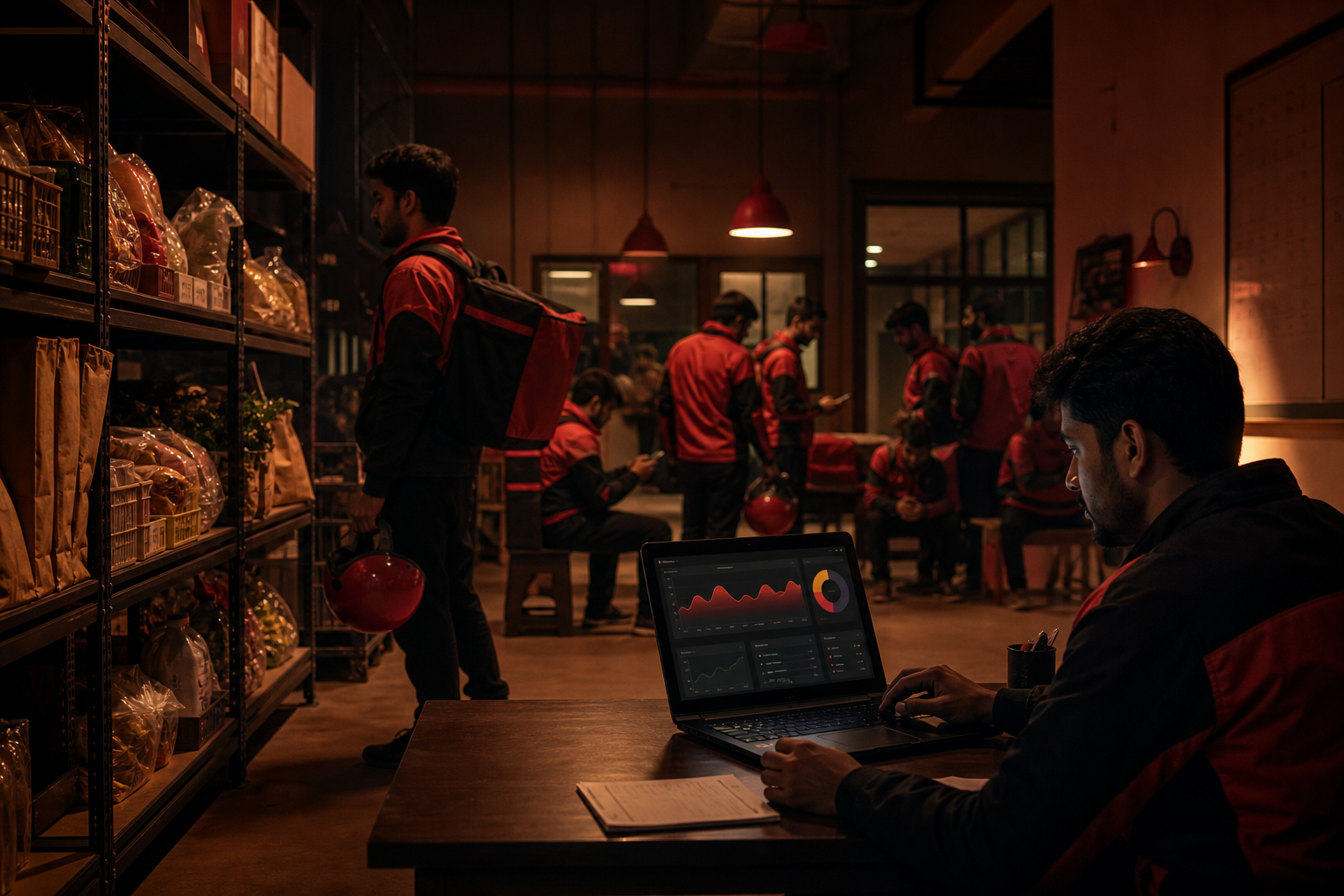
Zomato is best known for food delivery, while Blinkit operates in quick commerce - a model built around dense local demand, assortment availability, dark-store operations and rapid last-mile execution. Zomato discusses Blinkit as part of its business reporting on its investor relations platform.
Now imagine the steering committee responsible for integrating and scaling this business. A poor deck would say: “Blinkit expansion is progressing; more stores opened; customer traction is improving.” That sounds positive, but it does not help leaders govern.
A strong SteerCo deck would ask sharper questions:
The primary driver of the story is not simply “quick commerce growth.” It is the strategic fit between urban convenience demand and Zomato’s consumer, technology and logistics capabilities. Supporting drivers include operational discipline in store networks, assortment planning, delivery execution, capital allocation and leadership willingness to make trade-offs between growth and profitability.
The lesson: a steering committee deck should not celebrate activity. It should expose the operating truth clearly enough for senior leaders to make the next high-quality decision.
How AI Changes Building a Steering Committee Deck
AI does not remove the need for judgment. It reduces the time spent converting scattered inputs into a coherent first draft - and increases the responsibility to verify every statement.
A practical student workflow: load the project charter, last SteerCo minutes, issue log and client annual report into NotebookLM. Ask: “Create a 10-slide SteerCo storyline, identify the top 5 decision asks, and generate 10 tough sponsor questions.” Then use Practising Cases With AI as a Mock Interviewer to rehearse defending your recommendation under pressure.
Never paste confidential client data into a public AI tool. Use approved enterprise tools, anonymise sensitive information and verify every number before it reaches a senior deck.
Interview Relevance
“You are staffed on a transformation project. The partner asks you to build the steering committee deck for next week. What would you include, and how would you structure it?”
Use the phrase “decision-oriented, exception-based governance.” It signals that you understand senior reviews are for trade-offs and escalations, not activity narration.
Common Mistake
The biggest mistake is making the deck a beautiful status report. It costs candidates because it shows they understand slides, not governance. The one-line fix: for every slide, ask “what decision, risk or action does this enable?” - if the answer is unclear, cut or move it to appendix.