
Comparable Company Analysis (Comps) Explained
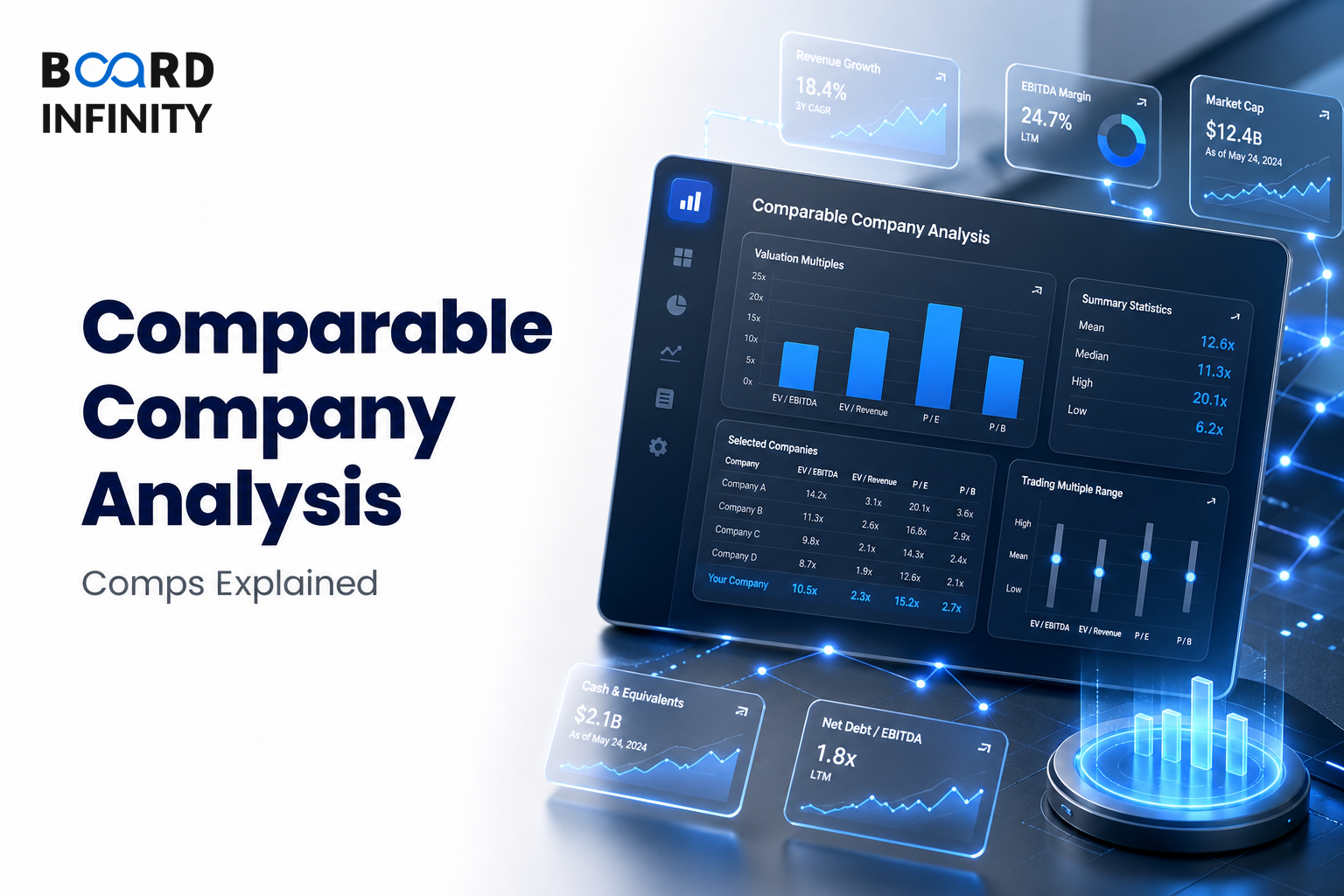
After DCF Valuation: Discounted Cash Flow Explained, the next valuation question is what comparable public companies imply today. Trading comps (or CCA) value a company by applying the valuation multiples of similar public companies. In interviews, it matters because the art is in selecting the right peer group and using the right multiple for each sector.
- Trading comps (or CCA) value a company by applying the valuation multiples of similar public companies.
- The art is in selecting the right peer group and using the right multiple for each sector.
- Comparable companies are screened by sector, size, geography, and growth profile.
- LTM means Last Twelve Months financial data, which is collected before calculating multiples.
- EV is calculated as Market Cap + Net Debt (+ minority interest + preferred equity).
- The median/mean multiple is applied to the subject company's financials and then triangulated with DCF and precedent transactions.
Comparable Company Analysis in One View
Trading comps are a market-based valuation method because they use the multiples of similar public companies. The big picture is simple: choose the comparable companies, collect LTM financial data, calculate Enterprise Value, compute multiples, apply the median/mean to the subject company's financials, and triangulate with DCF and precedent transactions.
The real skill is not blindly applying an average multiple. It is selecting the right peer group and using the right multiple for each sector.
EV = Market Cap + Net Debt (+ minority interest + preferred equity).
Step-by-Step Comps Process
The comps process moves from peer selection to multiple application. Each step matters because the output is only as good as the comp set and the sector-appropriate multiple used.
Why Sector Choice Drives the Multiple
No single multiple is universally correct. The right metric depends on the industry, growth stage, and profitability profile.
IT Services companies such as TCS and Infosys use P/E, EV/EBITDA, and EV/Revenue because of low capex, high earnings quality, and recurring revenues. FMCG / Consumer companies such as HUL and Nestle use P/E, EV/EBITDA, and P/Sales because predictable cash flows and premium brands justify high P/E.
Banking uses P/B, P/ABV, and RoE-based multiples because book value is most meaningful and NPA-adjusted BV is critical. Industrials / Infra use EV/EBITDA, EV/EBIT, and P/E because they are capex-intensive and EBITDA captures operating cash generation.
Structuring a Comparable Company Analysis (Comps) Explained Interview Answer
"Walk me through Comparable Company Analysis for an Indian listed company. How would you choose the peer set and the right multiple?"
Do not blindly apply an average multiple. The art is in selecting the right peer group and using the right multiple for each sector.
Conclusion
Comparable Company Analysis values a company by applying the valuation multiples of similar public companies, but the quality of the answer depends on peer selection and sector-appropriate multiples. In interviews, anchor your answer on the peer group, the relevant multiple, the EV calculation, and triangulation with DCF and precedent transactions.
The most frequent error is treating all multiples as interchangeable and applying an average multiple without matching the company to sector, size, geography, and growth profile. It costs points because book value is most meaningful in Banking, EBITDA captures operating cash generation in capex-intensive Industrials / Infra, and pre-profit Startups / Fintech value growth trajectory, not earnings.