
Contingent, Outsourced & Blended Workforce Models: Interview-Ready HR Framework
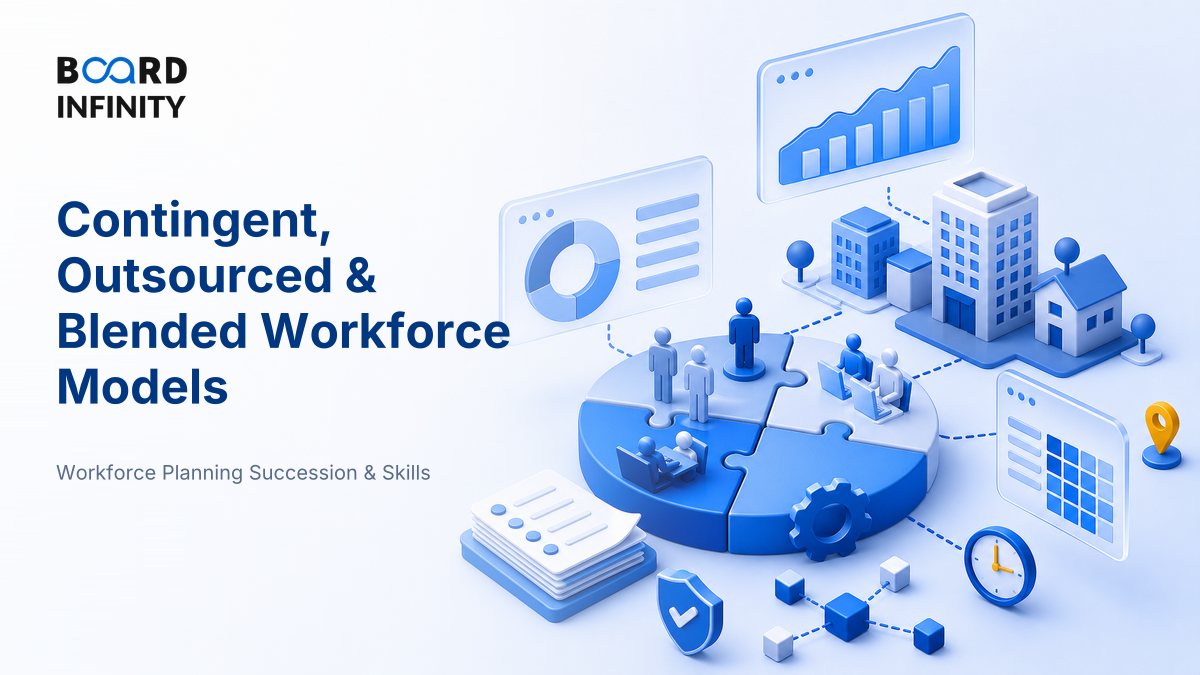
A midnight sale goes live, orders spike, delivery promises tighten, and the permanent workforce alone cannot stretch fast enough. The company has two bad choices if it has planned poorly: miss demand and anger customers, or add people in a hurry and create cost, quality and compliance risk.
- Contingent workforce means non-permanent talent used for time-bound, project-based or demand-variable work.
- Outsourcing means giving an activity to an external provider under a contract, service level agreement and governance model.
- Blended workforce means combining core employees, contingent workers, freelancers, vendors, gig workers and automation in one operating model.
- The strategic question is not “Which is cheapest?” It is “Which work needs control, flexibility, speed, capability and compliance?”
- Use permanent employees for strategic, confidential, culturally critical and capability-building work.
- Use contingent or outsourced capacity for variable demand, specialist skills, non-core processes or geographically distributed execution.
- The biggest risk is misclassifying people or managing vendors like employees without the legal, HR and governance design to support it.
Big Picture: Workforce Is No Longer One Layer
Modern organisations do not simply “hire employees.” They design a workforce architecture: a layered mix of permanent employees, flexible talent, external partners and technology. The best model protects the strategic core while letting the outer layers flex with demand.
Core Explanation: Choose the Work Model by Control, Variability and Risk
The right workforce model depends on the nature of the work, not on the label of the worker. A payroll employee can be a poor fit for highly seasonal work. A vendor can be a dangerous fit for work involving strategy, customer trust or sensitive data.
Think of every role or activity through five questions:
The Four Workforce Models You Must Distinguish
Interview answers often become vague because candidates mix up “contractor,” “vendor,” “outsourcing” and “gig.” Keep the categories clean.
Definitions You Can Say in One Breath
- Contingent workforce: Non-permanent workers engaged for specific time-bound, project-based or demand-variable work.
- Outsourcing: Contracting an external provider to deliver a business activity against defined scope, cost and service levels.
- Blended workforce: A planned mix of employees, contingent workers, vendors, gig talent and automation delivering work together.
- SLA: A service level agreement defining measurable performance expectations between a company and service provider.
How to Decide: Build, Borrow, Buy, Partner or Automate
A strong workforce answer should sound like a business decision, not an HR label. Use this flow when asked how you would design staffing for a new function, expansion, cost programme or seasonal demand spike.
Metrics: How to Evaluate a Blended Workforce Model
Do not evaluate these models only by headcount cost. A cheaper model that increases errors, attrition, SLA misses or legal exposure is not actually cheaper.
Indian Example: Why Quick-Commerce and Logistics Use Blended Models
Indian e-commerce, quick-commerce and logistics firms face intense demand spikes during festivals, sales events, monsoons and city-level campaigns. A blended model lets them keep route planning, tech, network design and customer promise control internally, while using partners, temporary staffing and gig capacity for flexible execution. The so what: workforce flexibility works only when the core operating system is strong enough to coordinate it.
In India, the design also has a legal dimension. Companies must think about the Contract Labour (Regulation and Abolition) Act where applicable, state Shops and Establishments rules, PF/ESI applicability, safety obligations, vendor documentation and emerging discussions around gig and platform workers under the Code on Social Security, 2020. The practical lesson: flexibility without governance becomes risk.
Case Study: Delhivery and the Peak-Season Blended Logistics Workforce
Delhivery shows how a logistics company can blend core technology and network control with flexible operational capacity to handle volatile shipment demand.
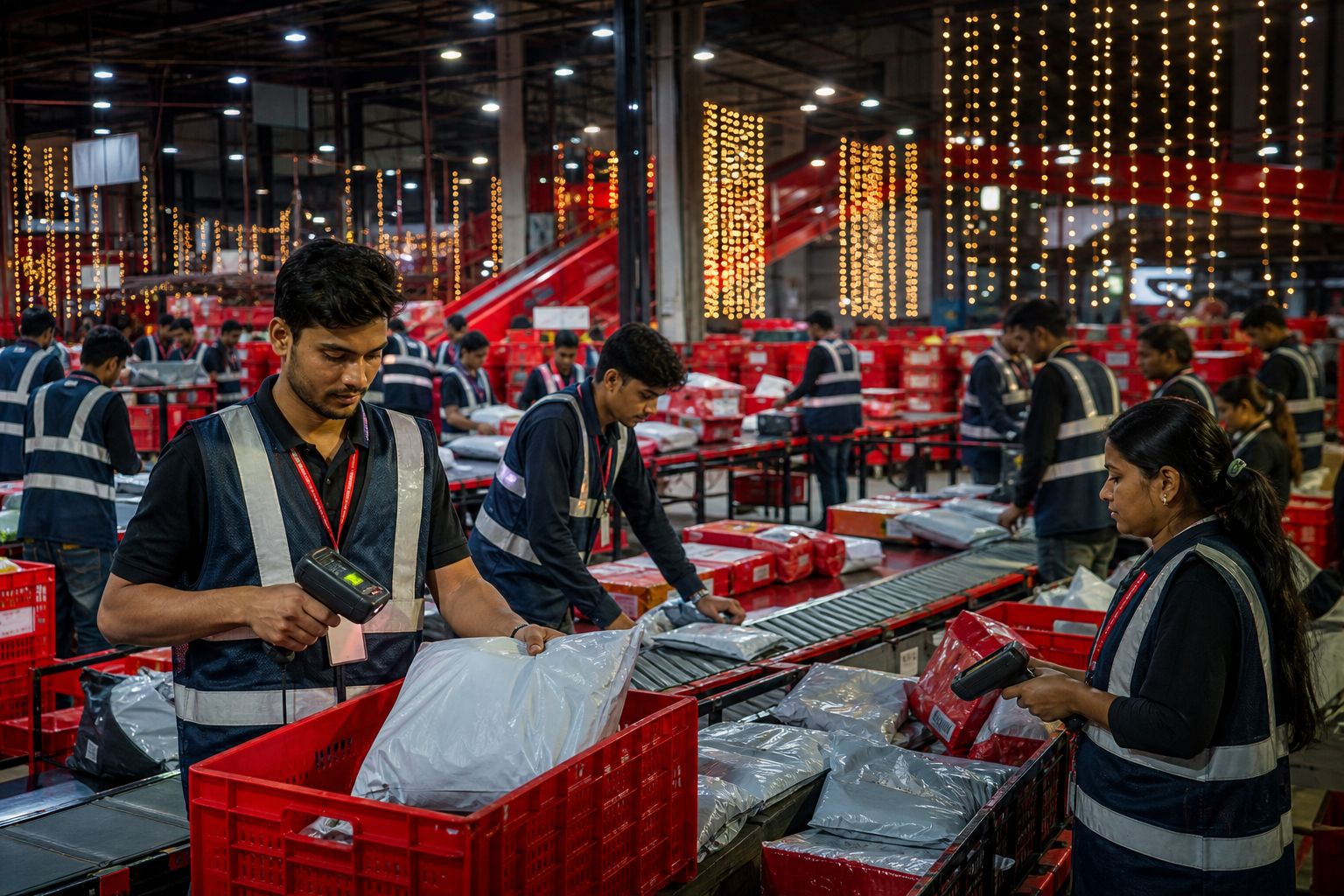
Situation: Logistics demand is uneven. E-commerce sale events, festive buying, city-level campaigns and weather disruptions can create sudden volume pressure. A logistics company cannot permanently staff every hub and delivery route for the highest possible peak without carrying heavy fixed cost during normal periods.
The move: Delhivery has built its model around a technology-led logistics network, keeping the critical control points - network design, routing intelligence, customer contracts, service promise, data systems and operating standards - close to the organisation. Around that core, logistics players typically use a mix of full-time operations teams, partner capacity, contract manpower, last-mile delivery arrangements and outsourced support services to absorb local and seasonal variation.
Outcome and lesson: The primary driver is variable capacity matched to volatile shipment flows. Supporting drivers are scan-level operational visibility, hub-and-spoke design, standard operating procedures, partner governance and service-level monitoring. The lesson is not “outsourcing saves cost.” The lesson is that a strong operating backbone makes workforce flexibility safe.
How AI Changes Contingent, Outsourced & Blended Workforce Models
AI makes blended workforce design sharper, but also more sensitive. It changes what work should be automated, what should be kept in-house and what should be bought from outside experts.
Use NotebookLM for interview prep: upload this lesson, a company annual report and a recent article on its hiring or operating model. Ask: “Which roles should this company keep core, outsource, use contingently or automate, and what risks should I mention in an HR interview?”
Interview Relevance
“Suppose a retail or logistics company expects seasonal demand to double for three months. How would you decide between hiring permanent employees, using contract workers, outsourcing and gig capacity?”
Use the phrase “strategic core plus flexible edge.” It shows you understand both control and flexibility in one clean line.
Common Mistake
The costly mistake is treating contingent and outsourced models as pure cost-saving levers. That answer misses quality, control, culture, legal classification and data risk. One-line fix: first decide what must remain core, then flex only the work that can be governed through outcomes, SLAs and compliance checks.
What to Revise Next
Next, move from workforce mix to workforce planning. Revise Planning a Workforce When AI Changes Role Content to understand how AI reshapes demand for skills, then study Case Study: Building a Three-Year Workforce Plan to connect role design, capacity planning and business strategy.