
Customer Experience & Digital Channel Transformation
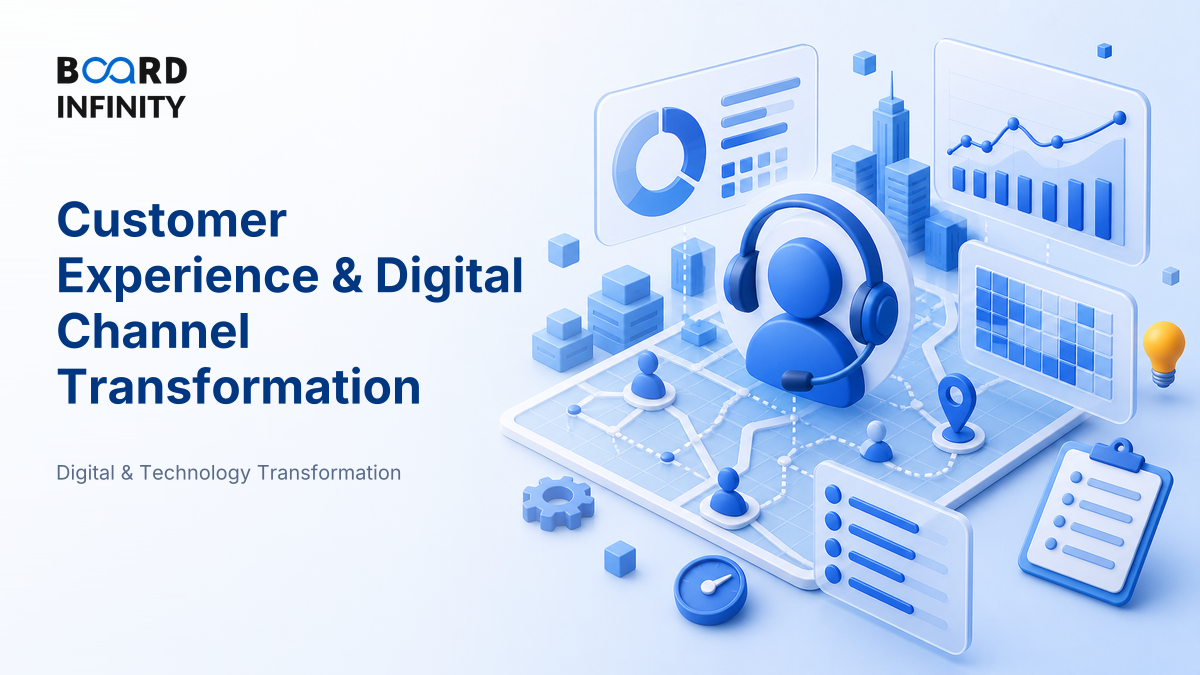
A customer opens a banking app to raise a failed-payment complaint, gets pushed to a chatbot, repeats the issue to a call-centre agent, then visits a branch with the same reference number. That is not a technology failure alone - it is a customer experience design failure across channels.
- Customer experience is the customer's perception of every interaction with a company, across the full journey.
- Digital channel transformation means redesigning digital touchpoints - app, web, WhatsApp, CRM, chatbot, marketplace - around the customer journey, not just launching new tools.
- The best answer uses a journey lens: discover - buy - use - get help - stay loyal.
- Good transformation improves both customer outcomes and business outcomes: lower effort, faster service, higher conversion, lower cost-to-serve and better retention.
- Core metrics to quote: NPS, CSAT, CES, digital adoption, first-contact resolution and channel containment.
- The biggest trap is treating digital transformation as an IT project; it is really a cross-functional operating model change.
Big Picture - CX Transformation Is Journey Redesign, Not App Launch
The simplest mental model: digital channels are only useful when they remove friction from a customer journey and connect cleanly to operations, data and service recovery.
Core Explanation - How to Think About Customer Experience and Digital Channels
Customer experience is broader than customer service. Service is what happens when the customer needs help; experience is the full memory the customer forms from discovering, buying, using, complaining, renewing and recommending.
Digital channel transformation is the redesign of customer-facing channels using technology, data and process change so customers can complete journeys faster, easier and with fewer handoffs.
For an interview answer, separate the topic into four connected layers:
The Five-Step Framework to Apply in Any Case
Use this when asked how to improve a bank app, D2C brand website, airline service journey, insurance onboarding flow or quick-commerce support experience.
A good candidate does not say, “Build an app.” A good candidate says, “Which customer task is broken, which channel should own it, what process or data layer blocks it, and how will we measure improvement?” If you struggle to structure such cases, revise defining the problem before solving it before practising transformation answers.
Digital Channel Choices - What Each Channel Is Best For
Every channel has a job. The mistake is forcing every customer into the cheapest digital channel even when the task is emotional, complex or high-risk.
Definitions You Can Say in One Breath
- Customer experience: Forrester defines CX as “how customers perceive their interactions with your company” (Forrester customer experience).
- Digital channel: A customer-facing digital touchpoint used to discover, transact, receive service or stay engaged with a business.
- Omnichannel experience: A connected experience where customers can move across channels without losing context, identity or service continuity.
- Moment of truth: A high-impact interaction that strongly shapes customer trust, satisfaction or future behaviour.
Metrics - How to Track Whether CX Transformation Is Working
Interviewers like this topic because it tests whether you can connect “better experience” to measurable outcomes. Use a balanced set: perception, behaviour, efficiency and economics.
Notice the guardrail: a company can increase channel containment and still damage CX if customers are trapped in a bad bot. Always pair cost metrics with quality metrics.
Mini Example - UPI Shows Why Digital Channels Need Ecosystem Thinking
In India, payment experience changed because customers did not need every bank or merchant to build a closed-loop payment journey. UPI is an interoperable payments system operated by NPCI that enables account-to-account transfers across participating banks and apps (NPCI UPI product overview).
The CX lesson is powerful: customers reward speed and interoperability, not just ownership of the front-end app. The primary driver is the common payments rail; supporting drivers include bank participation, QR acceptance, simple user flows and integration into everyday merchant journeys.
Case Study - Tata Neu and the Challenge of a Unified Digital Customer Experience
Tata Neu matters because it shows how digital channel transformation becomes difficult when one group tries to connect many brands, journeys and loyalty experiences into one customer front door.
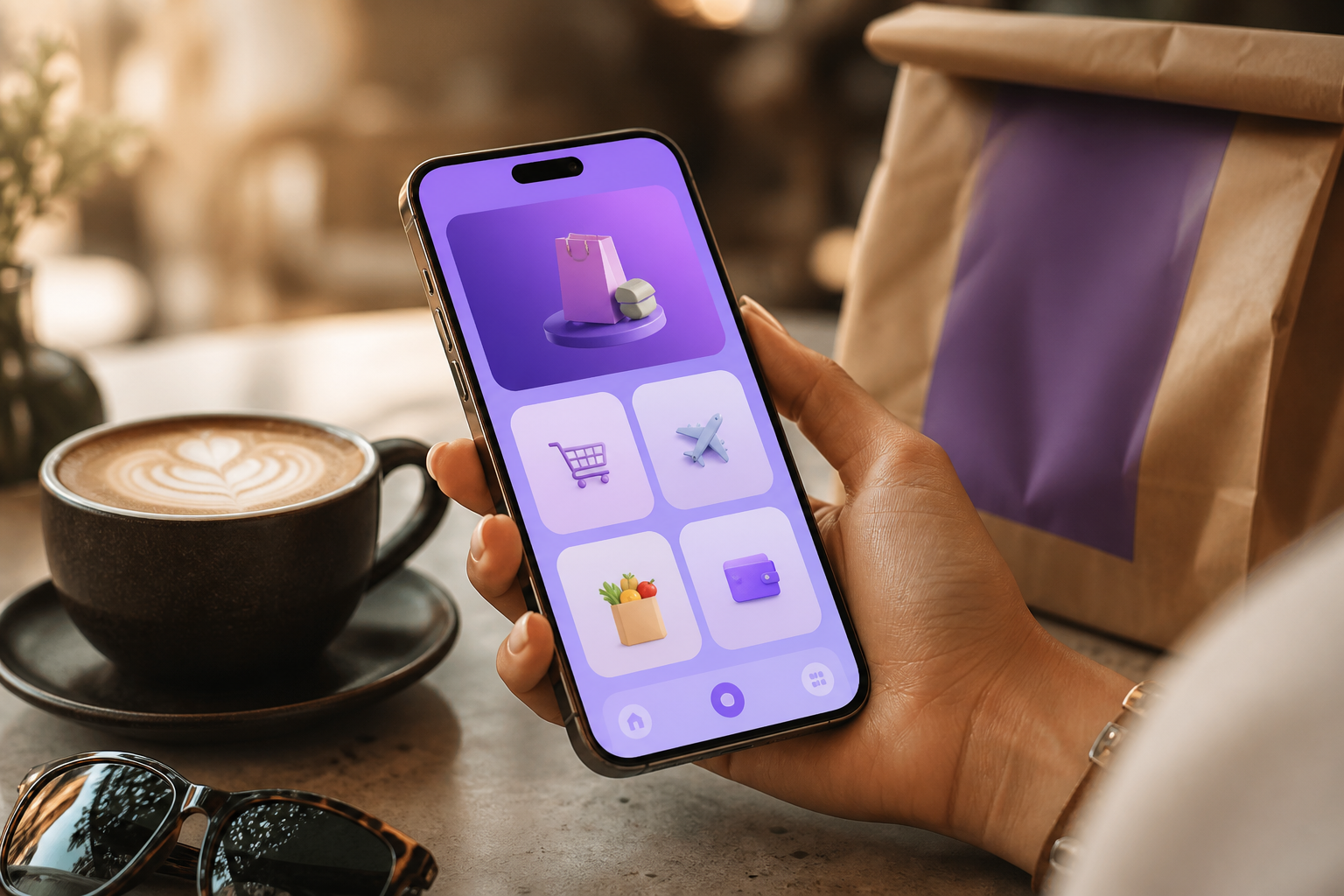
Situation: Tata Group has consumer-facing businesses across categories such as grocery, electronics, travel, fashion, hotels and financial services. For the customer, these journeys traditionally sat in separate brand apps, websites, loyalty programs and service systems.
The move: Tata Neu was built as a group-level digital platform that brings multiple Tata consumer journeys into one app experience, with discovery, transactions, payments and the NeuPass loyalty layer visible to customers on the Tata Neu platform (Tata Neu).
The CX logic: The primary driver is a unified customer identity and loyalty layer across categories. Supporting drivers include the breadth of Tata brands, payments integration, app-based discovery, cross-brand rewards and the ability to use customer data to personalise offers and journeys.
The hard part: A super-app is not won by interface design alone. Grocery delivery, hotel booking, electronics fulfilment and airline travel have different service promises, refund rules, inventory systems and complaint types. If the back-end journeys are not integrated, the customer sees one app but feels many disconnected businesses.
So what: Tata Neu is a strong interview example because it proves that CX transformation is both strategic and operational. The customer sees one app; the business must coordinate many brands, processes, data systems and service promises.
How AI Changes Customer Experience & Digital Channel Transformation
AI is changing this topic in three practical ways - not by replacing CX thinking, but by making journeys more predictive, personalised and measurable.
The caveat is important: AI can make a bad journey faster at disappointing customers. Firms need consent-aware data practices, bias checks, human escalation and clear service accountability.
Use NotebookLM or ChatGPT to practise: upload a company annual report, app reviews and this lesson, then ask, “Map the top five customer journeys, identify friction, suggest digital channel fixes and create three interview questions.” For mock practice style, use practising cases with AI as a mock interviewer.
Interview Relevance
“A large Indian insurance company wants to improve customer experience through digital channels. How would you approach the transformation?”
Always include one sentence on change adoption: employees, agents and service teams must be trained and incentivised to use the new channel model, otherwise customers experience old processes through a new interface.
Common Mistake
The single biggest mistake is saying “launch an app/chatbot” as the solution. It costs candidates because it ignores journey friction, operating integration, customer segments and metrics. One-line fix: start with the customer journey, then decide the channel, process, data and metric changes needed to improve it.