
Digital Public Infrastructure and India's Technology Stack
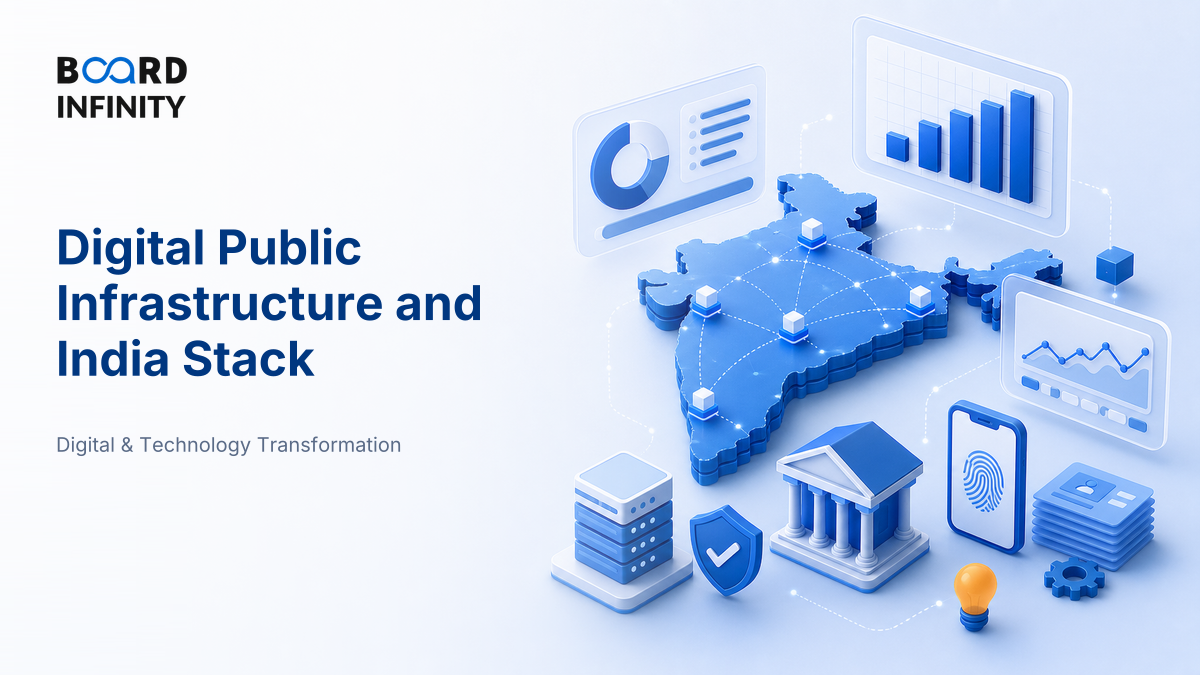
A kirana store owner in Jaipur does not need to know what an API is to accept a UPI payment, verify a customer digitally, or receive money instantly into a bank account. That is the power of Digital Public Infrastructure: invisible rails that let millions of tiny transactions feel simple, trusted and almost instant.
- Digital Public Infrastructure is the shared digital rail layer - identity, payments and data exchange - on which many public and private services can build.
- India Stack is India's best-known DPI architecture, built around Aadhaar, e-KYC, DigiLocker, UPI, eSign and consent-based data sharing.
- DPI is not one app. It is more like roads, electricity or telecom networks - a reusable foundation that lowers transaction cost for everyone.
- The core interview logic is: open rails create ecosystem competition. Government or public institutions set standards; private players innovate on user experience and business models.
- UPI became powerful because of interoperability, bank participation, NPCI governance, merchant QR adoption, smartphone penetration and strong app-level competition - not because of one factor.
- The main risks are exclusion, privacy, fraud, cyber resilience, over-dependence on central rails and weak grievance redressal.
- In cases, evaluate DPI using adoption, reliability, interoperability, cost-to-serve, fraud rate and inclusion - not just total transaction volume.
Big Picture: DPI Is the Rail, Not the Train
Think of Digital Public Infrastructure as the common rail layer under the economy. The rail itself is not the service; it enables banks, fintechs, government departments, hospitals, retailers and startups to build services faster, cheaper and at population scale.
Core Explanation: How India Stack Actually Works
Digital Public Infrastructure = foundational digital rails - identity, payments, data exchange and registries - that many public and private services can build on.
India Stack = India's layered set of DPI rails, especially Aadhaar, UPI, digital documents, e-signatures and consent-based data sharing.
The key management idea is simple: DPI changes the market structure. Instead of each firm creating a closed wallet, closed identity system or closed document flow, the economy gets common rails. Firms then compete on acquisition, trust, product design, pricing, analytics and service quality.
The most interview-safe way to explain India Stack is through four layers.
For official context, the India Stack website describes the broader set of open APIs, UIDAI operates Aadhaar, NPCI's UPI product overview explains the payment rail, DigiLocker hosts the digital document layer, and the Account Aggregator ecosystem explains consent-based financial data sharing.
Why DPI Creates Strategic Advantage
DPI creates advantage because it separates the rail from the product. A bank, fintech or retailer no longer needs to persuade every merchant or user to join a proprietary network from zero. It can plug into common rails and differentiate elsewhere.
This is why DPI is strategically important for market entry and ecosystem design. It can lower barriers to entry for startups while creating new competitive pressure for incumbents. If you want to connect this to strategy cases, revise competitive landscape and barriers to entry because DPI often changes both.
The DPI Flywheel: Why Adoption Can Compound
DPI succeeds when usage reinforces trust, and trust attracts more builders. But the flywheel works only when the rails are reliable, interoperable and safe enough for mass adoption.
Notice the supporting drivers. DPI does not win merely because it is digital. It wins when five conditions come together:
How to Evaluate a DPI System
Do not evaluate DPI only by headline scale. In a management answer, use a balanced scorecard: reach, reliability, inclusion, economics and risk.
There is no universal benchmark for these metrics because identity, payments, health and commerce systems have different risk profiles. In interviews, the safe phrase is: "I would look for improving scale with stable reliability, falling cost-to-serve and no widening exclusion gap."
Definitions You Can Say in One Breath
- Digital Public Infrastructure: Shared digital systems that enable identity, payments, data exchange and service delivery at population scale.
- India Stack: India's layered DPI architecture for digital identity, paperless records, real-time payments and consent-based data sharing.
- UPI: A real-time interoperable payment rail that links bank accounts through participating mobile applications.
- Account Aggregator: A consent-based framework that lets users securely share financial data between regulated entities.
- Interoperability: The ability of different providers, apps or institutions to work together through common standards.
- Open API: A documented interface that allows approved systems to exchange data or trigger services programmatically.
Case Study: UPI as India's Most Visible DPI Flywheel
UPI shows how a public digital rail can let banks, fintechs, merchants and consumers transact through a shared, interoperable payment network.
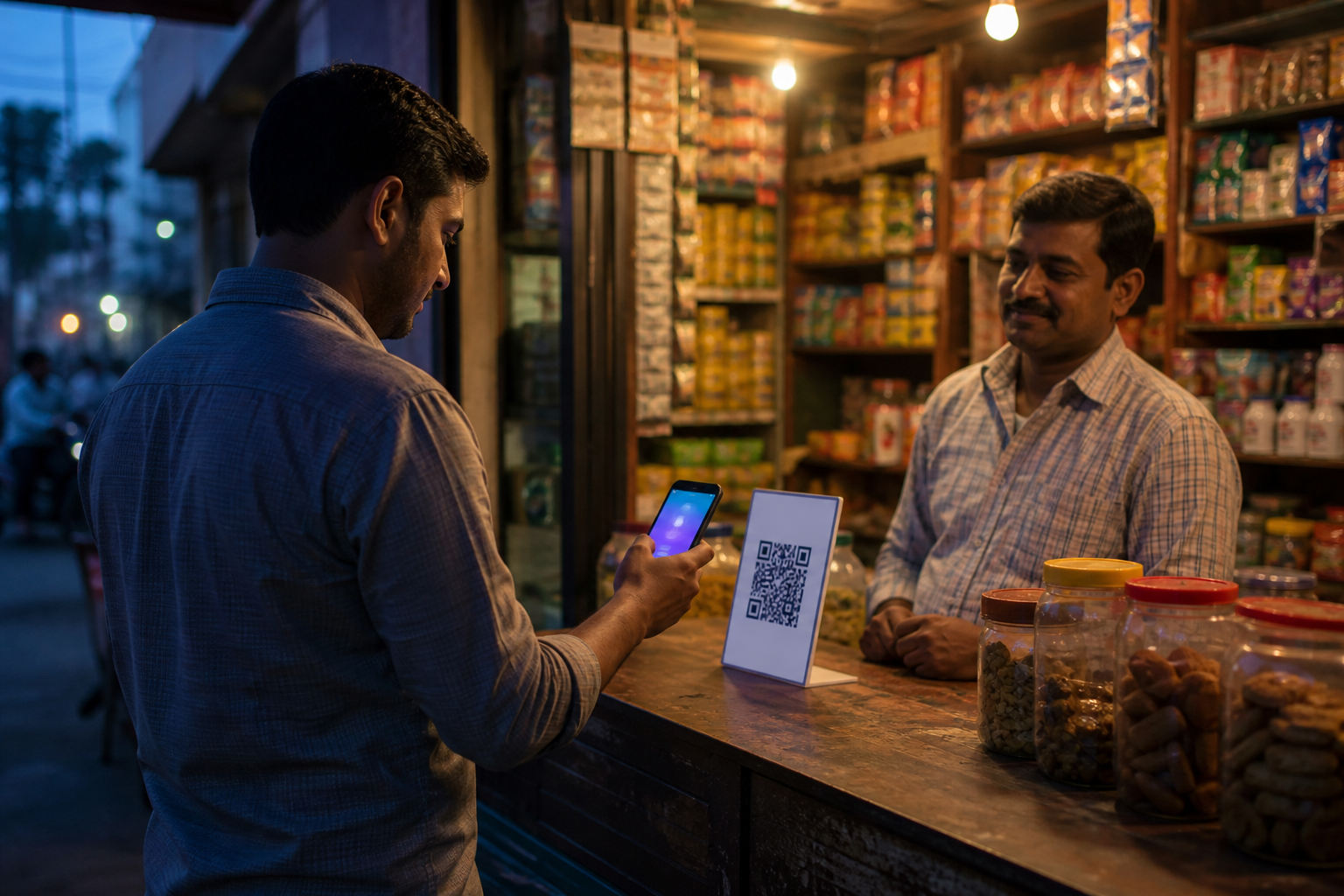
Situation. Before UPI became mainstream, India's digital payments experience was fragmented across cards, net banking, wallets and bank-specific flows. Merchants often had to manage multiple acceptance methods, while consumers faced friction in remembering details, adding beneficiaries or staying inside one wallet ecosystem.
The move. NPCI built UPI as an interoperable real-time payment rail, explained in NPCI's UPI product overview. Banks connected to the rail, payment apps competed for user experience, and merchants adopted simple QR-based acceptance. The primary driver was interoperability: users of different banks and apps could transact through a common system. Supporting drivers included NPCI governance, bank settlement infrastructure, smartphone adoption, familiar mobile UX, QR acceptance, and intense fintech competition.
Outcome and lesson. UPI changed the basis of competition in Indian payments. Apps could no longer win only by owning a closed wallet network; they had to win on ease of use, trust, rewards, merchant relationships, adjacent financial services and ecosystem partnerships. The strategic lesson: DPI commoditises the basic rail but creates new battlegrounds above the rail.
How AI Changes Digital Public Infrastructure and India Stack
AI does not replace DPI. It makes DPI more intelligent, more conversational and more risk-sensitive - while also raising the stakes on privacy, fraud and bias.
- Fraud and anomaly detection become real-time. AI models can flag unusual payment patterns, mule accounts, synthetic identities and suspicious device behaviour faster than rule-only systems. The risk is false positives: a poor user wrongly blocked from payments or benefits suffers real harm.
- Consent flows become smarter and more dangerous. In Account Aggregator-style data sharing, AI can help users understand what data they are sharing and why. But agentic AI could also nudge users into over-sharing unless consent screens are clear, minimal and auditable.
- Indian-language access improves inclusion. Voice and multilingual AI interfaces can help low-literacy users navigate payments, documents, benefits and credit. The management challenge is designing for trust: users must know whether they are speaking to a bank, a government service, a merchant or an AI assistant.
Use NotebookLM or ChatGPT like a consulting prep analyst: load official pages on India Stack, UPI, DigiLocker and Account Aggregator, then ask, "Create a 6-slide CEO briefing on how DPI changes customer acquisition, risk, cost-to-serve and competition for an Indian bank." For broader role impact, pair this with how AI is changing consulting roles and pricing.
Interview Relevance
"Explain Digital Public Infrastructure using India Stack. Why is it strategically important for Indian businesses, and what risks should a CEO worry about?"
If the interviewer turns this into a case, first clarify the business objective - growth, cost reduction, inclusion, risk control or compliance. The discipline is the same as defining the problem before solving it.
Common Mistake
The biggest mistake is saying, "India Stack is successful because of UPI." That is too narrow. UPI is one powerful layer, but the larger idea is reusable digital rails - identity, paperless documents, payments and consented data - that let an ecosystem build faster. One-line fix: always separate the rail, the ecosystem and the business model built on top.