
Decarbonisation Levers and Building a Roadmap
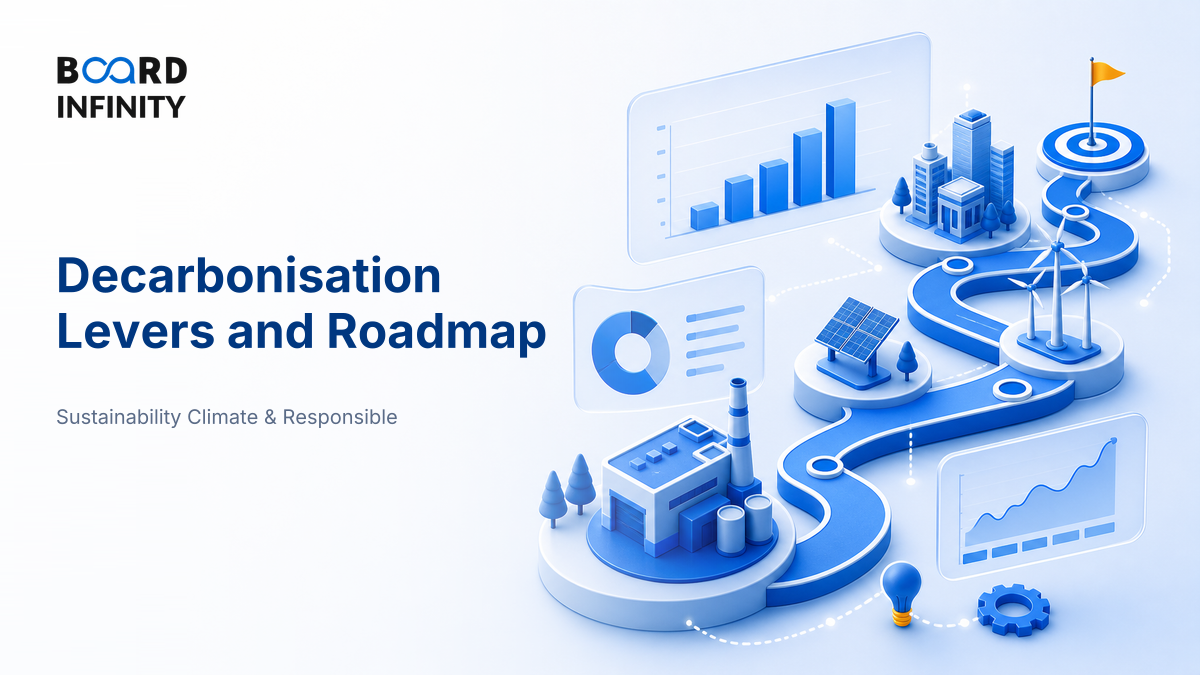
A cement plant can install solar panels and still remain carbon-heavy, because much of cement emissions come from the chemistry of making clinker, not only from electricity. That is the surprising heart of decarbonisation: the best lever is rarely the most visible one.
- Decarbonisation means reducing greenhouse gas emissions across operations, energy, products and the value chain.
- The roadmap starts with a baseline: Scope 1, Scope 2 and material Scope 3 emissions under the GHG Protocol Corporate Standard.
- The lever hierarchy is: avoid demand, improve efficiency, switch energy, redesign process/product, engage suppliers/customers, then neutralise residual emissions.
- Strong roadmaps sequence levers by abatement potential, cost, feasibility, timing and strategic risk - not by PR value.
- Track both absolute emissions and business-linked intensity, because a growing company can cut intensity while total emissions still rise.
- Offsets are not the roadmap; they are only for hard-to-abate residual emissions after real reduction levers are exhausted.
Big Picture: Decarbonisation Is a Business Transformation Roadmap
Think of decarbonisation as a five-stage strategy process. First, know where emissions sit. Then choose levers that actually reduce them. Finally, fund, govern and disclose the transition so it survives beyond one sustainability report.
Core Explanation: The Six Levers That Actually Cut Emissions
The mistake is to treat decarbonisation as an environmental side project. In reality, each lever touches core management choices: plant design, procurement, product mix, logistics, pricing, supplier selection, capital allocation and customer value proposition.
The cleanest way to revise it is as a hierarchy: cut what you do not need, reduce what remains, substitute cleaner inputs, redesign the high-emission core, influence the value chain, and neutralise only what cannot yet be eliminated.
1. Efficiency Levers
These reduce energy, fuel or material consumed per unit of output. Examples include waste heat recovery, efficient motors, route optimisation, building automation, lower scrap and better maintenance. They often have the best business case because they cut both emissions and operating cost.
2. Clean Energy Levers
These replace high-emission energy with lower-emission sources: renewable electricity, open access power, green tariffs, rooftop solar, electrified heat, biomass where sustainable, or green hydrogen where feasible. The key is to check whether the solution reduces actual emissions or only shifts accounting boundaries.
3. Process and Technology Levers
These change the production process itself. In cement, this can mean lower clinker factor, alternative binders, carbon capture pilots or alternative fuels. In steel, it can mean scrap-based electric arc furnaces or hydrogen-based direct reduction where economics and infrastructure allow.
4. Product and Business Model Levers
These reduce emissions through design: lighter packaging, repairable products, service-based models, recycled inputs, longer product life and lower-carbon variants. This is where sustainability becomes a growth question, not merely a compliance question.
5. Supply Chain and Customer-Use Levers
For many companies, a large share of emissions sits outside the factory gate. Supplier energy mix, agricultural practices, logistics, product use and end-of-life treatment can dominate. That is why procurement and sales teams matter as much as the sustainability team.
6. Carbon Removal or Offsets for Residual Emissions
Offsets should come late in the roadmap. They may help address hard-to-abate residual emissions, but they cannot substitute for operational reduction. Interviewers quickly penalise candidates who jump to tree planting before discussing Scope 1, Scope 2 and Scope 3 levers.
The Roadmap Builder: From Baseline to Board Approval
A roadmap is useful only if it answers five questions: where are emissions, what can reduce them, what will it cost, who owns delivery, and how will progress be verified?
If you already know how to diagnose a business problem, decarbonisation uses the same discipline: define the baseline before prescribing solutions. For a quick consulting-style refresher, revise defining the problem before solving it.
The Prioritisation Matrix: Pick Levers Like a Strategist
Not every green project deserves funding first. A roadmap should separate quick wins from major bets, symbolic actions and future options.
This is also where decarbonisation overlaps with margin thinking. Efficiency projects may reduce cost, but deep technology shifts can raise near-term capex. In a case answer, connect the roadmap to economics the way you would when recommending cost reduction without killing growth.
Definitions You Must Be Able to Say Clearly
- Scope 1: “Direct GHG emissions occur from sources that are owned or controlled by the company.” - GHG Protocol
- Scope 2: “Emissions from the generation of purchased electricity consumed by the company.” - GHG Protocol
- Scope 3: Indirect value-chain emissions from sources not owned or controlled by the reporting company. - GHG Protocol
- Net zero: Deep emissions cuts plus neutralisation of residual emissions, consistent with the Science Based Targets initiative Net-Zero Standard.
Metrics to Track: What a Strong Roadmap Measures
A decarbonisation roadmap without metrics is a wish list. Track absolute emissions, intensity, execution progress and financial quality together.
A Quick Worked Example: Choosing the First Three Levers
Suppose a manufacturer has a baseline of 100,000 tCO2e per year. Management identifies four possible levers. The question is not “which sounds green?” It is “which gives the best mix of carbon impact, cost and feasibility?”
The first roadmap would usually prioritise motor efficiency, logistics optimisation and renewable power because they reduce 38,000 tCO2e while improving or modestly affecting economics. The carbon capture pilot may still matter, but as a staged strategic bet, not the first budget item.
Case Study: Dalmia Bharat and the Cement Decarbonisation Puzzle
Dalmia Bharat is a useful Indian case because cement decarbonisation cannot be solved by renewable electricity alone; the product chemistry and process design matter.
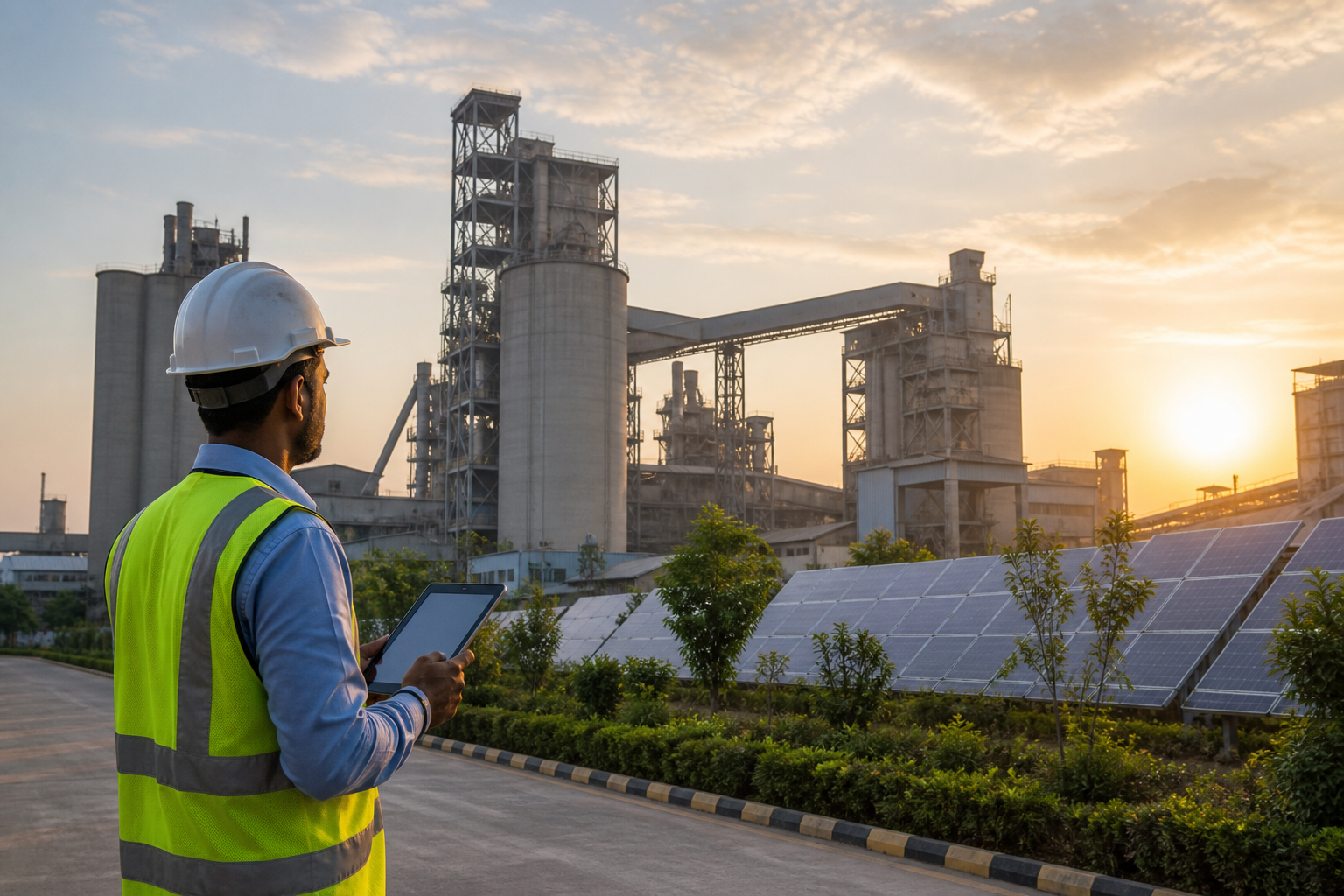
Situation. Cement is a hard-to-abate sector because emissions come from two sources: fuel used to heat kilns and process emissions released when limestone is converted into clinker. A company can buy renewable electricity and still face large remaining emissions from clinker chemistry.
The move. Dalmia Bharat has publicly positioned climate action as a core sustainability priority on its corporate sustainability platform (Dalmia Bharat sustainability). The strategic logic is a portfolio of levers: reduce clinker intensity through blended cement, improve thermal and electrical efficiency, use waste heat recovery and alternative fuels where feasible, increase renewable power, and explore deeper technology options for hard-to-abate emissions.
The lesson. The primary driver is not one shiny technology. It is attacking the largest emissions hotspot - clinker and kiln-related emissions - supported by energy efficiency, cleaner power, alternative fuels, product mix and governance. That is exactly how a decarbonisation roadmap should work: first fix the physics of the business, then layer financial and reporting discipline around it.
How AI Changes Decarbonisation Levers and Roadmaps
AI is making decarbonisation more operational and less spreadsheet-driven. The impact is most visible in three places.
- Better emissions baselines: AI can classify invoices, fuel logs, shipment data and procurement records into emissions categories faster, while flagging missing or anomalous data.
- Smarter abatement choices: Machine learning can simulate energy demand, predict equipment inefficiency, optimise transport routes and estimate which levers reduce emissions without hurting service levels.
- Supplier and disclosure intelligence: LLMs can read supplier sustainability reports, extract target language and compare claims against required disclosure formats, though human review is essential to avoid greenwashing and hallucination.
Use NotebookLM or ChatGPT like a sustainability analyst: upload a company annual report, sustainability report and this framework, then ask, “Build a Scope 1, 2, 3 hotspot map, identify five decarbonisation levers, and rank them by impact, feasibility and interview defensibility.” For mock drilling, pair this with practising cases with AI as a mock interviewer.
Interview Relevance
“A manufacturing client has committed to reducing emissions. How would you build a decarbonisation roadmap without damaging growth or margins?”
Always say “I would separate operational reductions from offsets.” That one sentence signals maturity because it avoids the most common greenwashing trap.
Common Mistake
The biggest mistake is jumping straight to renewable energy or offsets without diagnosing the emissions hotspot. It costs candidates because the answer sounds generic and may miss the real driver of emissions. Fix: start with Scope-wise baseline, then choose levers matched to the companys actual emissions profile.
Social Impact, Communities & Responsible Business Conduct