
Emerging Job Roles in Finance: Career Map for India
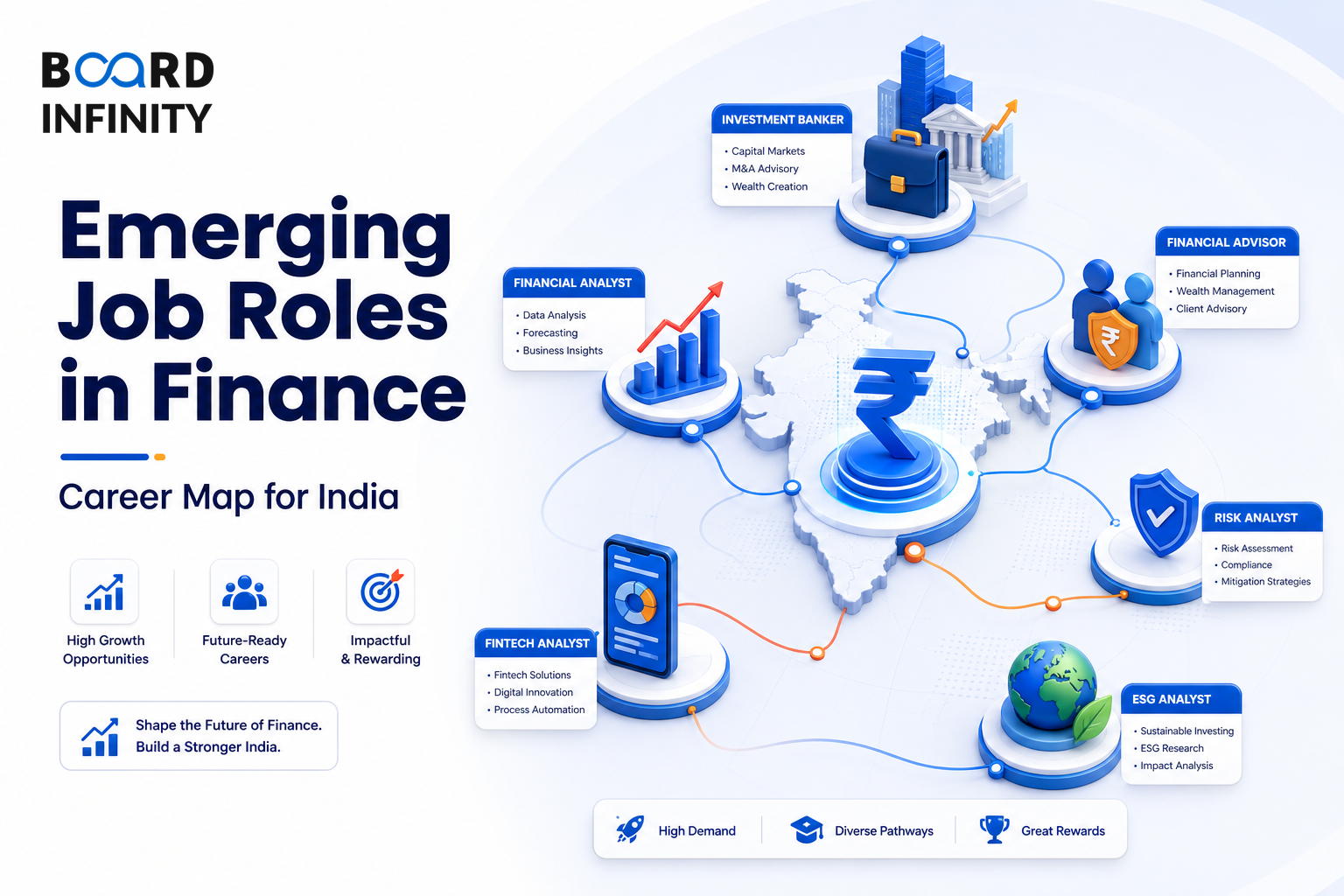
After Fintech & Embedded Finance Explained, the next career question is which modern finance roles candidates can target in India. This career map compares day-to-day work, key skills required, and typical Indian employers, so placement preparation moves from broad interest to role-specific clarity.
- Quantitative Analyst (Quant) roles develop statistical/ML models for trading strategies, risk management, pricing.
- ESG Analyst roles conduct ESG scoring, BRSR analysis, green bond structuring, sustainability reporting.
- Fintech Product Manager roles define product roadmap for lending/payments/wealth apps and work with engineering and risk teams.
- Data Analyst (Finance) roles build dashboards, credit scorecards, performance reporting and extract insights from financial data.
- Treasury Analyst roles manage corporate liquidity, FX hedging, investment of surplus cash, working capital optimisation.
- Credit Analyst roles analyse borrower financials, assign internal ratings, write credit memos, monitor portfolios.
- Compliance Officer roles ensure regulatory adherence (SEBI/RBI/IRDAI rules), manage audits, PMLA compliance, reporting.
Big Picture: How to Compare Emerging Finance Roles
Emerging finance roles can be compared through three practical filters: day-to-day work, key skills required, and typical Indian employers. This helps candidates understand whether a role is closer to models, ESG work, product, analytics, treasury, credit, or compliance.
Quantitative Analyst (Quant)
A Quantitative Analyst (Quant) develops statistical/ML models for trading strategies, risk management, pricing. The key skills required are Python/R, statistics, stochastic calculus, ML, derivatives pricing.
Typical Indian employers include Edelweiss Alternatives, Goldman Sachs, Morgan Stanley India, hedge funds. This role is a fit when the day-to-day work expected is model-heavy and linked to trading strategies, risk management, and pricing.
ESG Analyst
An ESG Analyst conducts ESG scoring, BRSR analysis, green bond structuring, sustainability reporting. The key skills required are ESG frameworks (GRI, SASB, TCFD), financial analysis, sector knowledge.
Typical Indian employers include CRISIL, MSCI, Sustainalytics, HDFC Bank, Kotak, PwC/Deloitte ESG teams. This role sits at the intersection of ESG scoring, sustainability reporting, financial analysis, and sector knowledge.
Fintech Product Manager
A Fintech Product Manager defines product roadmap for lending/payments/wealth apps; work with engineering and risk teams. The key skills required are product thinking, fintech regulations, data analytics, customer empathy, API knowledge.
Typical Indian employers include Razorpay, PhonePe, Cred, BharatPe, Zerodha, Navi, Slice. This role is suited to candidates who want finance work connected to product roadmap, lending/payments/wealth apps, engineering teams, and risk teams.
Data Analyst (Finance)
A Data Analyst (Finance) builds dashboards, credit scorecards, performance reporting; extract insights from financial data. The key skills required are SQL, Python/R, Excel, Tableau, financial domain knowledge.
Typical Indian employers include Bajaj Finance, ICICI Bank, McKinsey, BCG, Accenture, Deloitte. The role is anchored in dashboards, credit scorecards, performance reporting, and extracting insights from financial data.
Treasury Analyst
A Treasury Analyst manages corporate liquidity, FX hedging, investment of surplus cash, working capital optimisation. The key skills required are FX markets, derivatives, Excel modelling, SAP Treasury, regulatory knowledge.
Typical Indian employers include Infosys, TCS, Reliance, HDFC Bank treasury, Citi India Treasury. This role focuses on corporate liquidity, FX hedging, surplus cash, and working capital optimisation.
Credit Analyst
A Credit Analyst analyses borrower financials, assign internal ratings, write credit memos, monitor portfolios. The key skills required are financial statement analysis, credit risk frameworks, sector knowledge, Excel.
Typical Indian employers include HDFC Bank, Axis Bank, CRISIL, ICRA, PE credit funds. This role is centred on borrower financials, internal ratings, credit memos, and portfolio monitoring.
Compliance Officer
A Compliance Officer ensures regulatory adherence (SEBI/RBI/IRDAI rules), manage audits, PMLA compliance, reporting. The key skills required are regulatory knowledge, Ind AS, legal background, attention to detail.
Typical Indian employers include all banks, NBFCs, asset managers, fintech startups (mandatory role). This role is built around regulatory adherence, audits, PMLA compliance, and reporting.
Conclusion
Emerging job roles in finance can be compared cleanly through day-to-day work, key skills required, and typical Indian employers. For placement prep, the strongest career map is the one that connects a target role to the work it actually involves and the skills employers expect.
The common mistake is selecting a role only because the title sounds attractive, without matching day-to-day work, key skills required, and typical Indian employers. In placement conversations, that weakens clarity because each role in this map points to a different work pattern and skill set.