
Import Dependence and Building Domestic Capability
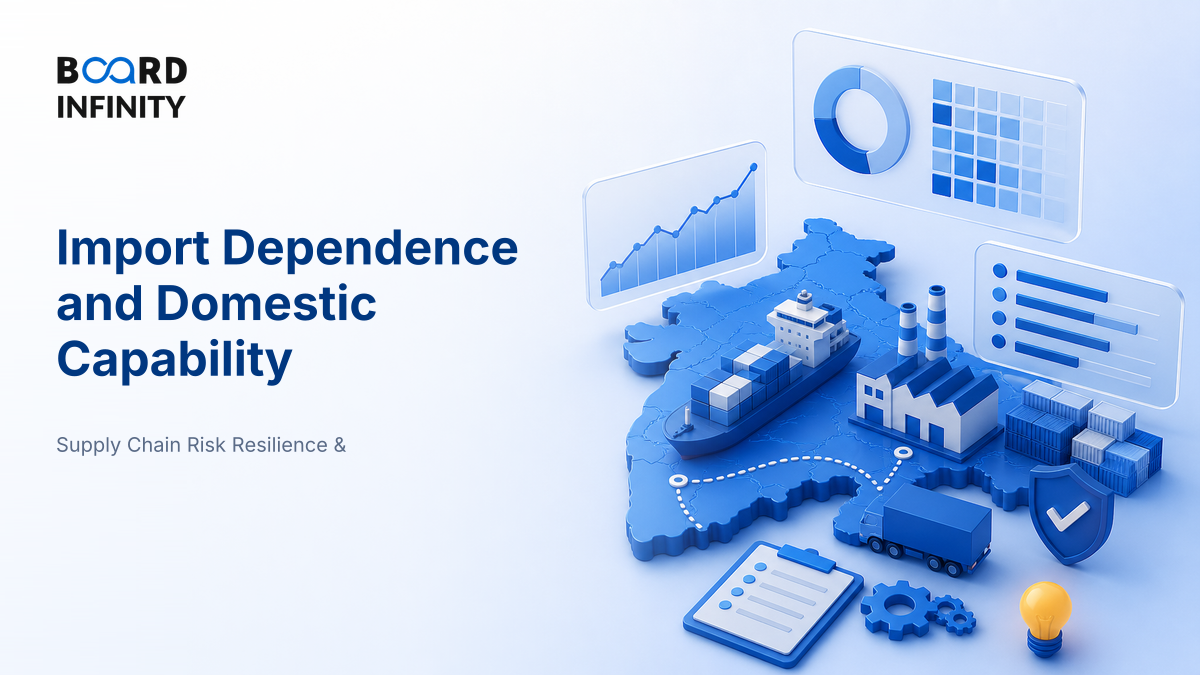
A production line can stop for a part that fits in your palm. A ₹5 sensor, a display module, a specialty chemical or a machine tool insert may be invisible to the customer, but if it is imported from one country, through one port, with one approved supplier, it quietly controls the whole business.
Import dependence is not simply "buying from abroad." The real question is: which capability does the country or company not yet control? Finished goods are the visible dependence; process know-how, tooling, materials, quality systems and supplier ecosystems are the hidden dependence.
- Import dependence is reliance on foreign sources for critical inputs, technology, components or capacity needed to serve demand.
- Domestic capability means the local ecosystem can design, make, test, scale and continuously improve the item at acceptable cost and quality.
- The core move is not "ban imports." It is reduce strategic vulnerability while keeping cost, quality and innovation competitive.
- Use a ladder: imported finished good - local assembly - component localisation - process capability - design/IP - ecosystem depth.
- Track five metrics: import dependency ratio, localisation rate, dual-source coverage, total landed cost gap and quality/yield gap.
- The biggest trap is confusing assembly with capability. Assembly reduces visible imports; capability reduces strategic dependence.
Big Picture - Import Dependence Is a Capability Funnel
Think of domestic capability as a funnel that gets narrower as the capability becomes more difficult. Many firms can start with final assembly. Far fewer can control components, tooling, process know-how, quality systems, design and upstream materials. Interviewers are testing whether you can see these layers.
Core Explanation - From Dependence to Capability
Import dependence becomes risky when the imported item is critical, concentrated, hard to substitute or slow to qualify. A company can import many low-risk items without worry. But one imported bottleneck can create stockouts, cost shocks, delivery delays, customer penalties and even national-security concerns in sectors like defence, telecom, pharma and energy.
Building domestic capability is the structured attempt to create local alternatives that meet the required cost, quality, capacity, technology and reliability. It sits at the intersection of procurement, operations, industrial policy, supplier development and strategy.
At firm level, the decision links directly to make versus buy and outsourcing economics: should the company manufacture internally, develop a domestic supplier, form a JV, license technology or continue importing with risk buffers?
The Four Decisions That Matter
Use this 2x2 before recommending localisation. It prevents a common overreaction: trying to localise everything at once.
Procurement owns much of this execution. The transition works only when supplier selection, contracting, cost modelling and development are disciplined. If that part feels weak, revise supplier selection, scorecards and evaluation before answering a localisation case.
Domestic Capability Is Built as a Flywheel
Capability does not appear because a company wants it. A domestic supplier invests when it sees credible demand. As it produces more, it learns. As yields improve, cost falls. As cost and quality improve, more customers shift volumes locally.
This is why policy support, anchor customers and supplier development often work together. India's Production Linked Incentive schemes are a policy example of using incentives to encourage domestic manufacturing in targeted sectors (Invest India, Production Linked Incentive Schemes).
What to Measure - The Five KPIs Interviewers Like
Do not answer this topic only with slogans like "Atmanirbhar" or "local sourcing." Show that you can measure whether dependence is actually falling.
Worked Example - When Localisation Makes Strategic Sense
Suppose an appliance company buys a critical motor assembly worth ₹100 crore annually. Imported supply is ₹75 crore and domestic supply is ₹25 crore. Its current import dependency ratio is 75%.
A domestic supplier offers the same assembly at an 8% higher total cost in the first year, but with shorter lead time and lower port-disruption exposure. If the company shifts ₹30 crore of volume locally after qualification, imported spend falls from ₹75 crore to ₹45 crore. The import dependency ratio becomes 45%.
The right interview answer is not "local is always better." It is: the company should compare the 8% cost premium against lower disruption risk, lower inventory buffer, faster engineering changes and long-term learning-curve benefits. A should-cost analysis and cost breakdown model helps separate a genuine cost gap from supplier inefficiency or low initial scale.
Definitions You Can Say in One Breath
- Import dependence: Reliance on foreign sources for critical goods, components, technology or capacity needed to meet demand.
- Domestic capability: Local ability to design, source, manufacture, test, scale and improve an item competitively.
- Localisation: Increasing the domestic value added in a product, process or supply chain.
- Supplier development: Structured improvement of a supplier's quality, cost, delivery, technology and management capability.
Case Study - Dixon Technologies and India's Electronics Capability Ladder
Dixon Technologies shows how domestic capability in electronics often begins with manufacturing execution, then moves toward ODM, components, supplier ecosystems and scale.
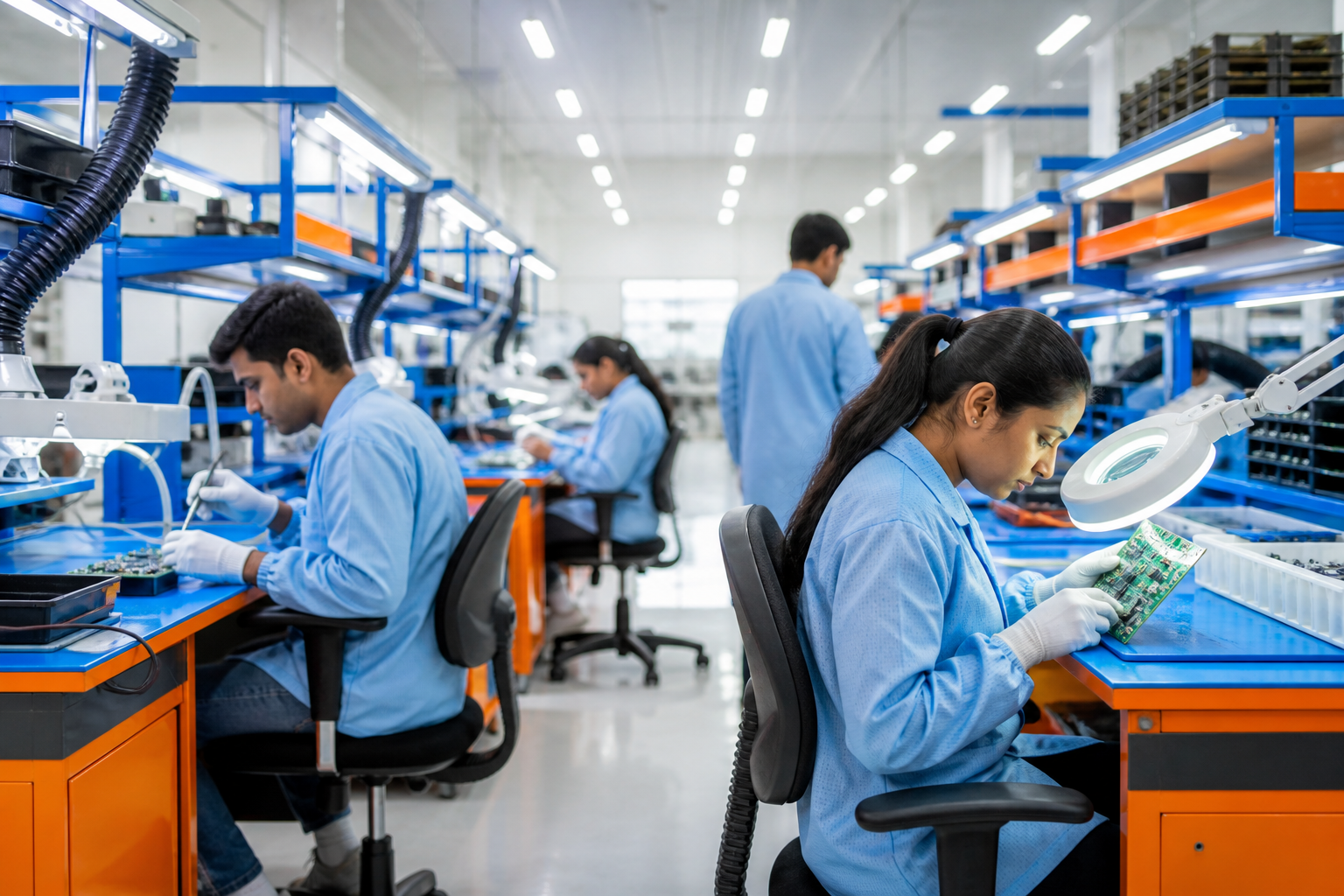
Electronics is a classic import-dependence category because the product hides many layers: semiconductors, display modules, printed circuit boards, batteries, precision tooling, testing equipment, firmware and final assembly. A country may assemble locally and still depend heavily on imported components and process know-how.
Dixon Technologies, which positions itself as an Indian electronics manufacturing services and original design manufacturing player across categories such as consumer electronics, home appliances, lighting, mobile phones and wearables (Dixon Technologies corporate website), is a useful case because it is not simply a brand story. It is a capability-platform story.
Situation: Global electronics supply chains have been concentrated across a few Asian manufacturing ecosystems. For Indian brands and global OEMs selling in India, importing finished products or semi-knocked-down kits can be faster initially, but it leaves exposure to currency movement, shipping disruptions, policy changes and limited local engineering control.
The move: Dixon's strategic role has been to build manufacturing capability for multiple electronics categories, serve anchor customers, expand into higher-value manufacturing and participate in a policy environment that encourages local production. The primary driver is process execution at scale: disciplined manufacturing, quality systems, customer trust and category know-how. Supporting drivers include demand from large brands, policy incentives, supplier ecosystem development, category diversification and movement from pure EMS toward more design-linked capability.
Outcome and lesson: The lesson is not that India becomes self-reliant the moment final assembly moves onshore. The deeper lesson is that domestic capability is a ladder. EMS capacity creates the base; component localisation, tooling, testing, design depth and supplier development create resilience. A mature answer must separate these layers.
So what: Dixon is a strong interview example because it proves the concept visually: domestic capability is not one factory. It is an ecosystem moving from assembly toward design, components and repeatable manufacturing excellence.
How AI Changes Import Dependence and Building Domestic Capability
AI changes this topic in three practical ways, especially in 2026 supply-chain and procurement roles.
- Risk sensing becomes faster: AI systems can scan supplier news, shipment signals, country-risk indicators, commodity movement and contract exposure to flag which imported inputs may become bottlenecks.
- Supplier discovery improves: Procurement teams can use AI to shortlist domestic suppliers by capability, certification, installed capacity, quality history and fit with the bill of materials. This connects naturally with digital procurement, electronic sourcing and spend analytics.
- Capability ramp-up becomes more data-driven: Computer vision, anomaly detection and predictive quality models can help domestic suppliers improve yield, identify process drift and reduce rework faster.
Use NotebookLM: upload a company annual report, its supplier-risk notes and this lesson, then ask: "Which imported inputs look most critical, what localisation options exist, and what interview questions could be asked?" Use the output to build a 5-point answer, not to memorise.
Interview Relevance
"An Indian manufacturer depends heavily on imported components from one country. How would you reduce risk and build domestic capability without hurting cost and quality?"
Use the phrase: "I would not localise everything; I would localise the critical bottlenecks where supply risk, strategic control and long-term learning justify the effort." That sounds managerial, not political.
Common Mistake
The mistake: saying "shift to local suppliers" as if a supplier already exists at the required quality, scale and cost. Why it costs candidates: it ignores qualification time, process capability, tooling, working capital and customer risk. One-line fix: say "I would first qualify domestic capability through pilots, supplier development and dual sourcing before transferring critical volumes."