
The LIC IPO: India's Largest Public Offering
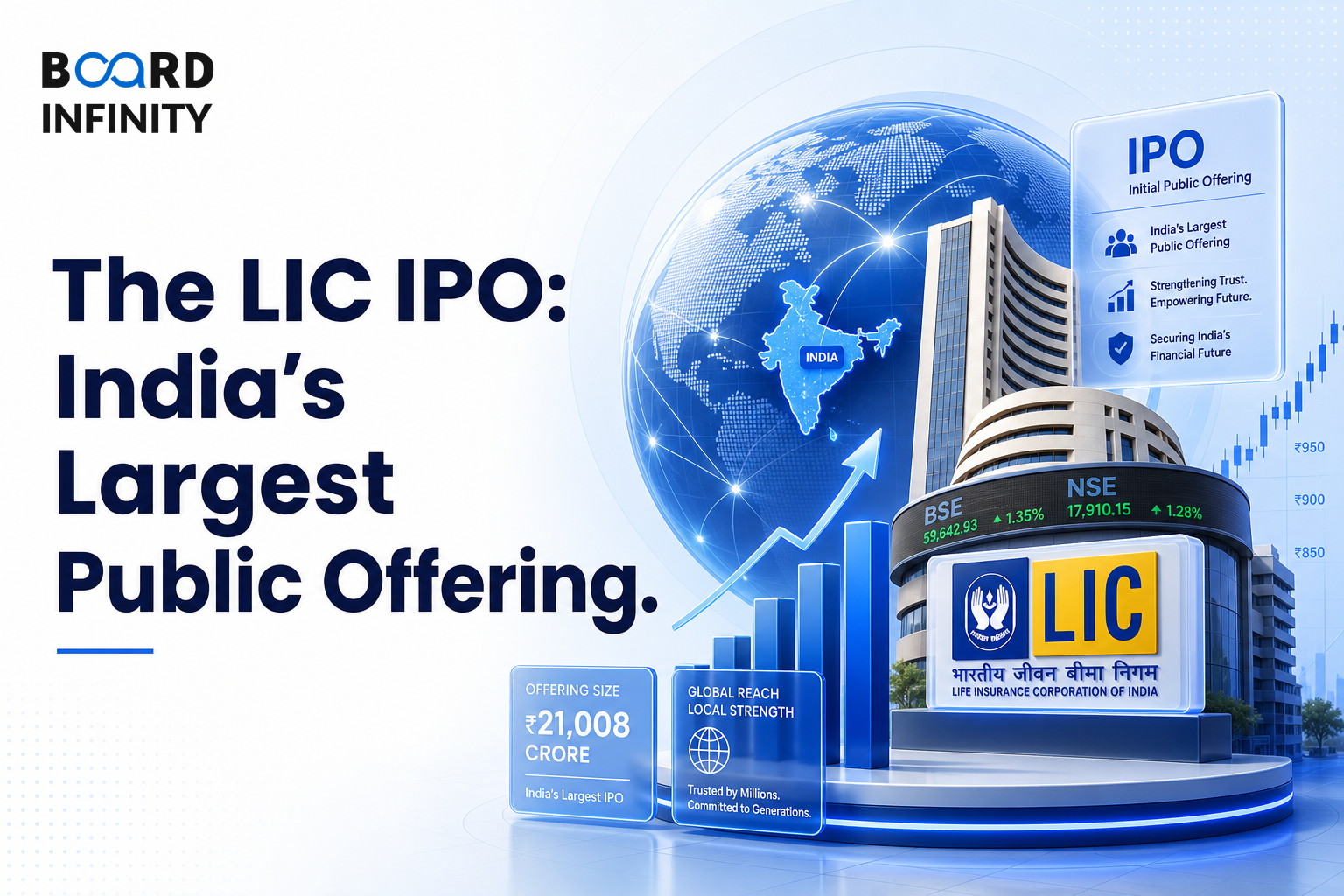
After Zomato: The IPO-to-Profitability Journey, the LIC IPO answers a different IPO question: how should a mature life insurance business be valued when traditional market multiples do not work? LIC's May 2022 IPO at ₹949/share raised ₹20,557 Cr, but the real interview lesson is that a low Price / EV multiple looked attractive while weak VNB margins showed why the stock was cheap for a reason.
- LIC's May 2022 IPO at ₹949/share was a 5% GoI stake divestment and raised ₹20,557 Cr - India's largest ever IPO.
- The deal forced analysts to learn a new valuation metric: Embedded Value.
- Traditional P/E is meaningless for life insurance. Analysts use Embedded Value, Price / EV, VNB Margin, and APE Growth.
- LIC's 1.1x P/EV looked cheap vs HDFC Life's 4.9x, but LIC's VNB margin was ~9% vs HDFC Life's ~26%.
- VNB margin = profitability of NEW policies. Low VNB = new business is barely profitable.
- Stock fell to ₹530 within 6 months, and IPO investors lost 44% before FY24 recovery to ₹1,000+ levels.
- PSU divestment IPOs often see selling by HNI/QIB post-listing, creating overhang.
Big Picture: LIC IPO as a Sector-Specific Valuation Lesson
LIC's IPO was not just a large public offering. It was a case where traditional P/E was irrelevant and the right metric was P/EV AND VNB margin.
The central mistake was treating a low P/EV multiple as automatically cheap. LIC's 1.1x P/EV looked cheap vs HDFC Life's 4.9x, but LIC's VNB margin was far below HDFC Life.
LIC IPO at a Glance
LIC's May 2022 IPO at ₹949/share involved a 5% GoI stake divestment. The Government of India retained 95%, and the issue raised ₹20,557 Cr.
Embedded Value (EV) = NAV + PV of in-force profits.
Embedded Value vs P/E for Insurance
Traditional P/E is meaningless for life insurance. Analysts use sector-specific metrics that connect valuation with the profitability and growth of policies.
VNB margin = profitability of NEW policies. Low VNB = new business is barely profitable.
Why LIC Was Priced Wrong
LIC's 1.1x P/EV looks cheap vs HDFC Life's 4.9x, but LIC's VNB margin (9%) was far below HDFC Life (26%). A simple P/EV comparison missed this nuance.
The interview lesson is straightforward: LIC was not actually cheap - it was cheap for a reason. A low valuation multiple must be read with profitability of new business and growth quality.
Post-Listing Reality and FY24 Recovery
Post-listing, the stock fell to ₹530 within 6 months, and IPO investors lost 44%. In FY24 recovery, stock recovered to ₹1,000+ and Embedded Value grew 15% to ₹6.5 lakh Cr.
This makes LIC a useful finance deal breakdown because the IPO had both a valuation discount and a recovery story. The correct interpretation depends on reading the sector-specific metrics, not just the headline IPO size.
PSU Divestment Overhang
PSU divestment IPOs often see selling by HNI/QIB post-listing, creating overhang. This is an important nuance because the IPO structure and investor behaviour can affect short-term listing performance even when the company is a large franchise.
Note: All figures are illustrative/approximate and for educational purposes only. Sources: Company annual reports, SEBI filings, RBI data, and publicly available information.
Structuring a The LIC IPO Interview Answer
"Why was LIC priced at a low P/EV multiple compared with HDFC Life, and was it actually cheap?"
Do not stop at the 1.1x P/EV versus 4.9x P/EV comparison. The key is to connect valuation to VNB margin, because a simple P/EV comparison missed this nuance.
The most frequent error is saying LIC was cheap only because it traded at 1.1x P/EV versus HDFC Life at 4.9x. That answer misses the reason for the discount: LIC's VNB margin was ~9% while HDFC Life's was ~26%, so the new business was barely profitable.
Conclusion
The LIC IPO is a lesson in sector-specific valuation: P/E was irrelevant, P/EV alone was incomplete, and VNB margin explained the apparent discount. In interviews, the strongest answer is that LIC looked cheap, but it was cheap for a reason.