
Reliance Retail - Building India's Largest Retailer
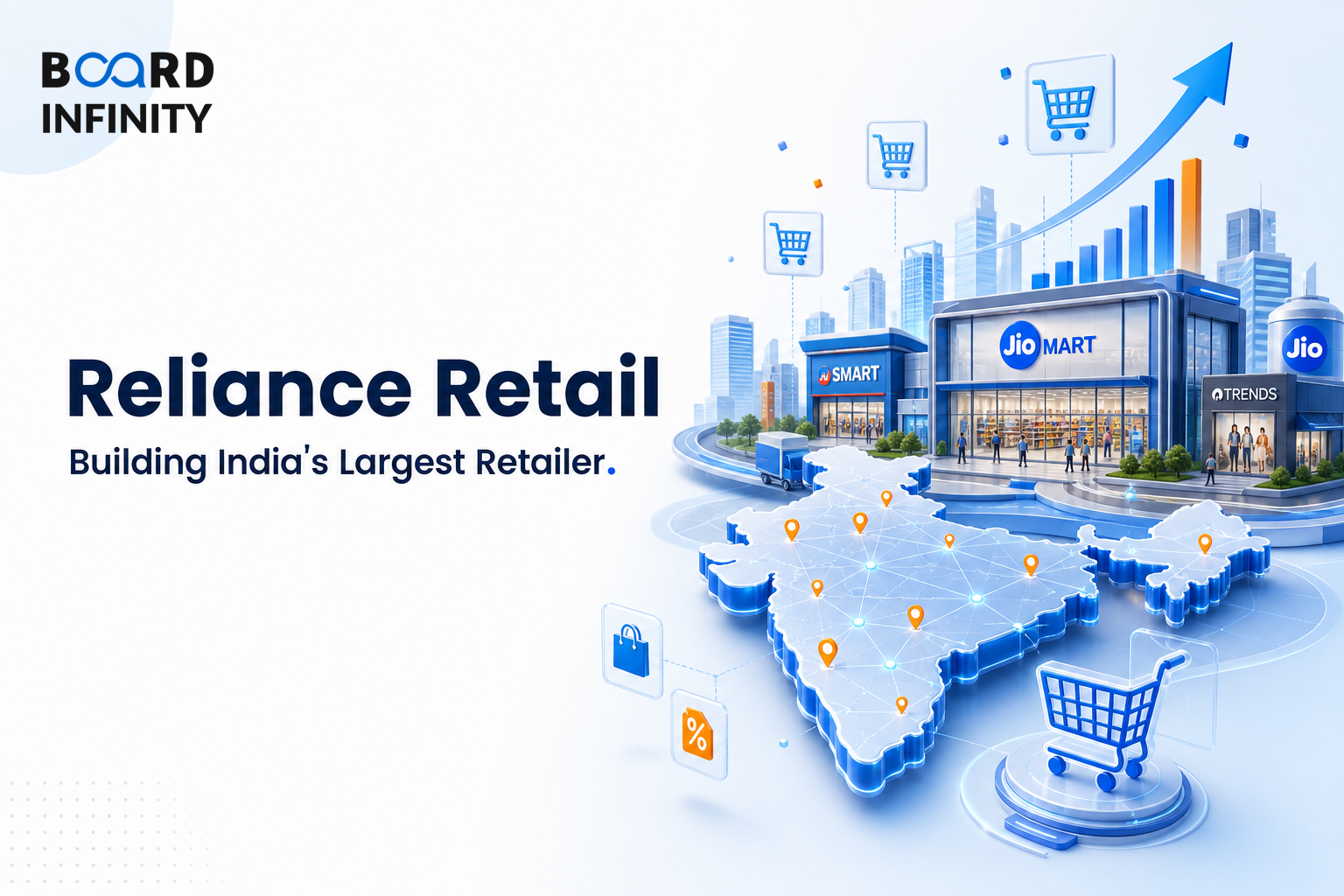
Reliance Retail is a classic real finance deal because it combines scale, capital raising, ecosystem strategy and execution risk in one case. The interview angle is not just that Reliance Retail became India's #1 retailer by revenue - it is that Reliance used a Jio-style platform play: raise subsidiary-level capital, combine telecom scale with retail distribution, and monetise India's largest captive consumer ecosystem.
- Reliance Retail Ventures Ltd (RRVL) is the entity, with Reliance Industries Ltd (Mukesh Ambani) as the parent.
- The key fundraise was FY21: $6.4 Bn from global investors for a 33% stake in RRVL.
- Notable investors included Silver Lake ($1.5 Bn), KKR ($1.5 Bn), and GIC Singapore ($1.3 Bn).
- Reliance Retail had 18,040+ stores across formats in FY24 and revenue of ~₹3.06 lakh Cr, making it India's #1 retailer by revenue.
- The strategic rationale was: Jio Platforms (telecom) + Reliance Retail (physical + digital commerce) = India's most integrated consumer ecosystem.
- The fundraise provided non-dilutive capital at subsidiary level while maintaining RIL promoter control.
- The interview risk is execution across 18,000 stores and thin FMCG margins in competitive categories.
Big Picture - The Jio-Style Platform Play
Reliance Retail should be framed as a platform strategy, not only a store expansion story. Jio's 470 Mn subscribers are a captive customer base for Reliance Retail's JioMart, while the subsidiary-level fundraise gave Reliance Industries capital without share dilution.
Outcome and Lessons
The deal created financial and strategic lessons around subsidiary-level capital raising, ecosystem synergies, consolidation and valuation re-rating.
Jio Platforms (telecom) + Reliance Retail (physical + digital commerce) = India's most integrated consumer ecosystem. This 'platform' strategy mirrors Amazon (AWS funds retail).
Financial Analysis
The financial trajectory shows growth in revenue, EBITDA, EBITDA margin and store count, alongside valuation re-rating from the fundraise period to later estimates.
Worked Example - Reading the Deal
Situation: Reliance Industries had Jio Platforms in telecom and Reliance Retail in physical + digital commerce. Jio's 470 Mn subscribers were a captive customer base for Reliance Retail's JioMart.
Decision: Reliance Retail raised FY21: $6.4 Bn from global investors for a 33% stake in RRVL, with notable investors including Silver Lake, KKR and GIC Singapore.
Outcome: The fundraise provided non-dilutive capital at subsidiary level while maintaining RIL promoter control. The retail business re-rated from 0.3x to 0.7x EV/Sales as margins improved.
Learning: The strongest interview answer links the capital raise, JioMart-WhatsApp integration, acquisition-led consolidation and valuation re-rating into one platform strategy.
Structuring a Reliance Retail Interview Answer
"How would you explain Reliance Retail's FY21 fundraise, strategic rationale, financial performance and key risks in 90-120 seconds?"
Reliance used the Jio playbook - subsidise entry (cheap/free), lock in users, monetise at scale. The subsidiary-level PE raise was financial engineering at its best: RIL got capital without share dilution.
The most frequent error is treating Reliance Retail as only a store-count story. That misses the real interview angle: Jio Platforms, Reliance Retail, JioMart, Meta's Jio investment, subsidiary-level capital and valuation re-rating together form the platform play.
Conclusion
Reliance Retail matters because it shows how Reliance combined telecom scale, retail distribution and subsidiary-level capital to build India's largest retailer. The final takeaway for interviews is simple: frame it as a Jio-style platform play with strong ecosystem synergies, but do not ignore execution risk and thin FMCG margins.