
The Operations Strategy Framework Explained
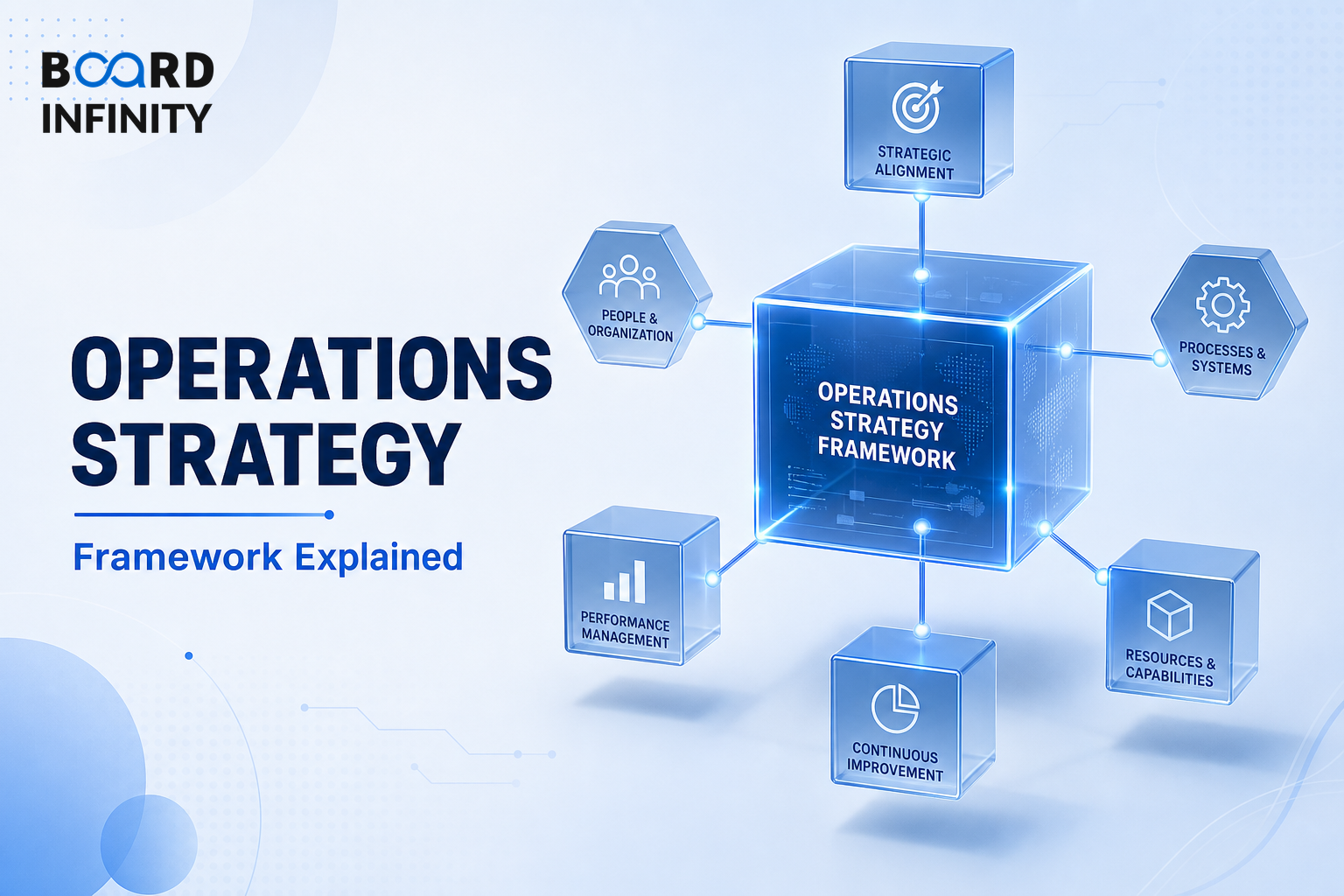
Operations strategy is a pattern of decisions that shapes the long-term capabilities of an operation and their contribution to overall strategy. It matters in interviews because it bridges corporate/business strategy with day-to-day operational execution, turning high-level intent into concrete choices around process, capacity, supply chain design, process design, and execution.
- Operations strategy is a pattern of decisions that shapes the long-term capabilities of an operation and their contribution to overall strategy.
- It bridges corporate/business strategy with day-to-day operational execution.
- The Hayes & Wheelwright 4-Stage Model explains how operations can move from internally neutral to externally supportive.
- Stage 1 operations minimise negative impact - just "keep the lights on".
- Stage 3 operations supports business strategy, as seen in Maruti's Lean system supporting cost leadership.
- Stage 4 operations IS the competitive advantage, as seen in Amazon's fulfillment network as a moat.
- Strategic fit aligns Corporate Strategy, Business Strategy, Operations Strategy, Process Design, and Execution.
The Big Picture: Operations Strategy as the Bridge
The framework starts with corporate strategy and business strategy, then translates them into operations strategy and process design before reaching execution. This is the bridge between how to compete in the market and daily operations, KPIs, and improvement.
Operations Strategy: Definition and Role
Operations strategy is a pattern of decisions that shapes the long-term capabilities of an operation and their contribution to overall strategy. It is not only daily execution; it links corporate/business strategy to the operating choices that decide how work gets done.
The core idea is strategic fit. Corporate Strategy sets Vision, Mission, Portfolio; Business Strategy defines How to Compete in the Market; Operations Strategy translates that into Process, Capacity, Supply Chain Design; Process Design defines Layout, Technology, Automation Level; and Execution manages Daily Operations, KPIs, Improvement.
Hayes & Wheelwright 4-Stage Model
The Hayes & Wheelwright 4-Stage Model describes the changing role of operations. At the early stages, operations tries to minimise negative impact or achieve parity; at the later stages, operations supports business strategy or becomes the competitive advantage itself.
Stage 1: Internally Neutral
In Stage 1, the operations role is to minimise negative impact - just "keep the lights on". The example is a small factory with reactive maintenance.
Stage 2: Externally Neutral
In Stage 2, the operations role is to achieve parity with competitors. The example is a company adopting industry-standard ERP.
Stage 3: Internally Supportive
In Stage 3, operations supports business strategy. Maruti's Lean system supporting cost leadership is the example of operations becoming aligned with how the business wants to compete.
Stage 4: Externally Supportive
In Stage 4, operations IS the competitive advantage. Amazon's fulfillment network as a moat shows how operations can become central to advantage, not just a support function.
Strategic Fit - Operations Strategy Alignment
Strategic fit means the operating system must connect to the strategy above it and the execution below it. The chain runs from Corporate Strategy to Business Strategy to Operations Strategy to Process Design to Execution.
This alignment helps avoid treating process, capacity, supply chain design, layout, technology, automation level, daily operations, KPIs, and improvement as disconnected decisions. Each operating choice should contribute to the overall strategy.
Named Examples: Maruti and Amazon
Maruti's Lean system supporting cost leadership fits Stage 3 because operations supports business strategy. Amazon's fulfillment network as a moat fits Stage 4 because operations IS the competitive advantage.
The distinction matters in interviews: Maruti shows operations as internally supportive, while Amazon shows operations as externally supportive. One supports the chosen business strategy; the other becomes the competitive advantage.
Structuring a The Operations Strategy Framework Explained Interview Answer
"How does operations strategy bridge corporate/business strategy with day-to-day operational execution?"
Structure before substance - use frameworks. Always pause to structure. Never start talking immediately. 30 seconds of silence to think is better than 5 minutes of unstructured rambling.
The most frequent error is treating operations strategy as only day-to-day execution. That misses the main point: operations strategy bridges corporate/business strategy with execution, and the best answers show the full alignment from strategy to process design to execution.
Conclusion
Operations strategy is the decision pattern that connects long-term operational capabilities to overall strategy. For interviews, the strongest answer is to define the bridge, use the Hayes & Wheelwright 4-Stage Model, and show strategic fit from Corporate Strategy through Execution.