
Personalisation & Recommendation in Indian Retail
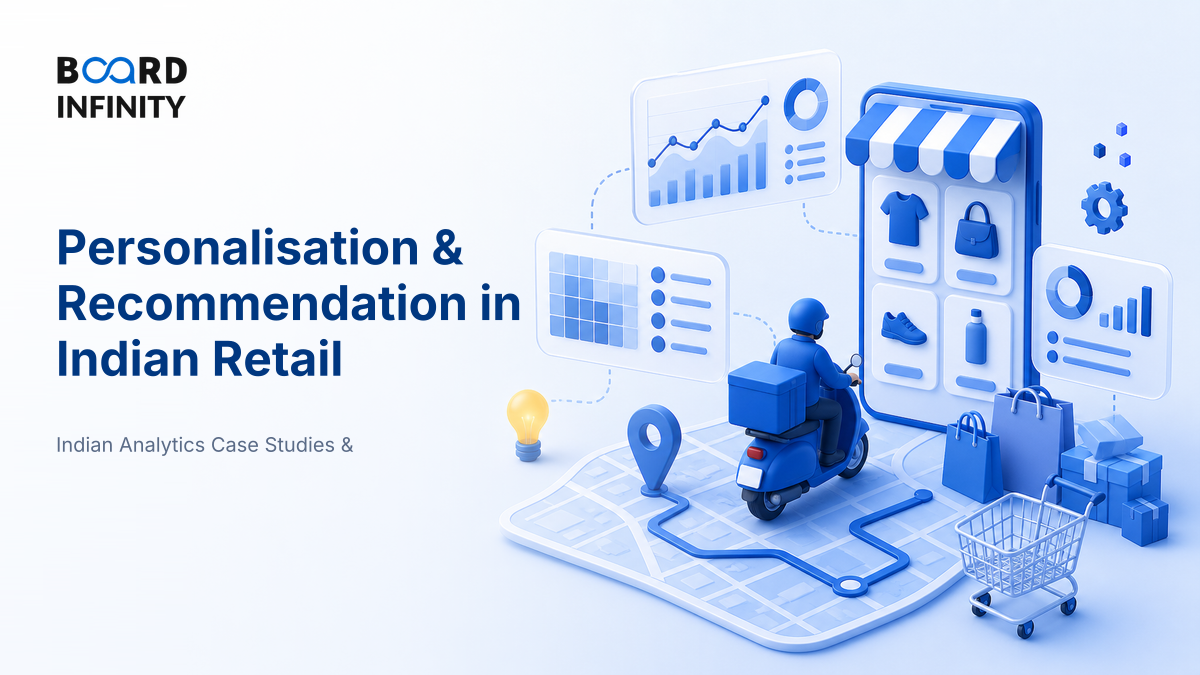
Open a retail app in 2015 and the homepage felt like a newspaper - everyone saw the same front page. Open a strong Indian retail app today and two customers standing in the same metro station may see completely different products, offers, languages, sizes and reminders.
- Personalisation is the business strategy of tailoring the shopping experience; recommendation is one engine that suggests relevant items.
- The core loop is: collect signals - build profile - generate candidates - rank options - learn from feedback.
- Indian retail personalisation must handle mobile-first behaviour, COD and UPI habits, regional preferences, price sensitivity, returns, stock-outs and privacy consent.
- The best recommendations optimise customer relevance plus business outcome - not just clicks.
- Common methods include rules-based recommendations, collaborative filtering, content-based filtering, hybrid models and real-time contextual ranking.
- Track CTR, conversion rate, revenue per session, average order value, repeat purchase rate and return rate - always compare against a control group.
- The interview trap: saying “personalisation means giving discounts.” It actually means improving relevance, trust and decision quality.
Big Picture
Personalisation in Indian retail is not one algorithm hidden inside an app. It is a decision system that turns customer signals - browsing, buying, search, location, language, price bands, sizes and stock availability - into a more relevant shopping journey.
How Personalisation and Recommendation Actually Work
The simplest distinction is this: personalisation decides what should be different for each customer; recommendation decides which items or actions to suggest. A retailer may personalise the homepage banner, product listing order, search results, coupons, delivery promise, language, push notification timing and post-purchase cross-sell.
In Indian retail, the challenge is sharper because the same user may browse in English, search in Hinglish, compare prices across marketplaces, pay through UPI, expect fast delivery in one pin code and tolerate longer delivery in another. Good personalisation respects these realities instead of blindly copying a global playbook.
The Five-Step Operating Framework
Recommendation Methods You Should Be Able to Explain
A strong answer does not need algorithmic depth, but it must show that different recommendation methods solve different retail problems.
Myntra operates in a category where size, fit, brand preference, occasion and visual taste strongly influence conversion. Its personalisation challenge is not only “show similar shirts” but to guide discovery across style, price, size availability and seasonality. The strategic so what: fashion recommendations work best when behavioural signals are supported by rich product attributes and merchandising logic.
Metrics That Prove Personalisation Is Working
Do not judge recommendations only by clicks. A click-heavy system can still hurt margins, increase returns or annoy loyal customers. The cleanest benchmark is a randomised control group or holdout cohort because public industry benchmarks vary widely by category, traffic source, app design and season.
A Small Worked Example
Suppose an Indian beauty retailer tests a personalised homepage module against a generic bestseller module for 100,000 impressions.
- Generic module CTR = 4.0%, so clicks = 4,000.
- Personalised module CTR = 5.2%, so clicks = 5,200.
- Incremental clicks = 1,200.
- If click-to-purchase conversion is 8%, incremental orders = 1,200 x 8% = 96.
- If gross margin per order is ₹250, incremental gross margin before tech and campaign costs = 96 x ₹250 = ₹24,000.
The interview point: after this, you must still check return rate, discount cost, stock availability and whether the lift holds for new users, repeat users and different cities.
Definitions
Personalisation: Tailoring experiences, content, offers or journeys to a customer using data, context and predicted intent.
Recommender system: Ricci, Rokach and Shapira define it as “software tools and techniques providing suggestions for items to be of use to a user.”
First-party data: Data a company collects directly from customer interactions across its own channels.
Cold start: The recommendation problem created when a new user or product has little behavioural history.
Nykaa: Personalisation in Beauty Retail Without Reducing It to Discounts
Nykaa uses content, category depth and digital behaviour to make beauty discovery less confusing and more relevant for Indian shoppers.
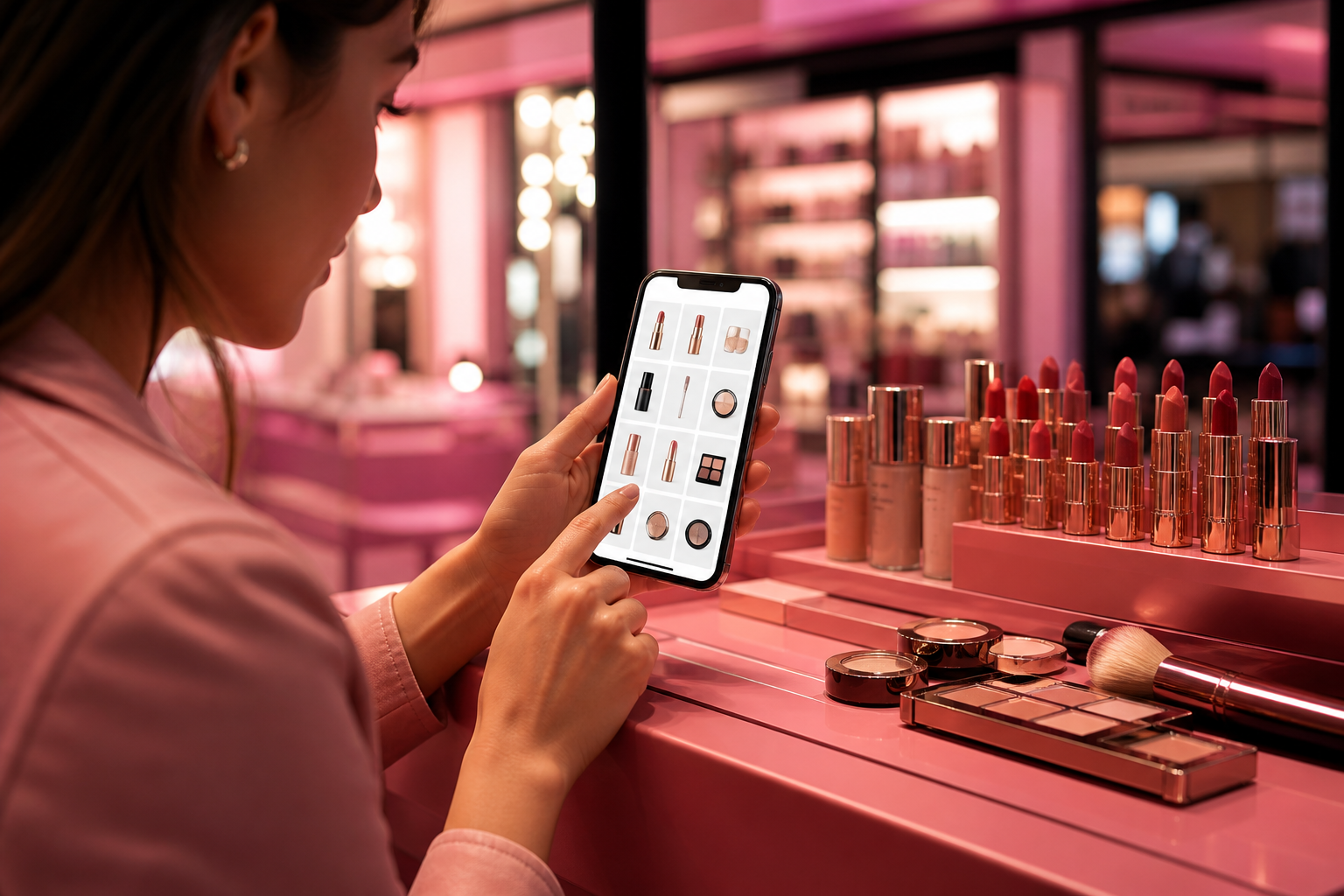
Situation: Beauty retail has a high choice-overload problem. A customer may not know which shade, ingredient, brand, price band or routine fits her need. In India, this gets more complex because skin tones, climate, affordability, trust in authenticity and regional shopping behaviour vary widely.
The move: Nykaa built a digital-first beauty retail model where product discovery is supported by content, reviews, category education, app behaviour and a wide assortment. The personalisation opportunity is to connect a shopper’s browsing and buying signals with relevant products, routines and replenishment nudges, while also respecting availability and authenticity expectations.
Primary driver: Nykaa’s strongest personalisation advantage comes from reducing decision anxiety in a high-involvement category. Supporting drivers include rich product metadata, beauty content, customer reviews, app engagement, private-label and marketplace assortment, and offline stores that reinforce trust.
Outcome or lesson: Nykaa shows that retail recommendation is strongest when it combines algorithmic relevance with category expertise. A pure “similar products” engine would be shallow; a complete system blends customer intent, content, product attributes, inventory and trust.
How AI Changes Personalisation & Recommendation in Indian Retail
AI is making personalisation more real-time, more conversational and more multimodal. The opportunity is big, but Indian retailers must balance it with consent, fairness and the Digital Personal Data Protection Act, 2023.
- Generative shopping assistants: Instead of making users filter endlessly, an assistant can interpret a need like “office kurta under ₹1,500 for humid weather” and convert it into product constraints, ranking and explanation.
- Multimodal recommendations: Vision models can use images, colours, style cues and catalogue photos to improve fashion, beauty, furniture and home decor discovery.
- Real-time next-best-action: AI can decide whether to show a recommendation, a replenishment reminder, a loyalty benefit, a size guide or no message at all based on predicted intent and fatigue.
Use Perplexity or NotebookLM to prepare company-specific interview points: upload or link the retailer’s annual report, app screenshots and recent news, then ask, “Map this retailer’s personalisation opportunities across signals, recommendations, metrics, risks and AI use cases.” Verify every factual claim before using it.
Interview Relevance
“You are the category manager for an Indian retail app. How would you improve conversion using personalisation and recommendations without simply increasing discounts?”
Use the phrase “optimise for incremental business impact, not vanity engagement.” It signals that you understand both analytics and retail economics.
Common Mistake
The biggest mistake is treating personalisation as “show more discounts to the user.” That costs candidates because it ignores relevance, margin, inventory, trust, consent and long-term retention. One-line fix: define the objective first, then recommend the least intrusive personalised action that improves both customer decision quality and business outcome.
What to Revise Next
Now extend the same marketplace and analytics thinking into dynamic pricing and digital subscriptions. These topics use similar ideas - signals, prediction, experimentation and trade-offs - but apply them to different business models.