
Profitability Improvement Case for a Manufacturer: IndSteel EBITDA Margin Recovery
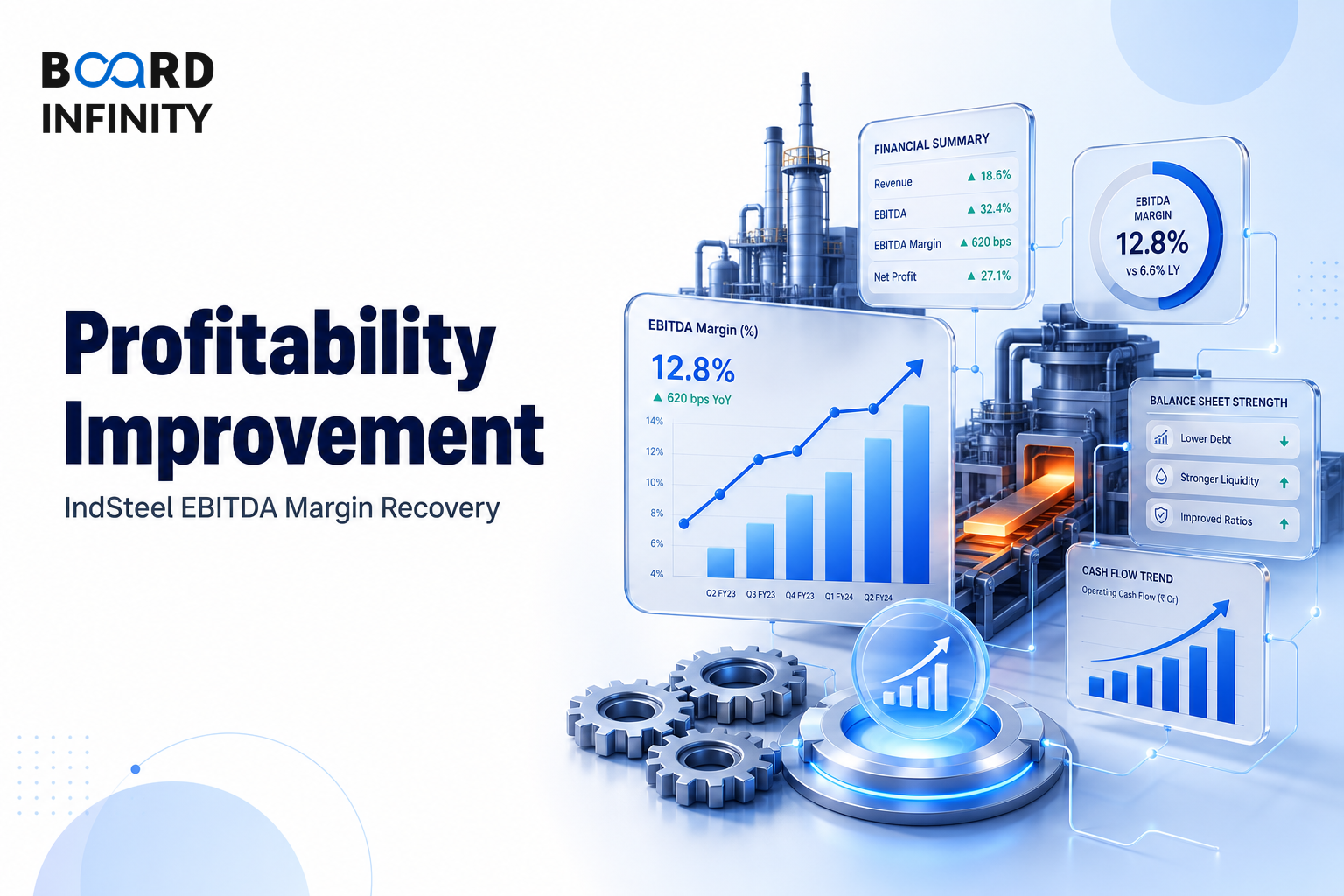
After learning how to structure a finance case using MECE buckets, the next step is applying that structure to a live profitability problem. In this case, IndSteel Ltd, a fictional ₹2,000 Cr revenue steel components manufacturer, has seen EBITDA margins decline from 18% to 11% over 3 years, and the CFO wants to restore margins to 15%+ within 18 months. This matters in interviews because the answer must separate revenue mix pressure, input-cost inflation, and working-capital drag before recommending quantified interventions.
- IndSteel Ltd is a fictional ₹2,000 Cr revenue steel components manufacturer whose EBITDA margins declined from 18% to 11% over 3 years.
- The CFO wants to restore margins to 15%+ within 18 months, which means recovering 400 bps from the current 11% level.
- Revenue grew from ₹1,800 Cr in FY21 to ₹2,000 Cr in FY23, but product mix shifted from 40% premium to 32% premium and export revenue fell from 25% to 18%.
- Realisation grew only 6.7% while raw material inflation was ~20%, creating margin compression.
- Raw Materials increased from 52% to 58% of revenue, adding +600 bps of cost pressure, while Power & Fuel increased from 8% to 11%.
- Debtor days increased from 45 to 72 days and inventory days rose from 30 to 45 days, increasing net working capital by ₹180 Cr and consuming ₹180 Cr cash flow.
- The recommendation should prioritise premium product mix, RM contracts, working capital, energy, and export revival with quantified impact.
Case Context and Big Picture
The situation is an EBITDA margin recovery problem, not a simple revenue growth problem. Revenue has grown, but the mix has shifted to lower-margin products, realisation has lagged raw material inflation, and working capital has consumed cash flow, reducing debt repayment capacity.
EBITDA Margin = EBITDA / Revenue × 100. It measures operating efficiency before D&A.
Revenue Analysis
The first question is whether revenue growth is healthy enough to support margin recovery. For IndSteel Ltd, total revenue increased by 11% over 2 years, but volume growth was sluggish, product mix shifted to lower-margin commodity grades, and export orders were lost.
Cost Structure Analysis
The cost bridge shows where the EBITDA margin decline has actually come from. Raw Materials and Power & Fuel are the largest pressures, while Depreciation has reduced as a percentage of revenue due to asset sweat and deferred capex.
Working Capital Drag
Debtor days increased from 45 to 72 days because PSU customers were delaying payment. Inventory days rose from 30 to 45 days due to raw material hoarding caused by supply uncertainty.
Net working capital increased by ₹180 Cr, consuming ₹180 Cr cash flow and reducing debt repayment capacity. This means the case is not only about profit and loss improvement; cash conversion also needs attention.
Recommended Interventions
The recovery plan should be specific, actionable, and prioritised. Each action below is tied to a margin, cash flow, or EBITDA impact stated in the case.
Worked Example: IndSteel Ltd Margin Recovery
Situation: IndSteel Ltd, a fictional ₹2,000 Cr revenue steel components manufacturer, has seen EBITDA margins decline from 18% to 11% over 3 years. The CFO wants to restore margins to 15%+ within 18 months.
The problem is that revenue grew but mix shifted to lower-margin products. Realisation grew only 6.7% while raw material inflation was ~20%, creating margin compression. At the same time, debtor days and inventory days increased, consuming ₹180 Cr cash flow.
The decision is to recover 400 bps through a combination of premium product mix, RM contract renegotiation, working capital reduction, captive solar, and export revival. The learning is that an EBITDA margin case should not stop at costs; it should connect revenue quality, input-cost pressure, and capital efficiency.
Note: All figures are illustrative/approximate and for educational purposes only.
Structuring a Case Interview Answer
"IndSteel Ltd, a fictional ₹2,000 Cr revenue steel components manufacturer, has seen EBITDA margins decline from 18% to 11% over 3 years. The CFO wants to restore margins to 15%+ within 18 months. How would you approach this?"
Never jump to the answer. Interviewers reward structured thinking. Say: "Let me break this into three buckets: revenue, costs, and capital efficiency. Starting with revenue..."
The most frequent error is treating the EBITDA decline as a pure cost-cutting case. That misses the stated insight: revenue grew, but mix shifted to lower-margin products, realisation lagged raw material inflation, and working capital consumed ₹180 Cr cash flow.
Conclusion
A strong profitability improvement answer separates revenue quality, cost inflation, and working-capital drag before recommending quantified actions. For IndSteel Ltd, the path to 15%+ EBITDA margin is a prioritised recovery plan across premium mix, RM contracts, debtor days, energy savings, and export revival.