
Quick Commerce & Gig Platforms: Workforce Models Under Scrutiny
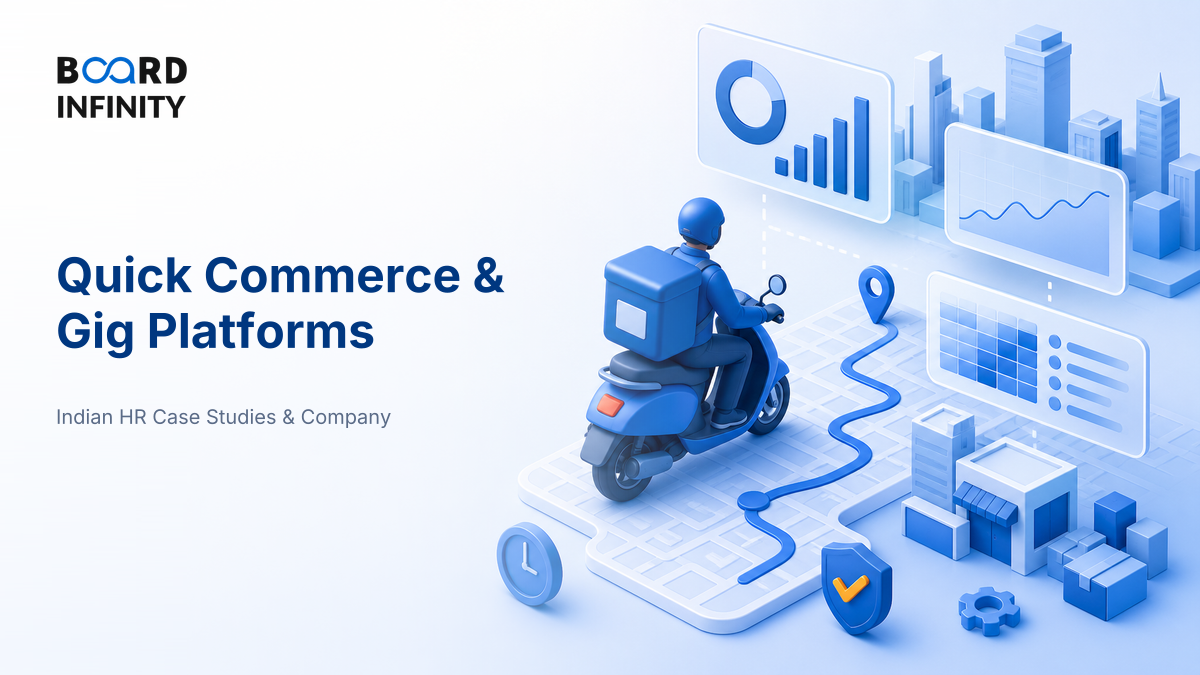
A neighbourhood store once needed a cashier, a stock boy and a predictable footfall curve. A quick-commerce dark store needs demand prediction, inventory pickers, shift leads and riders moving through peak-hour bursts - all coordinated by software that may never appear on an org chart.
- Gig work is not one model. It sits on a spectrum from low-control marketplace work to highly managed, platform-directed labour.
- Quick commerce adds urgency. The workforce model must solve speed, availability, safety, cost and compliance at the same time.
- The central tension: platforms want contractor flexibility, but operating discipline often requires employee-like control.
- India formally recognizes gig and platform workers under the Code on Social Security, 2020, and NITI Aayog estimated 7.7 million gig workers in 2020-21, projecting 23.5 million by 2029-30 (NITI Aayog, 2022).
- Good analysis needs three lenses: operating model, worker economics and regulatory risk.
- The best interview answer is not anti-platform or pro-platform. It explains the trade-off and recommends a balanced workforce architecture.
Big Picture
Quick commerce and gig platforms convert labour into a flexible, app-coordinated supply layer. That creates customer convenience, but it also raises hard questions: who bears idle time, who controls work, who pays for risk, and who is accountable when the algorithm decides?
Core Explanation: The Workforce Model Under the App
A workforce model is the design of how a firm sources, schedules, pays, controls and supports the people who deliver its service. In quick commerce and gig platforms, this model usually has four layers.
The Key Trade-Off: Flexibility vs Control
The scrutiny begins when a platform says “independent contractor” but manages work like an employer. If riders or partners choose when to log in, flexibility is high. If the platform fixes prices, routes, service standards, penalties and customer access, control is high.
Quick commerce often sits closer to the high-control side because delivery promises depend on tightly managed operations. A rider delay, dark-store picking error or stock mismatch directly damages the customer promise. That is why these platforms use shift planning, location tracking, incentive slabs, acceptance rules and service-level dashboards.
In Indian quick commerce, companies such as Blinkit, Zepto and BigBasket's quick-delivery formats depend on dense dark-store networks, local inventory planning and rider availability during demand spikes. The strategic point is that speed is not created by riders alone - the primary driver is the operating system of dark stores and demand forecasting, supported by routing, assortment discipline and workforce availability.
How to Judge the Model: Six Workforce Metrics
Do not evaluate gig platforms only through GMV, orders or app downloads. A sustainable model must show whether workers are available, earning fairly, retained and operating safely.
Definitions You Must Be Able to Say Cleanly
Gig worker: “a person who performs work or participates in a work arrangement and earns from such activities outside of traditional employer-employee relationship” (Code on Social Security, 2020).
Platform worker: a worker who uses an online platform to access paid work, customers or tasks.
Algorithmic management: the use of software rules to allocate work, monitor performance, set incentives or restrict worker access.
Dark store: a small fulfilment location designed for online orders, not walk-in shopping.
Case Study: Urban Company and the High-Trust Gig Model
Urban Company shows why some gig platforms cannot remain pure marketplaces: when service happens inside a customer's home, trust and standardization become the real product.
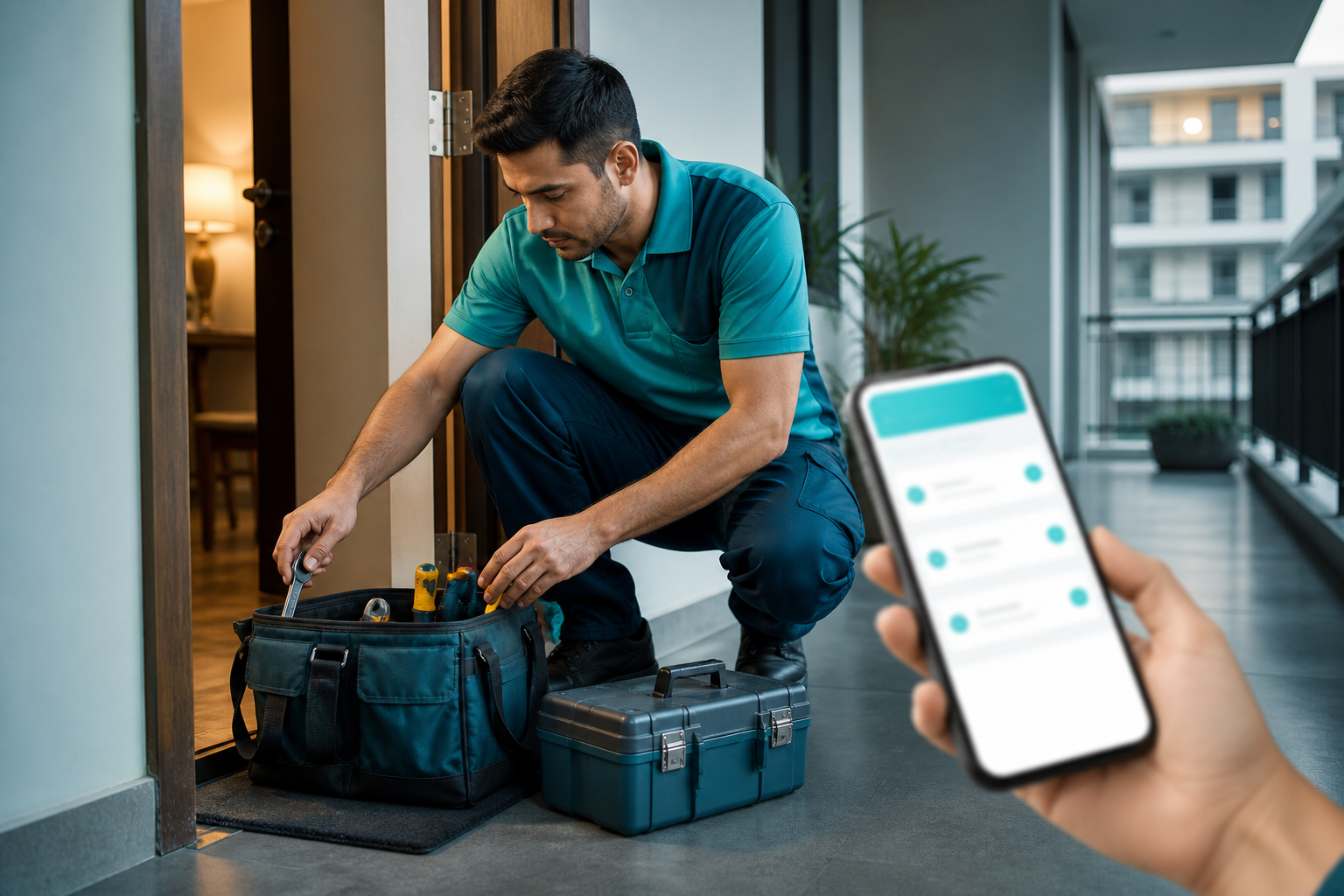
Situation. Home services are different from food delivery or taxi aggregation. A customer is not just buying speed; they are allowing a professional into a private space. That raises the cost of poor vetting, inconsistent quality, weak safety protocols or unresolved complaints.
The move. Urban Company built a more controlled gig model around curated service professionals, category training, standard operating procedures, customer ratings and platform-led discovery. The primary driver was trust standardization - making a haircut, beauty service, appliance repair or cleaning visit feel predictable. Supporting drivers included demand aggregation, app-based scheduling, quality monitoring and repeat customer behaviour.
The lesson. The stronger the platform's promise, the more it must control the worker experience. But more control also increases expectations around fair earnings, transparent deactivation, grievance handling and social security. That is the core workforce dilemma.
How AI Changes Quick Commerce & Gig Platforms
1. AI makes workforce planning more granular. ML models can forecast order spikes by locality, weather, festivals, paydays and time slots. That helps platforms position riders and pickers better, but it can also create unstable earning patterns if workers are pulled into short peak windows only.
2. Algorithmic management becomes a governance issue. AI can assign orders, detect fraud, score reliability and trigger deactivation. In 2026, the question is not just “does the model optimize?” but “can the platform explain and appeal the decision?” The European Union's Directive (EU) 2024/2831 specifically addresses working conditions in platform work and algorithmic management (EUR-Lex, 2024).
3. Worker support can become personalized. AI assistants can help partners understand earnings, incentives, training modules, safety rules and grievance status in local languages. This can reduce friction if the platform uses it for support, not only surveillance.
Use Perplexity or NotebookLM to compare one Indian platform's annual report, app partner policy pages and news coverage. Ask: “Map the company's workforce model across control, dependency, earnings visibility, grievance redressal and regulatory risk.” Then turn the output into a 6-point interview answer.
Interview Relevance
“Quick-commerce and gig platforms depend on flexible workers, but regulators are questioning the model. How would you evaluate whether the workforce model is sustainable?”
Use the phrase “continuum, not binary”. It signals maturity because you are not forcing every worker into employee or contractor categories without understanding control, dependency and economics.
Common Mistake
The costly mistake is giving a moral answer instead of a managerial answer - “gig work is exploitative” or “gig work creates jobs.” Both are incomplete. The fix: evaluate the model across operating necessity, worker economics, control-dependency risk and governance safeguards.