
Case Study: Reversing FMCG Market-Share Decline
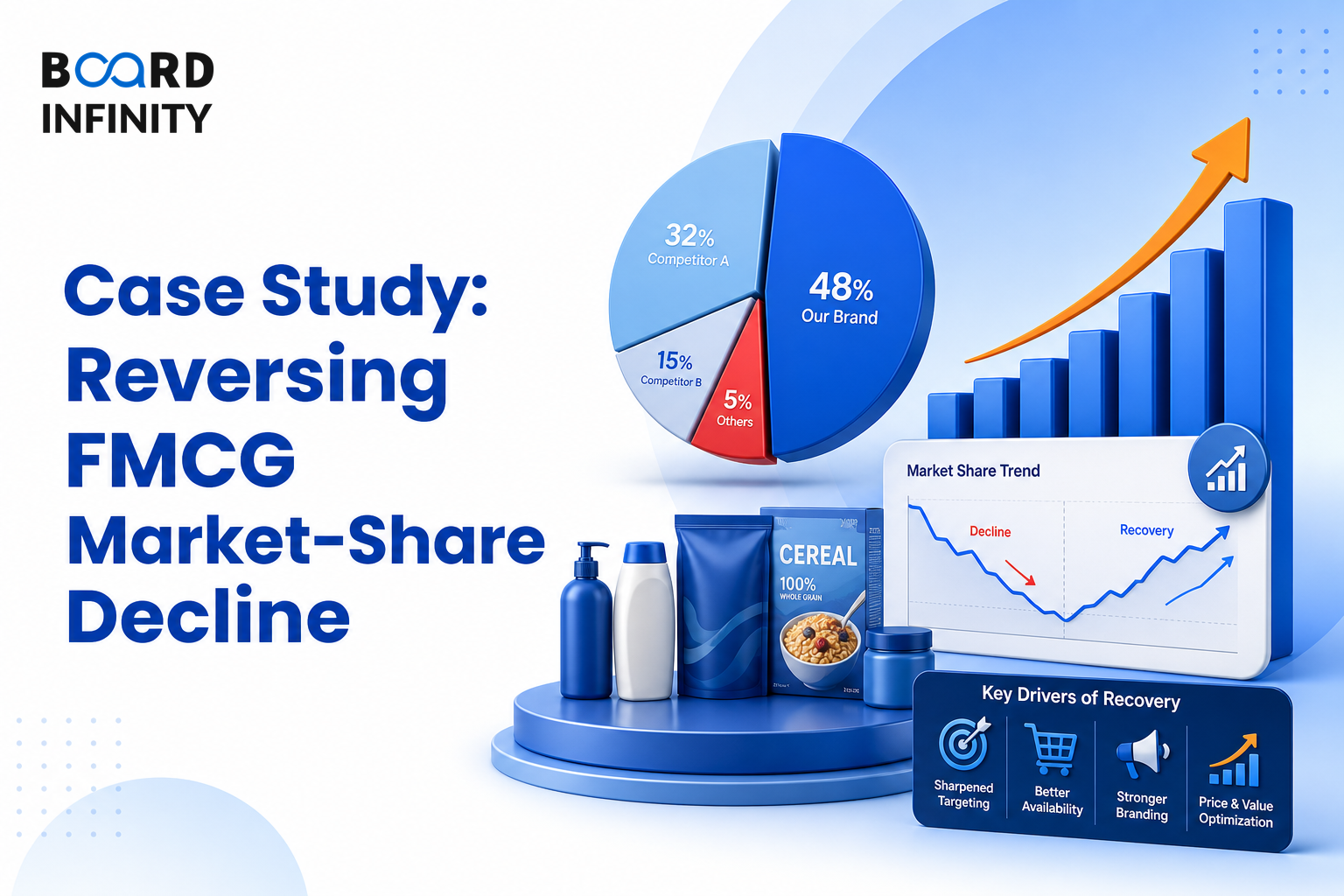
After launching a D2C brand on a ₹50L budget, the harder interview move is diagnosing why a large brand is losing share before prescribing fixes. In this fast-moving consumer goods case, you are the brand manager of a leading ₹500 Cr revenue shampoo brand in India, and the CEO wants a turnaround plan after market share drops from 24% to 19%. The core skill is to use the 5C Framework first, then move into root-cause hypotheses and a phased 12-month recovery plan.
- The brief: You are the brand manager of a leading ₹500 Cr revenue shampoo brand in India, and over the past 18 months, market share has dropped from 24% to 19%.
- Step 1 is to diagnose before prescribing by using the 5C Framework: Company, Customers, Competitors, Collaborators, and Context.
- In FMCG, market share loss typically comes from a combination of distribution loss, innovation gap, price-value mismatch, and communication fatigue.
- Quick Wins in Month 1-3 include launching a 'Natural Range' sub-brand, improving price pack architecture, and trade push.
- Brand Refresh in Month 3-6 includes a new campaign, digital-first launch, and sampling at scale with salon chains like Lakme and Naturals.
- Sustain & Grow in Month 6-12 includes D2C channel launch, Marketing Mix Modelling (MMM), and a quarterly innovation pipeline.
- Never jump to 'increase ad spend' when share declines. A structured turnaround always starts with diagnosis.
Big Picture: Diagnose Before Prescribing
The case starts with a simple business problem: a leading ₹500 Cr revenue shampoo brand in India has seen market share drop from 24% to 19% over the past 18 months. The CEO wants a turnaround plan, but the first move is not to prescribe communication fixes. Use the 5C Framework to structure the diagnosis.
Likely Root Causes
Once the diagnosis is structured, build a hypothesis tree. In FMCG, market share loss typically comes from a combination of the following causes.
Phased Turnaround Plan
The recommendation should move from diagnosis into a phased plan for the next 12 months. The plan starts with quick wins, then refreshes the brand, and finally builds sustained growth mechanisms.
Never jump to 'increase ad spend' when share declines. The 5C diagnosis framework ensures you check product, distribution, pricing, and competition before prescribing communication fixes. A structured turnaround always starts with diagnosis.
Worked Case Flow
Situation: You are the brand manager of a leading ₹500 Cr revenue shampoo brand in India. Over the past 18 months, market share has dropped from 24% to 19%.
Problem: The CEO wants a turnaround plan. Before recommending action, diagnose whether the loss is linked to Company, Customers, Competitors, Collaborators, or Context.
Framework: Use the 5C Framework to investigate Nielsen data, internal sales by SKU/region, P&L trends, brand health tracker, purchase frequency data, cohort retention, NPS trends, competitor ad spends, new launches, pricing changes, distribution moves, trade feedback, distribution audits, agency performance reviews, category growth rate, premiumisation trends, and D2C disruption in haircare.
Decision: Build the turnaround around likely root causes: distribution loss, innovation gap, price-value mismatch, and communication fatigue. Then recommend Quick Wins in Month 1-3, Brand Refresh in Month 3-6, and Sustain & Grow in Month 6-12.
Learning: Check product, distribution, pricing, and competition before prescribing communication fixes.
Structuring a Case Study Interview Answer
"You are the brand manager of a leading ₹500 Cr revenue shampoo brand in India. Over the past 18 months, market share has dropped from 24% to 19%. The CEO wants a turnaround plan. What would you recommend?"
Never jump to 'increase ad spend' when share declines. The strongest answer starts with diagnosis, checks product, distribution, pricing, and competition, and only then prescribes communication fixes.
The single most frequent error is treating a share decline as only a communication problem and immediately recommending higher ad spend. That costs points because the 5C diagnosis framework is meant to check product, distribution, pricing, and competition before prescribing communication fixes.
Conclusion
A ₹500 Cr shampoo brand losing share from 24% to 19% needs a structured turnaround, not a reflexive media push. Diagnose through the 5C Framework, identify the likely root causes, and then recommend a phased 12-month plan because a structured turnaround always starts with diagnosis.