
Content Marketing Strategy: A Step-by-Step Framework
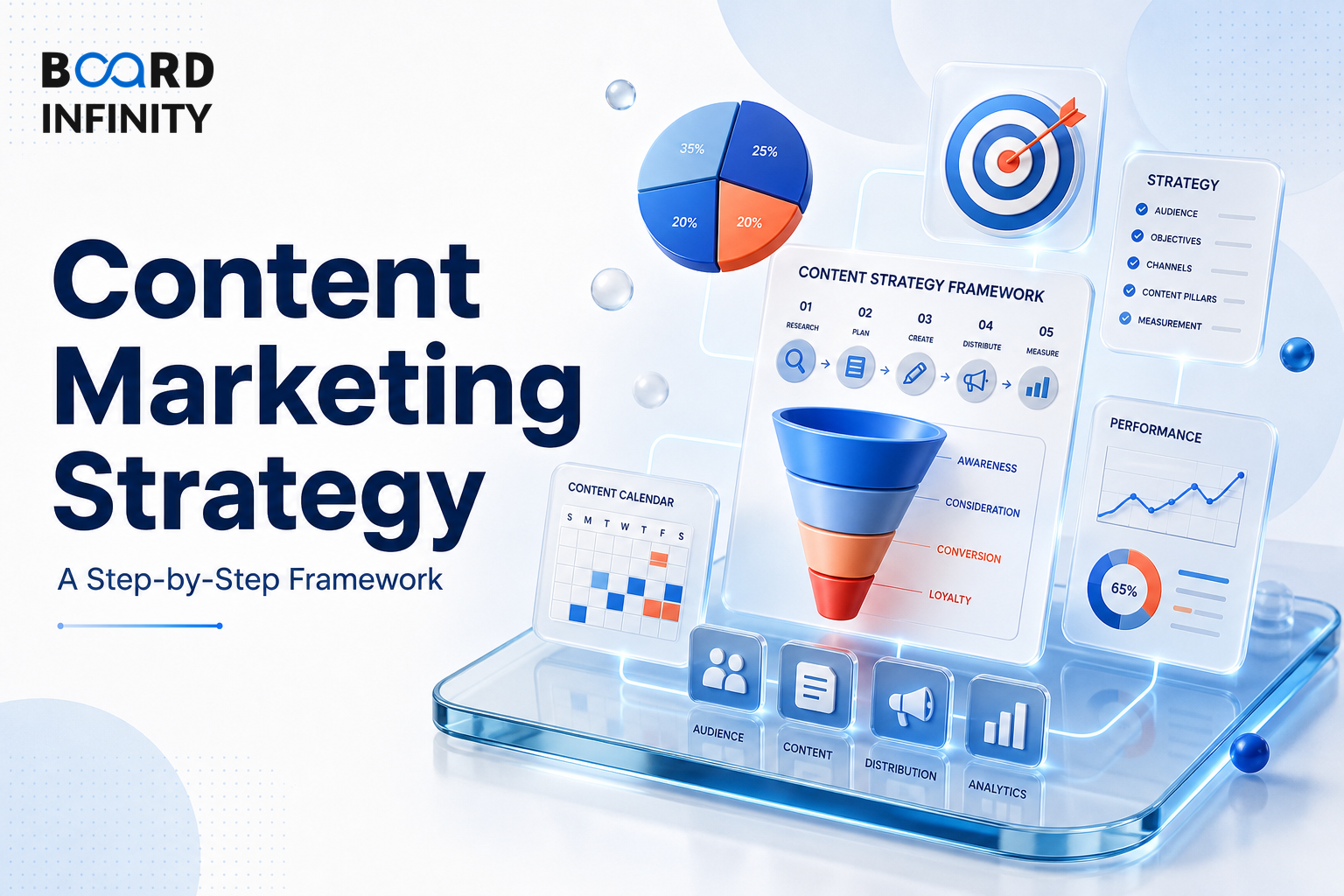
After understanding Social Media Marketing in India: A Platform Guide, the next question is how to build a content engine that is disciplined, measurable, and connected to the funnel. Content marketing strategy matters in interviews because it shows whether you can move beyond isolated posts and explain audit, personas, funnel mapping, publishing, distribution, and ROI optimization as one operating system.
- A structured approach to building an effective content marketing engine starts with auditing existing content and identifying gaps and opportunities.
- Target personas should include goals, pain points, and content preferences, producing 3-5 detailed persona documents.
- Content must be mapped to funnel stages: TOFU for awareness, MOFU for consideration, and BOFU for conversion.
- Keyword and topic research should identify high-volume, low-competition keywords and group them into topic clusters and pillar pages.
- An editorial calendar plans content creation, publication dates, distribution channels, and responsible teams.
- Measurement tracks traffic, engagement, leads, and conversions, then doubles down on what works and cuts what does not.
- Content marketing costs 62% less than traditional marketing and generates approximately 3× as many leads per dollar spent, but most content programs take 6-12 months to show meaningful ROI.
Content Marketing Strategy as a 7-Step Operating System
A structured approach to building an effective content marketing engine moves from understanding what already exists to producing, distributing, measuring, and optimizing content. The full system is useful because each step creates a clear output, from a content inventory and gap analysis to monthly performance reports.
Content marketing costs 62% less than traditional marketing and generates approximately 3× as many leads per dollar spent. However, it requires patience - most content programs take 6-12 months to show meaningful ROI.
How the Framework Works
The process begins with Audit existing content: analyze what content you have, what performs well, gaps, and opportunities. The output is a content inventory & gap analysis, which gives the content engine a starting point instead of forcing teams to create blindly.
The next step is Define target personas: create detailed buyer personas with goals, pain points, content preferences. The output is 3-5 detailed persona documents, which helps connect content themes to the audience being targeted.
The third step is Map content to funnel stages. The content funnel is TOFU, MOFU, and BOFU: TOFU uses blogs, social posts, and videos for awareness; MOFU uses guides and webinars for consideration; BOFU uses case studies and demos for conversion.
Keyword Research, Editorial Calendar, and Publishing
Keyword & topic research means identifying high-volume, low-competition keywords. These are grouped into topic clusters & pillar pages, producing a keyword list & topic clusters.
Create editorial calendar means planning content creation, publication dates, distribution channels, and responsible teams. The output is a monthly editorial calendar, which converts strategy into a production plan.
Produce & distribute means creating high-quality content and repurposing across formats, such as blog → video → carousel → newsletter. The output is published content assets.
Measurement and Optimization
The final step is Measure & optimize: track traffic, engagement, leads, conversions. The decision rule is simple - double down on what works, cut what does not. The output is monthly performance reports.
Content builds trust, establishes thought leadership, and drives organic traffic. It is the foundation of inbound marketing.
Named Examples in India
India: Nykaa's beauty content strategy drives 40%+ organic traffic. Zerodha's Varsity is a masterclass in content marketing.
These examples matter because they show content as more than publishing volume. Content-led systems can build trust, establish thought leadership, and drive organic traffic when the strategy is tied to audience needs and funnel stages.
Structuring a Content Marketing Strategy Interview Answer
"How would you build an effective content marketing engine and prove its ROI?"
Do not present content marketing as only content creation. A strong answer closes the loop with measurement, optimization, and the patience required for 6-12 months to show meaningful ROI.
The most frequent error is stopping at Produce & distribute and ignoring Measure & optimize. This costs points because a content marketing strategy must track traffic, engagement, leads, and conversions, then double down on what works and cut what does not.
Conclusion
Content marketing strategy is a disciplined 7-step operating system: audit, personas, funnel mapping, keyword and topic research, editorial calendar, production and distribution, and measurement. The core takeaway is to connect content to funnel stages and ROI instead of treating it as isolated publishing.
Social Media Marketing in India: Platform Selection Guide