
The Digital Marketing Funnel: Awareness to Conversion
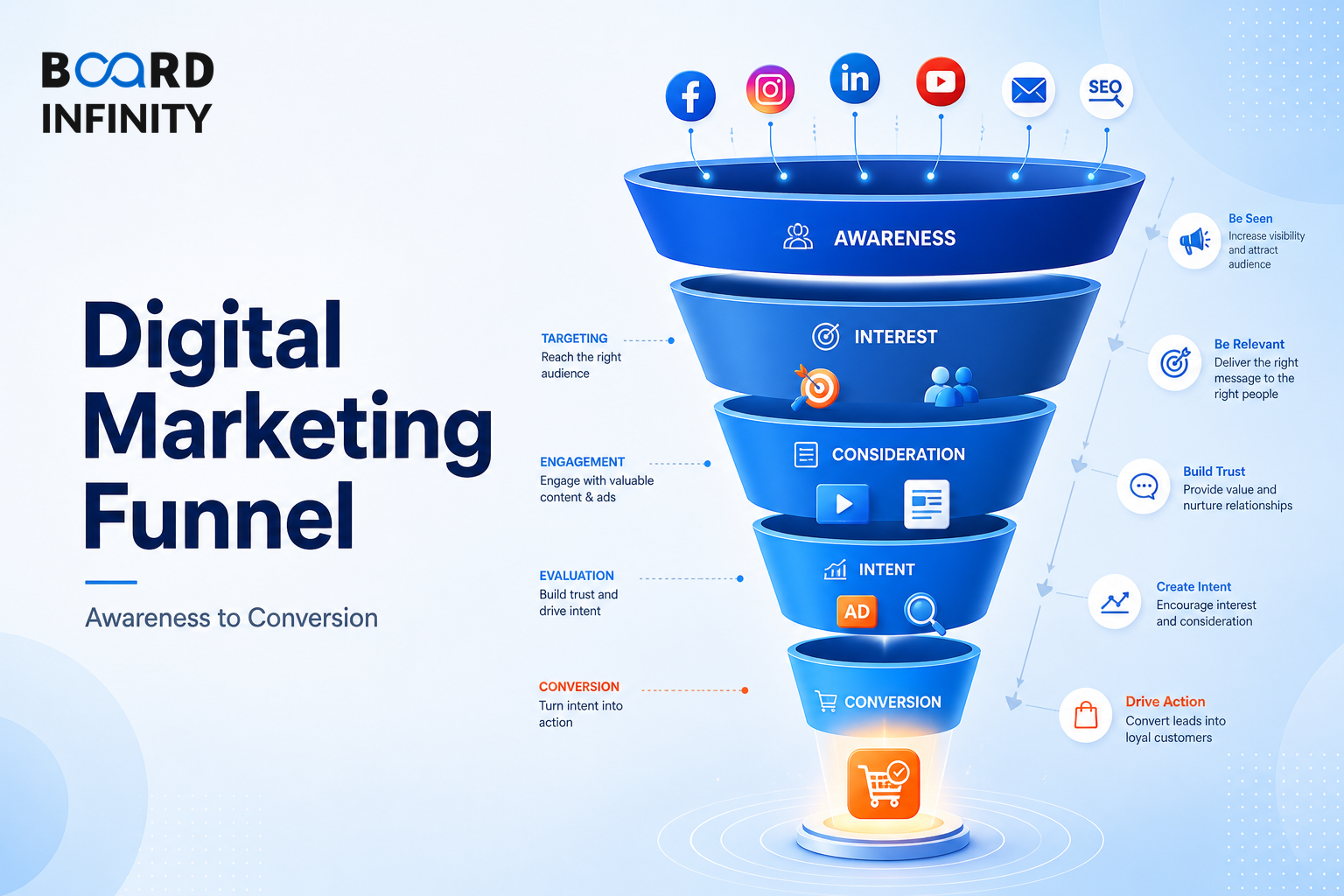
After understanding The 9 Digital Marketing Channels Explained, the next interview question is how those channels fit together across a customer journey. The digital marketing funnel maps stages from awareness to retention, connecting customer intent with the right goals, channels, and key metrics. This matters in interviews because a strong answer is not just about naming channels, but showing how YouTube, WhatsApp, email, ads, content, and community work at different funnel stages.
- The digital marketing funnel includes Awareness, Interest, Consideration, Conversion, and Retention.
- Awareness uses TOFU channels such as SEO, Social, Ads, and PR to reach new audiences.
- Consideration uses MOFU channels such as Content, Retargeting, Email, SEM, and Webinars to engage and educate.
- Conversion uses BOFU channels such as Performance Ads, WhatsApp, SMS, and Landing Pages to drive purchase or signup.
- Retention uses Post-Sale channels such as Email, Push, CRM, Loyalty, and Community to drive repeat and advocacy.
- Key metrics shift by stage: Impressions, Reach, CPM, Brand Lift at Awareness; CVR, CPA, ROAS, Revenue, Add-to-Cart Rate at Conversion; Churn Rate, LTV, NPS, Repeat Purchase Rate at Retention.
How the Digital Marketing Funnel Fits Together
The marketing funnel connects stages, acronyms, goals, channels, and key metrics. The big picture is simple: use upper-funnel channels to reach new audiences, middle-funnel channels to engage and educate, bottom-funnel channels to drive purchase or signup, and post-sale channels to build repeat and advocacy.
Funnel Stages, Goals, Channels, and Metrics
A useful funnel answer should not stop at channel names. Each stage has a goal, a channel mix, and key metrics that indicate whether the stage is working.
Awareness: Reaching New Audiences
Awareness is a TOFU stage with the goal to reach new audiences. Channels include YouTube, Social Ads, SEO, OTT, and Influencers.
The key metrics for this stage are Impressions, Reach, CPM, and Brand Lift. In an interview answer, this is where channels such as YouTube fit naturally because they help reach audiences before the buyer is ready to purchase or sign up.
Interest: Building Early Engagement
Interest is also mapped to TOFU. The channels listed for this stage are Blog, Content, and Email.
This stage connects the first audience touchpoint with deeper engagement. It helps move a user from discovering the brand to consuming content or responding to communication.
Consideration: Engaging and Educating
Consideration is the MOFU stage with the goal to engage and educate. Channels include Content, Retargeting, Email, SEM, and Webinars.
The key metrics are CTR, Time on Page, Video Views, and Email Opens. Case Studies, Webinars, and Demos also fit this stage because they help a prospect evaluate the offering before purchase or signup.
Conversion: Driving Purchase or Signup
Conversion is the BOFU stage with the goal to drive purchase/signup. Channels include Performance Ads, WhatsApp, SMS, and Landing Pages.
The key metrics are CVR, CPA, ROAS, Revenue, and Add-to-Cart Rate. WhatsApp is a strong example to mention at this stage because it appears directly in the conversion channel mix, alongside SMS and Landing Pages.
Retention: Repeat and Advocacy
Retention is the Post-Sale stage with the goal of repeat and advocacy. Channels include Email, Push, CRM, Loyalty, and Community.
The key metrics are Churn Rate, LTV, NPS, and Repeat Purchase Rate. This stage reminds interviewers that a digital marketing plan should not stop at the first purchase or signup.
Structuring a The Digital Marketing Funnel Interview Answer
"How would you allocate a ₹10L digital budget for a D2C brand launch?"
In digital marketing interviews, always talk in terms of metrics. Numbers and frameworks demonstrate competence, so link every funnel stage to the goal, channels, and key metrics that show performance.
The most frequent error is listing channels without mapping them to the funnel stage, goal, and metric. Saying only that you will use YouTube, email, or WhatsApp loses points because it does not show whether the channel is meant for Awareness, Consideration, Conversion, or Retention.
Conclusion
The digital marketing funnel is a stage-by-stage system for connecting customer intent with the right channels, goals, and metrics. A strong interview answer moves from Awareness to Retention and shows exactly how performance will be measured at each stage.
Social Media Marketing in India: Platform Selection Guide