
Equity vs Debt Financing: CFO Capital Structure Trade-off
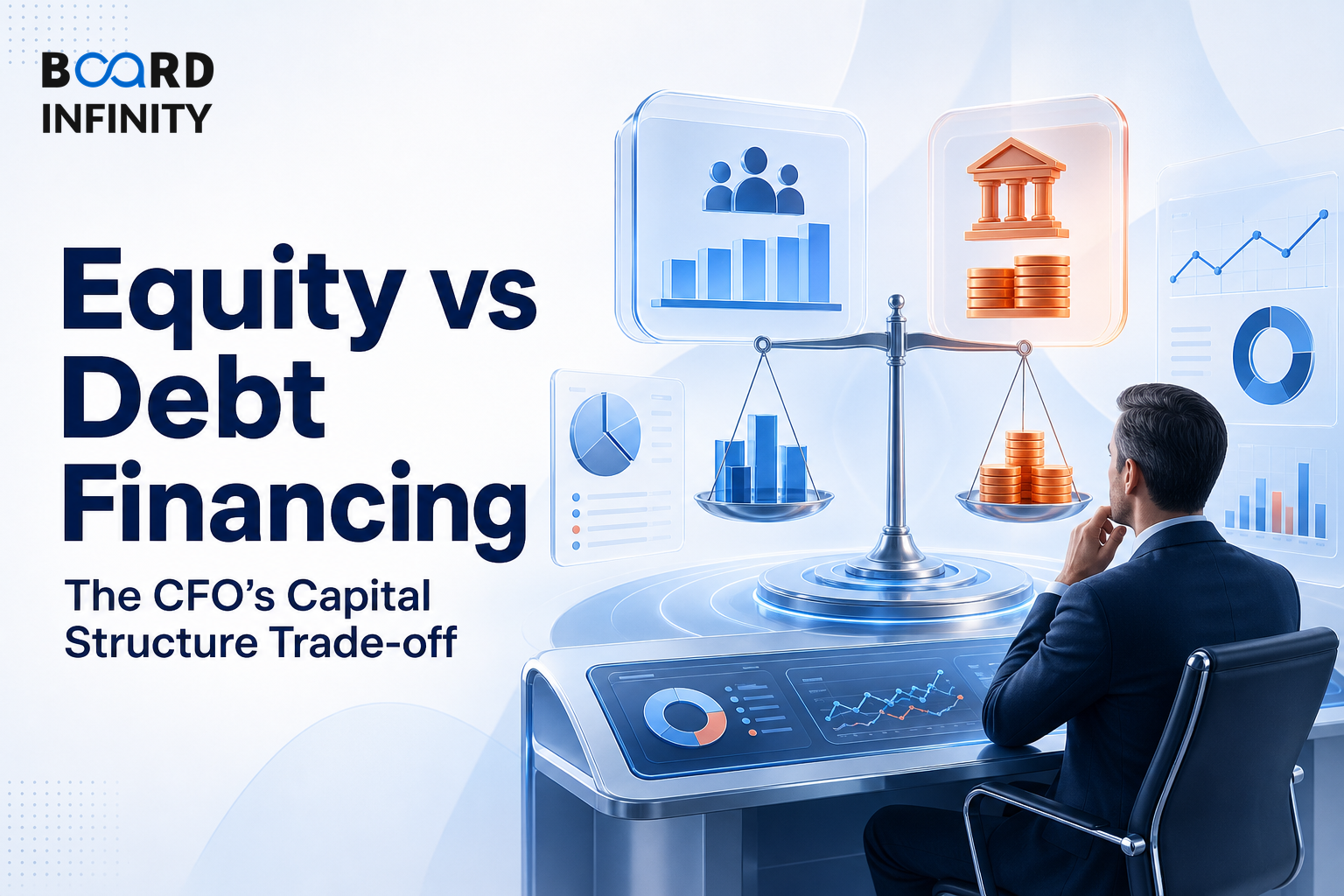
Equity vs debt financing is a capital structure question: how should a firm finance its operations and growth while protecting firm value? In interviews, this matters because the best answer is not "debt is cheaper" or "equity is safer" - it is a CFO-style trade-off between tax-shield value and financial distress risk.
- The capital structure decision is fundamentally about balancing the tax shield from debt, because interest is deductible, against the costs of financial distress.
- Modigliani-Miller (MM) without taxes says capital structure is irrelevant; with taxes, debt creates value.
- Optimal Capital Structure: Maximise Firm Value = PV(Tax Shield) - PV(Distress Costs).
- Debt has lower cost and no ownership dilution, but brings covenants on ratios and default risk if ICR <1x.
- Equity has no distress risk and no covenant restrictions, but has higher cost and dilutes ownership.
- A CFO should prefer debt when ICR >3x comfortably, business is mature with stable cash flows, and promoter does not want dilution.
- Prefer equity when EBITDA volatile, large growth capex planned, and need operational flexibility.
The Capital Structure Trade-off
The capital structure decision is fundamentally about balancing the tax shield from debt, because interest is deductible, against the costs of financial distress. Modigliani-Miller (MM) without taxes says capital structure is irrelevant; with taxes, debt creates value.
Optimal Capital Structure: Maximise Firm Value = PV(Tax Shield) - PV(Distress Costs)
Equity vs Debt Comparison
CFO Advice Angle
Infosys is debt-free (equity-heavy) - high cash generation, no need for leverage. Adani Ports D/E = 1.3x - asset-heavy infrastructure benefits from debt tax shield. Bajaj Finance D/E = 6x - NBFC business model requires leverage to generate spread.
Structuring a Equity vs Debt Financing Explained Interview Answer
"If you were CFO, when would you prefer debt over equity, and when would you prefer equity?"
The biggest error is treating lower cost of debt as the whole answer. Debt if profitable & stable, but equity for volatile businesses and flexible growth cos.
Saying debt is always preferable because it is lower cost is the single most frequent error. It ignores covenants on ratios, default if ICR <1x, and the need for operational flexibility when EBITDA volatile or large growth capex planned.
Conclusion
Equity vs debt financing is best answered as a CFO capital-structure trade-off: debt creates value through the tax shield when cash flows are stable, while equity protects flexibility when distress risk or growth uncertainty is high.