
Organic vs Inorganic Growth Explained
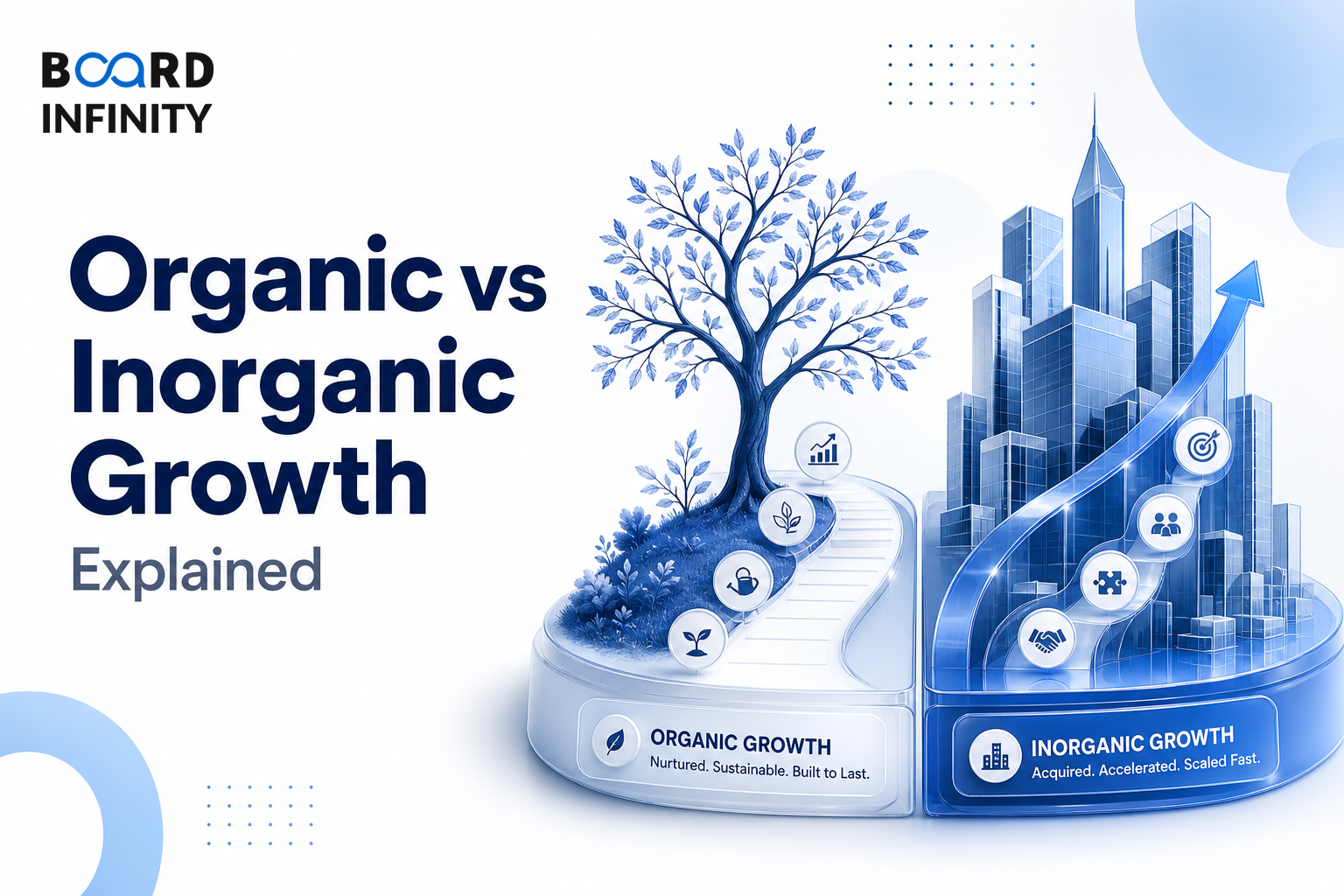
After Dividend vs Buyback: Capital Return Strategy, where a company has surplus cash and no high-IRR capex, the next Chief Financial Officer (CFO) and Chief Executive Officer (CEO) decision is whether to build capability organically or acquire it. The choice between building capability organically vs acquiring it is a core CFO/CEO decision. In interviews, this matters because it tests how clearly you can weigh speed, cost, execution risk, culture fit, and valuation impact.
- The choice between building capability organically vs acquiring it is a core CFO/CEO decision.
- Key trade-off: time - inorganic is faster - vs price - organic is cheaper but slower.
- Organic growth typically takes 3-5 years, while inorganic growth through mergers and acquisitions (M&A) can be immediate.
- Organic cost is lower - build at book - while inorganic cost is higher because the buyer may pay control premium of 30-50%.
- Execution risk is high in both: organic has uncertain success, while inorganic has integration risk.
- Culture fit is full control in organic growth, while inorganic growth is often mismatched.
- Valuation impact is gradual in organic growth, while inorganic growth can create immediate accretion/dilution.
Big Picture: Build Capability or Acquire It
Organic growth means building capability internally; inorganic growth means acquiring it through mergers and acquisitions (M&A). M&A involves combining or acquiring companies to create strategic, operational, or financial value.
The decision is not about which route is always better. It is a trade-off between time, price, execution risk, culture fit, and valuation impact.
Key trade-off: time - inorganic is faster - vs price - organic is cheaper but slower.
In the speed dimension, organic growth takes 3-5 years, while inorganic growth is immediate. Reliance: Hamleys, Netmeds acquired (fast). The strategic so what: inorganic is faster, but the key trade-off remains time vs price.
Reading the Trade-off
On speed, organic growth takes 3-5 years, while inorganic growth is immediate. This is why Reliance: Hamleys, Netmeds acquired (fast) is a useful example for the inorganic path.
On cost, organic is lower because the company can build at book. Inorganic is higher because the company may pay control premium of 30-50%. Tata: built Tata Digital organically is the India example for the organic cost route.
On execution risk, both routes are high risk, but for different reasons. Organic growth has uncertain success, while inorganic growth has integration risk. Tata-Corus: synergies overestimated is the example that captures this risk.
On culture fit, organic growth gives full control. Inorganic growth is often mismatched, as seen in Sun Pharma-Ranbaxy integration issues.
On valuation impact, organic growth is gradual. Inorganic growth can create immediate accretion/dilution. Accretion/dilution means whether the acquiring company's Earnings per Share (EPS) increases or decreases post-acquisition. Bajaj Finance: organic growth (best) is the example for the organic valuation path.
How to Use This in a CFO/CEO Discussion
A strong answer should not treat organic or inorganic growth as automatically superior. The CFO/CEO lens is to compare the route against the capability needed, the time available, the price paid, the likelihood of execution success, the culture fit, and the immediate or gradual valuation impact.
If speed is the dominant constraint, inorganic growth is faster. If price and control matter more, organic growth is cheaper but slower.
Structuring a Organic vs Inorganic Growth Explained Interview Answer
"As a CFO or CEO, would you build capability organically or acquire it?"
The strongest answers keep the trade-off balanced: inorganic is faster, but organic is cheaper and gives full control. Do not stop at speed without discussing price, integration risk, culture fit, and valuation impact.
The most frequent error is saying inorganic growth is better because it is immediate. That misses the higher cost, control premium of 30-50%, integration risk, often mismatched culture, and immediate accretion/dilution impact.
Conclusion
Organic vs inorganic growth is a CFO/CEO trade-off between building capability slowly at lower cost and acquiring it quickly at a higher price. The final takeaway is simple: choose the route by comparing speed, cost, execution risk, culture fit, and valuation impact together.