
Global Footprint and Localisation Choices
A product that looks global from the outside often runs on a very local operating system underneath. The same furniture concept, burger format or smartphone supply chain may cross borders, but the warehouse network, sourcing mix, service promise, labour model and customer handover can change sharply from one country to another.
- Global footprint is the configuration of plants, suppliers, warehouses, service centres and markets across countries.
- Localisation is the deliberate adaptation of product, process, sourcing or service design to fit a local market.
- The core trade-off is global efficiency vs local responsiveness: lower cost and scale on one side, faster fit and resilience on the other.
- Footprint choices answer “where should we operate?”; localisation choices answer “what must change by market?”
- Use the framework: customer promise - location drivers - make/buy/partner - localisation depth - risk and metrics.
- Good answers do not say “global is cheaper” or “local is better”; they identify which operating activities should be global, regional or local.
- Best interview examples show both the primary driver and supporting drivers behind the footprint choice.
Big Picture: The Two Forces Pulling Every Global Operation
Global operations design is not about choosing one extreme. It is about deciding which activities need scale and standardisation, and which activities need local adaptation to protect demand, service, compliance or resilience.
Core Explanation: What You Actually Decide
A global footprint decision has two linked questions.
Question 1: Where should the operating network sit? This covers factories, suppliers, warehouses, call centres, fulfilment hubs, engineering teams and service locations. It connects directly to aligning operations with business strategy, because a premium-speed business and a lowest-cost business should not have the same footprint.
Question 2: What should be localised? This covers product specifications, packaging, sourcing, last-mile delivery, service model, staffing, pricing architecture, compliance processes and even the store or channel format.
A strong footprint answer sounds like this: “Keep scale-sensitive activities global or regional, but localise customer-facing and regulation-sensitive activities.”
The Four Footprint Archetypes
Most companies sit somewhere in this 2x2. The axes are simple: how much the market needs local adaptation, and how much the operation benefits from scale.
Global platform: one highly standardised operating model serves many markets. This works when products are uniform, freight economics are manageable and local regulation does not force redesign.
Regional hub: one hub serves a cluster of nearby markets. This reduces distance and lead time while preserving some scale.
Local-for-local: production, sourcing or service is close to the market. This works when demand is volatile, regulation is local, tariffs matter or speed is a competitive priority.
Glocal network: the company keeps a global product or process backbone but localises the final customer-facing layer. Many consumer and retail businesses use this model.
The Five-Step Decision Framework
Use this when you need to analyse a company, market entry, plant location, sourcing strategy or expansion case.
What to Localise: The Practical Menu
Localisation is not only language translation or marketing. In operations strategy, it has six practical layers.
A clean answer separates these layers. For example, a company may keep the product architecture global, localise packaging, source selected components locally and create a market-specific service model.
Metrics to Judge a Footprint Choice
Footprint choices look strategic, but they must be tested operationally. Use 4-6 metrics rather than one cost number.
If the question involves capacity, connect the answer to lead, lag or match capacity strategy. A local plant that arrives too early burns cash; one that arrives too late loses service and market share.
Definitions
- Global footprint: the geographic configuration of a firm’s operating assets, suppliers, partners and fulfilment nodes across markets.
- Localisation: adapting product, process, sourcing or service choices to meet local customer, cost, regulatory or infrastructure conditions.
- Global standardisation: using common products, processes and systems across markets to gain scale, consistency and control.
- Local responsiveness: the ability to adapt operating choices quickly to local demand, regulation, culture and infrastructure.
Case Study: IKEA India’s Glocal Operating Model
IKEA shows how a global concept can enter India by preserving the operating backbone while localising the customer-facing service model.
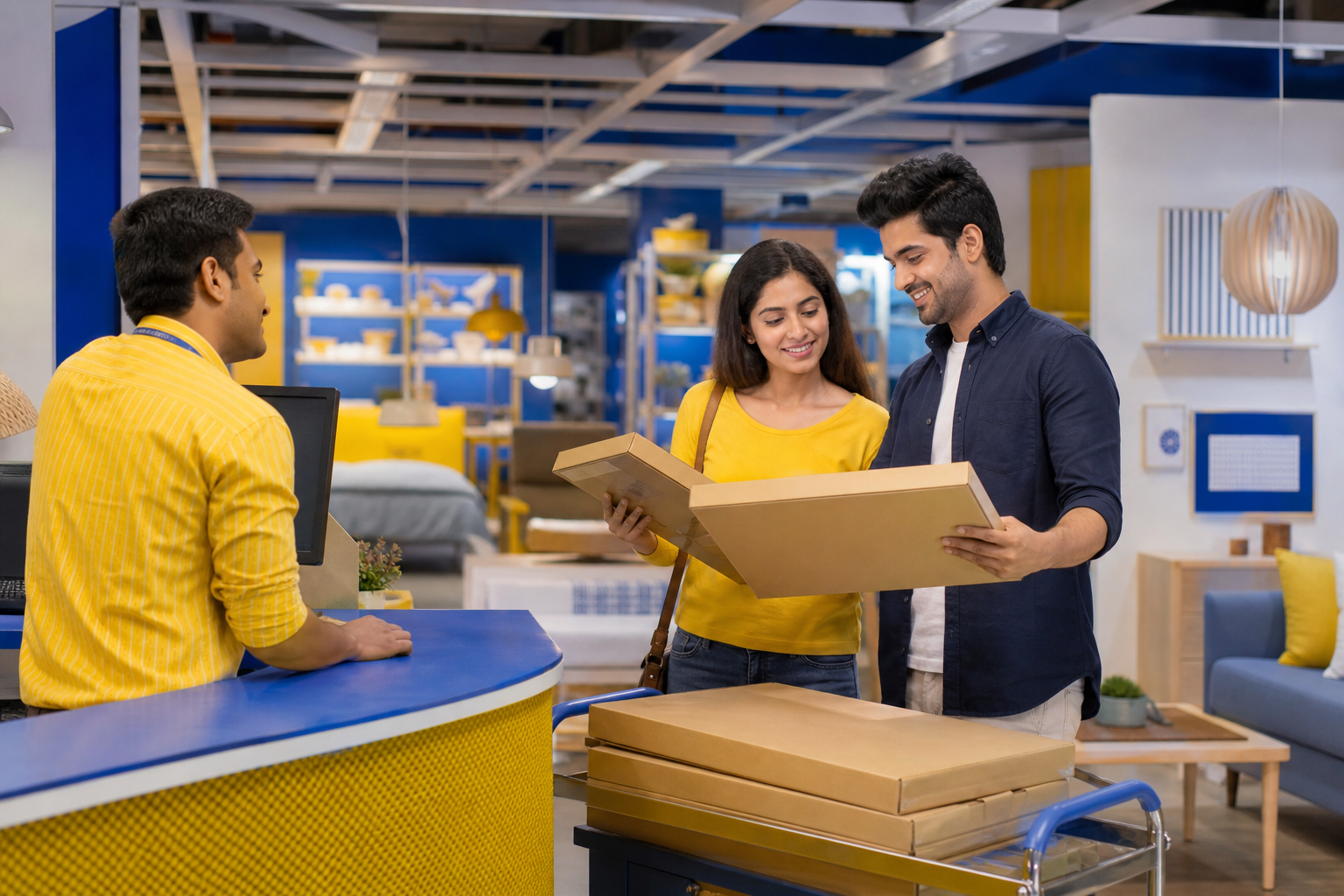
Situation: IKEA’s global model is built around design standardisation, flat-pack logistics, large-format retail, self-service browsing and cost discipline. India, however, is a market where many customers are less used to DIY furniture assembly, urban real estate is dense, and delivery plus installation support can strongly influence adoption.
The move: IKEA did not abandon its global operating model. It kept the global backbone - standardised design logic, flat-pack handling, store-led experience and value pricing discipline - but localised important edges of the model. In India, the operating challenge is not just “sell furniture”; it is “help the customer discover, transport, assemble and use furniture in a market with different home sizes, service expectations and city logistics.” IKEA India publicly offers services such as delivery, assembly, planning and installation support through its India customer-service pages (IKEA India services).
Outcome or lesson: The primary driver is local customer adoption: a global self-service concept needs a service layer in India. The supporting drivers are city fulfilment design, local sourcing development, price architecture and channel adaptation. The strategic lesson is sharp: localisation should protect the parts of the global model that create advantage while adapting the parts that block adoption.
This is also why a shallow answer - “IKEA localised for India” - is not enough. A strong answer says exactly what stayed standard, what changed locally and why those choices protected the business model.
Indian Example: Hyundai’s Local Manufacturing Logic
Hyundai Motor India is another useful example for interviews because automobile operations cannot rely only on importing finished products. A carmaker needs supplier development, quality systems, dealer serviceability, variant planning and manufacturing scale close to demand. The primary driver is market access with cost and service control; supporting drivers include local supplier ecosystems, faster model adaptation, after-sales support and resilience against trade or currency shocks.
The “so what” is simple: in complex durable goods, localisation is not only about customer taste. It is also about building a manufacturing and supplier system that can support quality, cost, variety and service over years.
How AI Changes Global Footprint and Localisation Choices
AI does not remove the strategic trade-off. It makes the trade-off more visible, testable and dynamic.
Practical student workflow: Use ChatGPT or Claude to compare three footprint options - “central export hub,” “regional hub” and “local assembly” - across cost, service, risk, working capital and localisation depth. Then load your assumptions into NotebookLM with the company’s annual report or investor presentation and ask it to generate likely interview questions on the operations implications. For a structured modelling approach, revise using AI to model operations strategy options.
Interview Relevance
“A global consumer goods company wants to enter India. How would you decide whether to import, manufacture locally or partner with a local player?”
The ownership part of the answer links naturally to make, buy or partner as a strategic choice. If the firm lacks local suppliers, regulatory knowledge or last-mile capability, partnership may beat full ownership in the first phase.
Use the phrase “global backbone, local edge.” It signals that you understand standardisation and localisation can coexist inside the same operating model.
Common Mistake
The mistake: treating the footprint decision as a binary choice - “global means low cost, local means customer fit.” This costs candidates because real networks are activity-specific. Fix: break the operating model into activities and decide which should be global, regional, local, owned, outsourced or partnered.