
HR in Manufacturing: Where Industrial Relations Still Dominates
At Samsung India’s Sriperumbudur factory near Chennai, a people issue in 2024 did not look like a townhall or an engagement survey. It looked like workers outside the plant, production pressure inside the plant, union recognition demands, state mediation and management trying to protect business continuity.
- Manufacturing HR is IR-heavy because labour is concentrated, work is shift-based, stoppages are costly and rules are legally enforceable.
- Industrial relations means the relationship between management, workers, unions and the state around workplace rules, voice and conflict.
- The core HR job is to balance production continuity, legal compliance, worker dignity, safety and productivity.
- Key IR tools are grievance handling, collective bargaining, standing orders, disciplinary procedures, wage settlements and statutory compliance.
- Shopfloor HR is measured through absenteeism, grievance closure, lost time injury frequency rate, overtime intensity, strike or lockout days and contractor compliance.
- The interview-winning answer links HR decisions to plant output, not just employee satisfaction.
- The biggest mistake is treating manufacturing HR like corporate HR and ignoring unions, labour law, safety and line-supervisor discipline.
Big Picture: Manufacturing HR Runs on the Shopfloor, Not in the HR Cabin
In services, HR often optimizes talent, engagement and culture. In manufacturing, HR first protects the social contract that allows production to continue safely. One unresolved grievance, unsafe shift practice or poorly handled disciplinary case can move from supervisor issue to union issue to conciliation room.
Core Explanation: Why Industrial Relations Still Dominates Manufacturing HR
The simplest way to understand manufacturing HR is this: the factory is a high-dependence system. Machines, materials, shifts, supervisors, contractors and workers must move together. HR is not a support function sitting outside operations; it is part of the production system.
Industrial relations dominates because the employment relationship is more collective, rule-bound and stoppage-sensitive than in most white-collar settings. A policy mistake does not just create dissatisfaction. It can stop a line, trigger legal escalation or damage trust built over years.
The Manufacturing HR Stack: What HR Actually Owns
A good answer should show that manufacturing HR is layered. You cannot talk about engagement before safety, compliance and discipline are under control.
Here is what each layer means in practice:
- Safety and compliance: Factories must comply with safety, welfare, wage, social security and labour contractor obligations. A plant with weak safety cannot claim strong HR.
- Attendance and wages: Shift rosters, overtime, leave, payroll accuracy and wage settlement discipline directly affect output and trust.
- Relations and discipline: HR manages grievances, misconduct cases, domestic enquiries, standing orders and union discussions without appearing arbitrary.
- Skills and flexibility: Plants need operators who can run multiple machines, adapt to new technology and fill gaps without quality loss.
- Productivity: The final goal is stable output with safe work, fair treatment and predictable labour cost.
Manufacturing HR vs Corporate HR: The Difference Interviewers Expect You to Know
The same HR concepts exist in both worlds, but the risk profile changes dramatically inside a plant.
The Four Actors in Industrial Relations
Industrial relations is not just “HR versus union.” A mature answer names all actors and their incentives.
- Management wants productivity, safety, predictable labour cost and flexibility.
- Workers want fair wages, safe conditions, dignity, predictable shifts and job security.
- Unions or worker representatives convert individual concerns into collective bargaining power.
- The state enters through labour departments, conciliation officers, inspectors, courts and statutory frameworks.
Key Tools of HR in a Manufacturing Plant
Manufacturing HR is practical. The best candidates do not speak only in abstract words like “engagement”; they name the instruments used inside plants.
What to Measure: Manufacturing HR and IR Metrics
Metrics matter because plant HR must prove that people systems are protecting both workers and operations. Benchmarks differ by industry, union context and plant maturity, so compare trends against the plant’s own baseline and statutory requirements.
Definitions You Can Say in One Breath
- Industrial relations: The relationship between management, workers, unions and the state around workplace rules, voice and conflict.
- Dunlop’s IR view: Industrial relations is a system of actors creating workplace rules within market, technological and power contexts.
- Collective bargaining: Negotiation between an employer and employee representatives over wages, work rules and employment conditions.
- Grievance: A formal employee complaint that a rule, right, policy or settlement has been violated.
- Standing orders: Certified or documented service rules governing classification, attendance, misconduct, discipline and separation.
Case Study: Samsung India Sriperumbudur and the Return of Hard IR
Samsung India’s 2024 labour dispute at its Sriperumbudur plant showed that even high-tech manufacturing still depends on classic industrial relations.
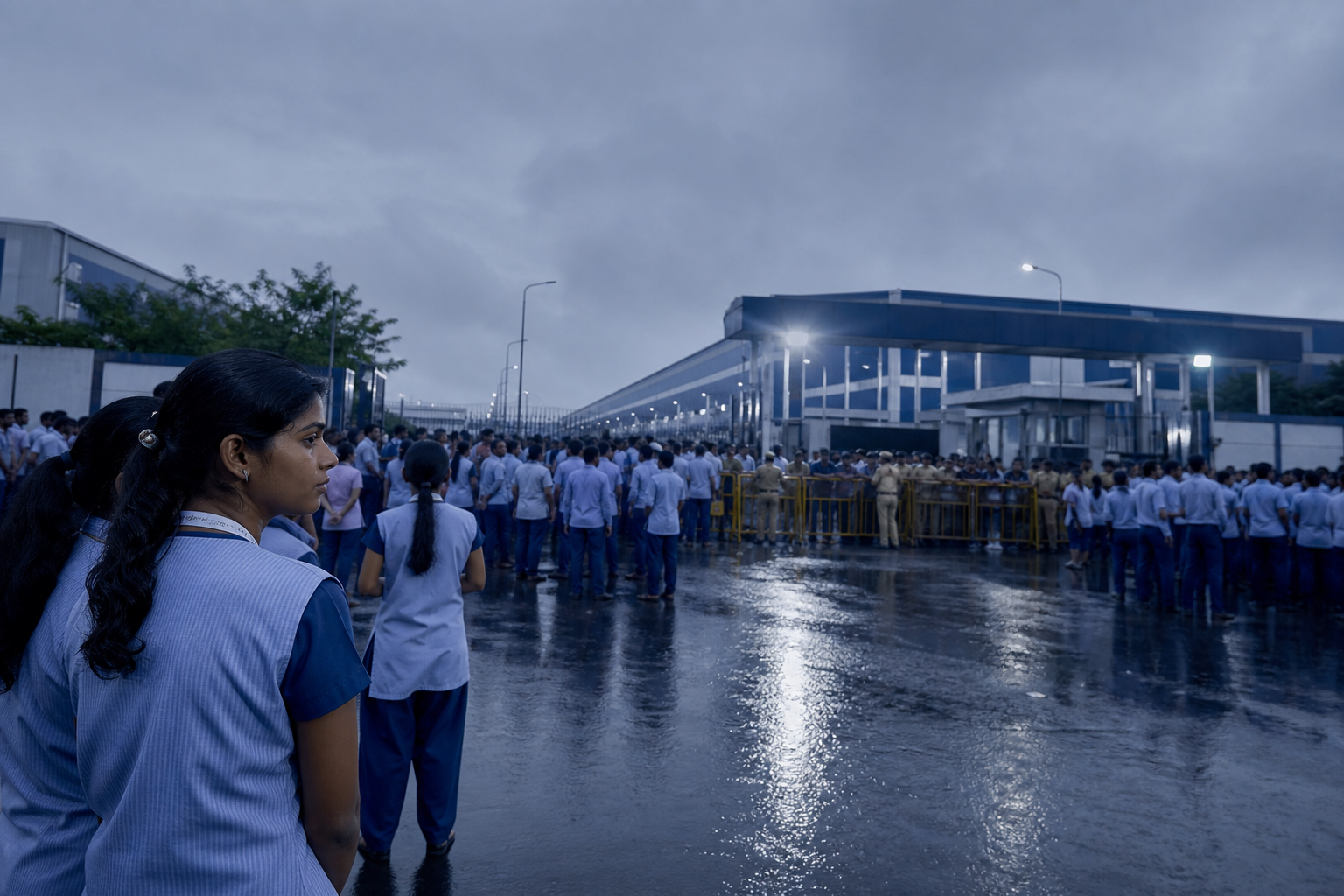
Situation: In 2024, workers at Samsung India’s Sriperumbudur manufacturing facility near Chennai protested over issues reported publicly around wages, working conditions and union recognition. The plant is strategically important because consumer electronics manufacturing depends on tight schedules, quality discipline and predictable labour availability.
The move: The dispute moved beyond ordinary HR handling. It involved worker representatives, union-linked demands, management discussions, government attention and mediation efforts. This is the manufacturing HR reality: once the matter becomes collective, HR must operate at the intersection of law, negotiation, operations and reputation.
Outcome and lesson: The key lesson is not that “unions are a problem.” The lesson is that unresolved voice, wage expectations and recognition questions can become business continuity risks. The primary driver of the dispute was collective representation and bargaining recognition; supporting drivers included wage expectations, shopfloor trust, production dependence and the visibility of a global brand operating in India.
So what: A strong interview answer uses this case to prove that modern manufacturing HR is not old-fashioned. It is high-stakes stakeholder management where labour law, trust and output meet.
How AI Changes HR in Manufacturing
AI will not replace industrial relations judgement, but it is changing how plant HR detects risk, plans manpower and improves safety.
- Predictive attendance and manpower planning: HR teams can use shift, leave, overtime and absenteeism data to forecast manpower gaps before they hit the production line. The caveat: models must not penalize protected groups or treat legitimate leave as misconduct.
- Safety analytics and computer vision: Plants increasingly use camera-based systems and sensor data to flag unsafe zones, missing PPE or near-miss patterns. HR must connect this to training and fair discipline, not surveillance fear.
- Skills intelligence: AI can map operator skills, certifications and training needs to create better deployment plans for multi-skilling, automation adoption and succession on critical machines.
Use NotebookLM or Perplexity to upload a company annual report, sustainability report and recent labour news. Ask: “Identify manufacturing HR risks, union or workforce issues, safety indicators and likely interview questions for this company.” Then convert the output into a 60-second answer using safety, compliance, IR and productivity as your structure.
Interview Relevance
“How is HR in a manufacturing company different from HR in an IT or services company? What would be your priorities as an HR manager in a unionized plant?”
Use the phrase “credible voice before conflict”. It signals maturity: you understand that the best IR strategy is not fire-fighting, but building trust, fair rules and early grievance resolution.
Mistake: Giving a generic HR answer about engagement, training and culture while ignoring industrial relations. Why it costs you: it shows you do not understand the factory context. Fix: answer in this order - safety and compliance, production continuity, collective relations, discipline, skills and productivity.