
HUL Project Shakti: Rural Marketing Case Study
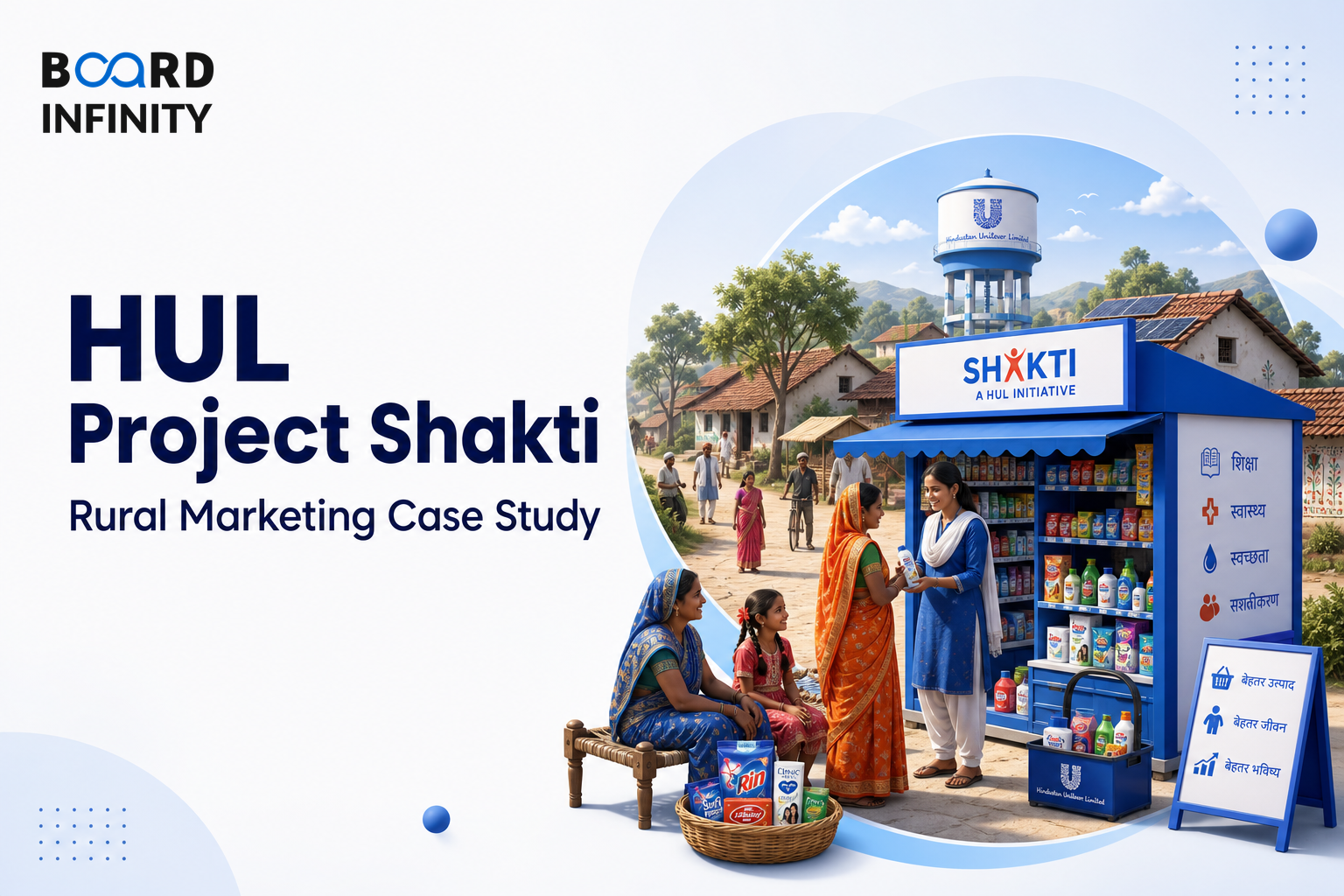
HUL Project Shakti is a last-mile rural distribution case where Hindustan Unilever turned local women entrepreneurs into a scalable, trust-based sales network for underserved villages. It matters in interviews because it connects rural marketing, distribution innovation, social impact, and sustainable business model design in one case.
- Company: Hindustan Unilever | Year: 2001-Present.
- In 2001, HUL couldn't effectively reach 600,000+ villages where 65% of Indians lived.
- Traditional distribution infrastructure (roads, warehouses, retail outlets) was almost non-existent, and the last-mile problem was the biggest barrier to growth.
- HUL recruited women from Self-Help Groups (SHGs) as 'Shakti Ammas' - micro-entrepreneurs who sold HUL products door-to-door in their villages.
- 50,000+ Shakti Ammas across 18 states reached 100,000+ villages.
- Rural revenue grew to 40%+ of HUL's total revenue, while Lifebuoy and Wheel achieved 80%+ rural penetration.
- Project Shakti demonstrates innovation in Place, social impact, and sustainable business model design.
Big Picture Overview
Project Shakti works because HUL solved a rural distribution problem by building a human distribution network. The case is best understood through the challenge, the Shakti Amma model, the measurable results, and the frameworks applied.
The Challenge
In 2001, HUL couldn't effectively reach 600,000+ villages where 65% of Indians lived. Traditional distribution infrastructure (roads, warehouses, retail outlets) was almost non-existent. The last-mile problem was the biggest barrier to growth.
This is why Project Shakti is a rural marketing case, but more specifically, a Place innovation case. The question was not only whether rural consumers wanted HUL products, but whether HUL could make products available in villages where conventional distribution could not work effectively.
The Strategy
HUL recruited women from Self-Help Groups (SHGs) as 'Shakti Ammas' - micro-entrepreneurs who sold HUL products door-to-door in their villages.
Each Shakti Amma received:
- Working capital loans and initial inventory on credit
- Training on selling techniques and product knowledge
- Tablets for digital ordering and inventory management (Shakti 2.0)
- A sustainable income of ₹3,000-5,000/month - transformative in rural India
Shakti Ammas were women from Self-Help Groups (SHGs) - micro-entrepreneurs who sold HUL products door-to-door in their villages.
Why the Shakti Amma Model Worked
Project Shakti converted a missing distribution infrastructure problem into a local entrepreneurship model. Instead of depending only on roads, warehouses, retail outlets, and traditional retail reach, HUL used trusted local women to create a human distribution network.
The strategy also linked business growth with rural income generation. Each Shakti Amma received working capital loans, initial inventory on credit, training, product knowledge, and later tablets for digital ordering and inventory management through Shakti 2.0.
Results
- 50,000+ Shakti Ammas across 18 states reaching 100,000+ villages
- Rural revenue grew to 40%+ of HUL's total revenue
- Lifebuoy and Wheel achieved 80%+ rural penetration
- Won multiple global awards for inclusive business innovation
Frameworks Applied
Project Shakti is powerful in interviews because the same case can be explained through multiple marketing frameworks without changing the facts.
The 4As of Rural Marketing in Project Shakti
The 4As framework addresses the unique challenges of marketing to rural India, where 65% of the population lives. In Project Shakti, HUL solved all four through a model that combined door-to-door access, sachets, trusted local women, and in-person demos.
Hindustan Unilever: The Full Framework in One Business
Hindustan Unilever demonstrates the full framework because Project Shakti connected the rural market challenge, the Shakti Amma distribution model, and measurable business outcomes.
A shallow answer says HUL used rural women to sell products. A complete answer shows how HUL solved the last-mile problem through Place innovation, the 4As, and a scalable rural business model.
Placement Takeaway
Project Shakti is the gold standard answer for 'How would you expand an FMCG brand in rural India?' It demonstrates innovation in Place (4Ps), social impact, and sustainable business model design. Know this case cold.
Structuring a HUL Project Shakti Interview Answer
"How would you expand an FMCG brand in rural India?"
For any rural India expansion answer, start with Availability because distribution is the #1 barrier, then connect the answer to Affordability, Acceptability, and Awareness. Cite HUL Shakti as your go-to example.
Conclusion
HUL Project Shakti shows how a rural distribution barrier became a scalable, trust-based sales network through Shakti Ammas. The final takeaway is simple: in rural India, growth often begins with solving last-mile Availability before the rest of the marketing mix can work.
The most frequent error is describing Project Shakti only as a social impact story without linking it to Place innovation, the 4As, and business results. That costs points because the case is valuable precisely because it combines rural distribution, measurable growth, and sustainable business model design.