
Paytm: A Landmark Listing and the Regulatory Reset That Followed
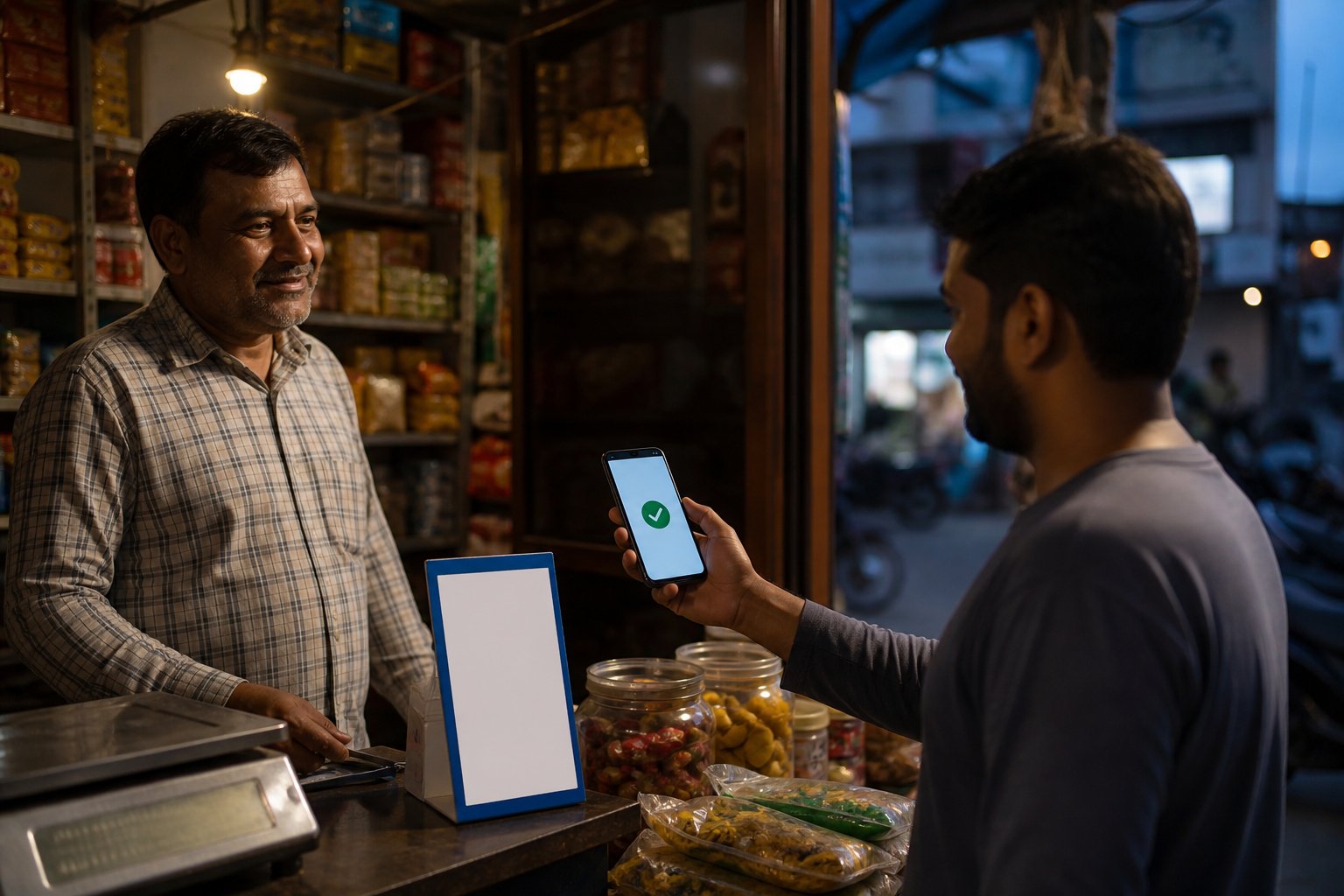
A small shopkeeper could still scan a blue QR code and accept digital payments, while the market was punishing the company behind that familiar habit. That is the Paytm story in one line: massive consumer adoption did not automatically translate into public-market trust.
- Paytm's 2021 IPO was a landmark listing - One97 Communications raised about ₹18,300 crore at an issue price of ₹2,150 per share.
- The listing questioned the business model, not digital payments itself. Investors asked whether scale could convert into durable profits.
- Payments are high-frequency but often thin-margin. The stronger monetisation story came from merchant services, financial services distribution and lending partnerships.
- The 2024 RBI action against Paytm Payments Bank was a regulatory reset. It forced sharper separation between the listed technology company, the licensed bank and partner-bank rails.
- The interview lens is three-fold: valuation, unit economics and regulatory governance.
- The biggest trap: saying “RBI banned Paytm.” The action was against Paytm Payments Bank; the Paytm app and One97 had to reconfigure dependencies.
Big Picture: Paytm Is a Fintech Case, Not Just an IPO Case
Paytm teaches a powerful placement concept: in fintech, customer scale creates optionality, but regulation decides how safely that optionality can be monetised. The IPO tested the valuation of the platform; the RBI reset tested the resilience of the operating architecture.
Core Explanation: What Actually Happened and Why It Matters
One97 Communications, the parent company of Paytm, came to the public market in November 2021 with one of India's largest IPOs. The brand had deep consumer recall, wide merchant visibility through QR codes and a strong position in India's digital payments habit.
But public markets ask a harder question than users do: where is the cash flow, how defensible is it, and what regulatory risk sits underneath it? Paytm's listing-day weakness signalled that investors were not rejecting digital payments; they were discounting uncertainty around monetisation, losses, competition and regulatory dependence.
The later regulatory action made that concern more concrete. On 31 January 2024, the Reserve Bank of India directed Paytm Payments Bank to stop accepting fresh deposits, credit transactions and top-ups in customer accounts, wallets and certain instruments after the specified deadline, later extended to 15 March 2024 for several services. The RBI cited persistent non-compliances and supervisory concerns. For interview purposes, that sentence is crucial: the issue was not “payments are dead”; it was compliance quality inside a regulated entity.
One97 Communications is the listed company behind the Paytm app and many merchant/customer services. Paytm Payments Bank was the regulated payments bank entity that held customer deposits and wallets. After the RBI action, One97 had to reduce operational dependence on Paytm Payments Bank and move key payment flows to partner-bank arrangements. So what: in fintech, entity structure is not legal trivia - it shapes business continuity.
The Three Lenses That Explain Paytm
Use three lenses whenever Paytm comes up: valuation, unit economics and regulatory governance. A strong answer does not choose one lens and ignore the others.
1. Valuation Lens: Scale Was Visible, Profits Needed Proof
Paytm had a huge user and merchant footprint, but IPO investors wanted evidence that the platform could move from transaction frequency to profitable monetisation. In payments, the user may transact daily, but revenue per transaction can be thin. That makes adjacent monetisation - merchant devices, payment gateway, lending distribution, insurance, wealth and commerce - central to the story.
2. Unit Economics Lens: Not All Digital Transactions Are Equal
A QR payment, a wallet balance, a soundbox subscription, a merchant loan referral and a payment gateway transaction have different economics. The question is not “How many users?” but “Which users create contribution profit after incentives, processing cost, credit risk and servicing cost?”
3. Regulatory Governance Lens: Fintech Is Not Pure Tech
Paytm's regulatory reset shows why fintech companies cannot be analysed like ordinary consumer apps. A food delivery app can change a restaurant partner quickly. A regulated payments business must satisfy KYC, anti-money laundering controls, customer fund protection, outsourcing norms, data security and board-level governance.
Definitions You Should Be Able to Say Cleanly
- Initial public offer: Under SEBI ICDR Regulations, an IPO is an offer of specified securities by an unlisted issuer to the public for subscription.
- Payments bank: An RBI-licensed bank that can accept demand deposits and enable payments, but cannot undertake lending.
- Unit economics: The revenue and cost behaviour of one transaction, customer, merchant or loan cohort.
- Regulatory reset: A forced redesign of business practices after a regulator identifies unacceptable compliance or supervisory risk.
Case Study: Paytm's Listing and the Reset After RBI Action
Paytm showed how a beloved consumer fintech can win daily usage but still be forced to prove profitability, governance and regulatory resilience to public markets.
Situation: By 2021, Paytm had become one of India's most recognisable digital payment brands. Its IPO raised about ₹18,300 crore, with an issue price of ₹2,150 per share. The consumer story was easy to understand: wallets, QR codes, merchants and app-based financial services. The investor story was harder: how would this payment scale turn into sustainable profit?
The move: After listing pressure, Paytm increasingly emphasised monetisation through merchant subscriptions, payment gateway services, financial services distribution and cost discipline. But in January 2024, the RBI's action against Paytm Payments Bank forced a more fundamental reset. One97 had to preserve customer and merchant continuity while reducing dependence on the payments bank entity. In March 2024, NPCI approved One97 Communications to participate in UPI as a third-party application provider under a multi-bank model with partner banks including Axis Bank, HDFC Bank, State Bank of India and Yes Bank.
Outcome and lesson: The lesson is not that digital payments failed. The primary driver of the reset was regulatory non-compliance risk in a licensed entity. Supporting drivers included thin payment economics, dependence on regulated rails, intense competition and public-market demand for clearer profitability. Paytm's experience proves that in fintech, trust architecture is part of the business model.
How AI Changes Paytm-Style Fintech Analysis
1. AI makes credit underwriting faster, but also more explainable-demanding. Fintechs use machine learning signals for risk scoring, fraud checks and collections prioritisation. In India, this must align with RBI expectations on digital lending, customer consent, fair treatment and explainability. A black-box model can create regulatory risk if customers, auditors or regulators cannot understand the decision logic.
2. AI improves compliance monitoring. Transaction-monitoring systems can use anomaly detection to flag unusual merchant behaviour, mule accounts, suspicious velocity and KYC mismatches. The benefit is early detection; the risk is false positives, biased features or poor escalation workflows.
3. AI changes investor diligence. Analysts can use LLMs to scan DRHPs, annual reports, exchange filings, RBI orders and earnings-call transcripts for related-party exposure, regulatory dependencies and language shifts around profitability.
Use NotebookLM: upload Paytm's RHP, recent annual report, RBI press release on Paytm Payments Bank and one earnings-call transcript. Ask: “Create a timeline of valuation, unit economics and regulatory risk events, then generate five placement interview questions with model answers.”
Interview Relevance
“Paytm had a massive IPO, then faced a regulatory shock. Was the problem valuation, business model, or governance? How would you analyse it?”
Use this line if you are short on time: “Paytm was not a story of digital payments failing; it was a story of public markets asking for profit proof and the regulator demanding compliance proof.”
Common Mistake
The mistake: saying “RBI banned Paytm” or “Paytm failed because payments have no money.” This costs candidates because it merges separate entities and gives a simplistic cause. One-line fix: say, “The RBI action was against Paytm Payments Bank, while One97 had to redesign its operating rails and prove monetisation plus governance.”
What to Revise Next
Continue the same capital-markets and governance journey with two adjacent Indian business cases: