
Strikes, Lockouts & Dispute Resolution Machinery - Interview-Ready Labour Relations Guide
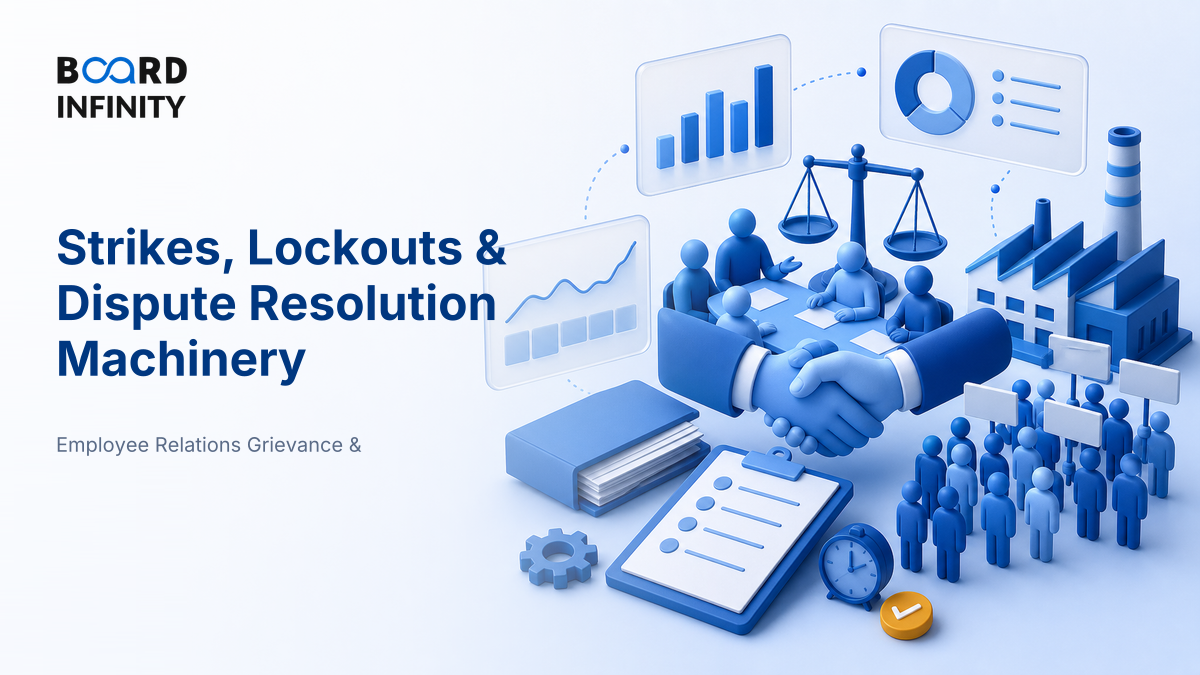
In 2024, a factory dispute at Samsung India’s Sriperumbudur plant did not stay inside the shop floor - it moved through union demands, management response, government mediation and public scrutiny. That is the real lesson of strikes and lockouts: they are not just “work stopped”; they are pressure tactics inside a legal and institutional system.
- Strike is a collective employee work stoppage or refusal to work; lockout is the employer-side temporary closure or refusal to employ.
- Both are industrial relations pressure tactics, but their legality depends on notice, timing, industry type and pending proceedings.
- India’s dispute resolution machinery moves from internal handling to conciliation, voluntary arbitration and adjudication by labour authorities or tribunals.
- Public utility services face stricter strike and lockout notice rules under the Industrial Disputes Act, 1947.
- A good HR answer separates legality, business continuity, employee relations and settlement design.
- The best preventive mechanism is not “discipline”; it is early grievance resolution, credible communication and fair collective bargaining.
Big Picture: A Dispute Is a Pipeline, Not a Single Event
A strike or lockout is usually the visible tip of a longer chain. The real HR skill is to catch the dispute early, use the correct machinery and avoid turning a manageable grievance into a shutdown.
The Core Explanation: Pressure, Legality and Settlement
Industrial dispute means a conflict connected with employment, non-employment, terms of employment or labour conditions. In practice, disputes arise around wages, working hours, recognition of unions, transfers, discipline, retrenchment, bonus, safety and contract labour.
A strike is employee-side collective pressure. A lockout is employer-side pressure. Both stop work, but they are not mirror images in business meaning: a strike signals employee protest; a lockout signals employer refusal to operate under disputed conditions.
The key distinction in interviews: do not call every stoppage illegal, and do not call every employer closure a lockout. Legality depends on the statute, the type of industry, notice rules and whether a proceeding is already pending.
When Is a Strike or Lockout Legally Sensitive?
Under the Industrial Disputes Act, 1947, public utility services have stricter rules. In broad terms, a strike or lockout in such services requires prior notice and cannot occur during specified protected periods such as conciliation proceedings. For non-public utility industries too, strikes and lockouts are restricted during pending conciliation, adjudication or arbitration proceedings and during the operation of settlements or awards.
Always check the applicable central law, state rules, standing orders, settlement terms and whether the Industrial Relations Code, 2020 has been operationalised for that context. Labour law is procedure-heavy; one missed notice period can change the entire answer.
Dispute Resolution Machinery in India
India’s industrial dispute machinery is designed to move conflict from confrontation to structured resolution. The route depends on the nature of dispute, parties involved and whether the matter is fit for voluntary settlement or formal adjudication.
Conciliation is the most important practical stage for HR managers. It preserves dialogue, creates a formal record and often prevents a dispute from becoming a long legal battle. Adjudication is more formal and slower, but necessary when parties cannot agree or when rights and legality must be determined.
What HR Should Track Before a Dispute Explodes
Strikes and lockouts rarely appear without warning. A disciplined HR team tracks both hard indicators and relationship signals.
The primary driver of industrial peace is credible problem resolution. Supporting drivers include fair wage communication, supervisor capability, safety culture, union relationship quality and documentation discipline.
Definitions You Can Say in One Breath
- Strike: a concerted cessation or refusal of work by employees acting together.
- Lockout: temporary closing, work suspension or employer refusal to continue employing workers.
- Industrial dispute: a dispute about employment, non-employment, terms of employment or labour conditions.
- Conciliation: a state-assisted process where a neutral officer helps parties reach settlement.
- Adjudication: formal legal determination of a referred industrial dispute by a labour authority or tribunal.
For exam or interview use, keep the definition short, then immediately add the legal caveat: “Its legality depends on notice, timing, industry category and pending proceedings.”
Case Study: Samsung India’s Sriperumbudur Labour Dispute
Samsung India’s 2024 Sriperumbudur dispute showed how wage demands, union recognition, production continuity and state mediation can converge in one industrial relations flashpoint.
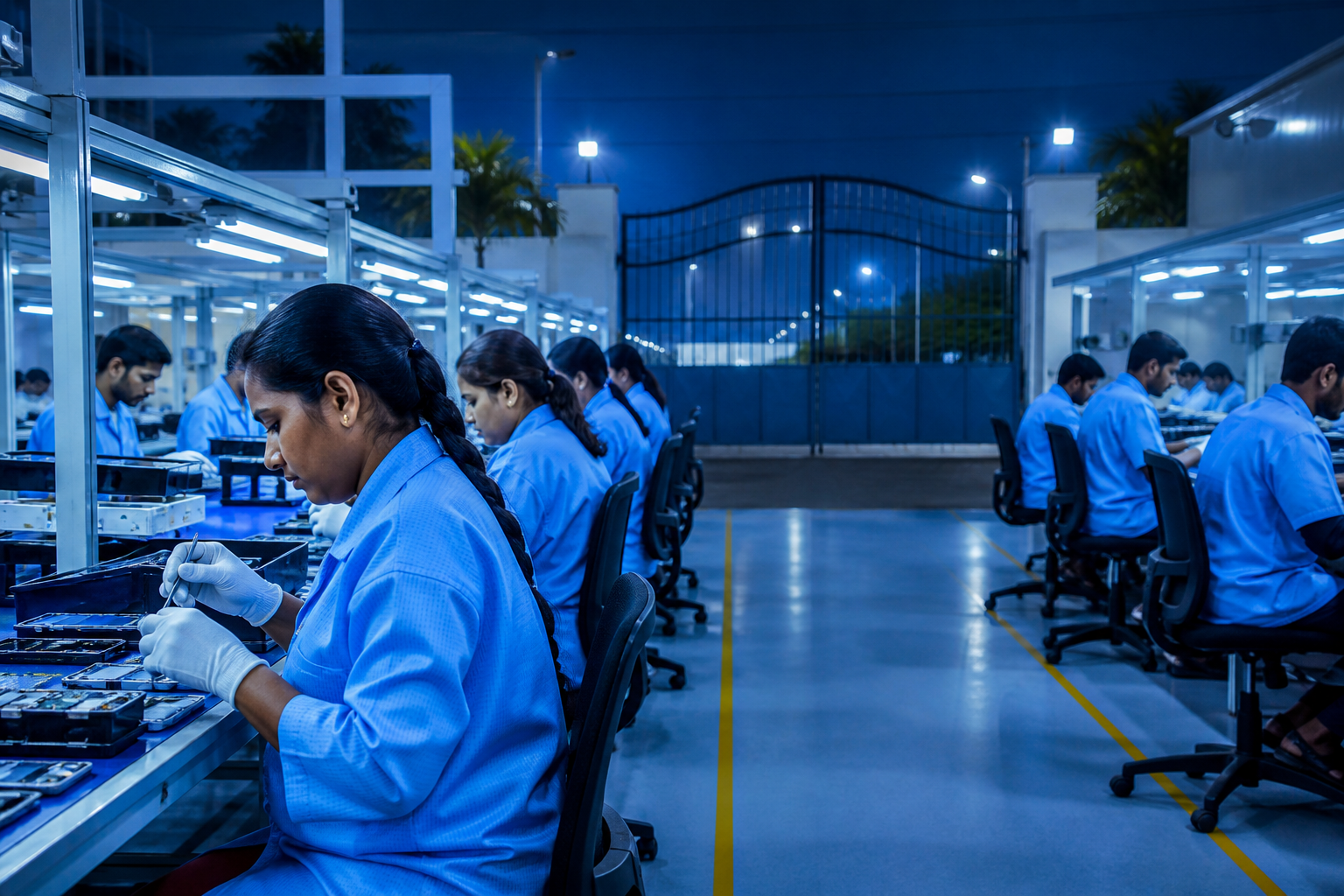
Situation: At Samsung India’s Sriperumbudur facility near Chennai, workers raised demands linked to wages, working conditions and union recognition. The dispute drew attention because the plant is part of a high-visibility electronics manufacturing ecosystem, where production continuity matters to both the company and the state’s investment narrative.
The move: The dispute moved beyond informal workplace disagreement into collective action, management response and government mediation. The Tamil Nadu labour machinery became important because neither side could treat the matter as a purely internal HR issue once the stoppage affected operations and public attention.
Outcome or lesson: The core lesson is not “workers struck, production suffered.” The better lesson is that industrial peace depends primarily on credible collective bargaining, supported by timely grievance handling, legally careful communication, production contingency planning and a state-mediated path to settlement.
The “so what” for an MBA student: manufacturing competitiveness is not just automation, cost and scale. It also depends on trust, bargaining architecture and legally sound dispute resolution.
How AI Changes Strikes, Lockouts & Dispute Resolution Machinery
AI will not replace labour law or collective bargaining, but it is changing how HR teams detect risk, prepare for negotiations and document disputes.
- Early-warning analytics: HR can use AI to scan grievance themes, absenteeism spikes, overtime stress, exit comments and employee sentiment to identify dispute hotspots before they become collective action. The caution: sentiment tools must respect privacy, consent and India’s DPDP Act principles.
- Negotiation preparation: AI can summarise wage settlements, tribunal awards, standing orders and comparable industry practices, helping HR prepare fact-based proposals instead of emotional counter-positions.
- Documentation discipline: LLM tools can help draft meeting minutes, chronology notes, settlement clause trackers and communication FAQs. Human review is essential because one careless phrase can look retaliatory or legally prejudicial.
Use NotebookLM or Claude to upload a company annual report, recent labour news and your notes. Ask: “Create five likely HR interview questions on this company’s labour relations risk, and answer using legality, business continuity and employee relations.”
Interview Relevance
“Suppose workers at a manufacturing plant go on strike during wage negotiations. As an HR manager, what will you do in the first 48 hours?”
In your answer, say “I will not immediately threaten termination or declare the strike illegal without legal verification.” This signals maturity, compliance awareness and practical HR judgement.
Common Mistake
The biggest mistake is treating strikes and lockouts as emotional confrontations instead of legal-institutional processes. It costs candidates because they jump to “discipline them” or “shut the plant” without checking notice, pending proceedings, safety and conciliation. One-line fix: first map facts and legality, then use communication, continuity planning and dispute machinery.
What to Revise Next
After strikes and lockouts, revise the legal end of the employment relationship. The natural next step is to understand how organisations reduce workforce size or end employment without creating avoidable litigation or reputational damage.