
Where AI Genuinely Helps HR, and Where It Must Not
A hiring team can now feed 5,000 resumes into a tool and get a ranked shortlist before lunch. The surprise is not that AI can do this - it is that the most dangerous moment comes after the ranking, when a human starts trusting the score more than the evidence.
- AI helps HR most in repetitive, data-rich, low-to-medium judgment tasks: resume parsing, scheduling, FAQs, learning recommendations, attrition alerts, and HR analytics.
- AI must not own final decisions on hiring, firing, promotion, compensation, discipline, or sensitive employee wellbeing without accountable human review.
- The core test is: Is the task structured, evidence-based, explainable, and reversible? If yes, AI can assist. If not, slow down.
- In HR, the risk is not only accuracy. It is bias, privacy, opacity, dignity, and legal accountability.
- Good HR AI design means human-in-the-loop, documented criteria, bias audits, data minimisation, explainability, and employee appeal mechanisms.
- For interviews, answer with a balanced line: AI should augment HR judgment, not replace ethical employment accountability.
The Big Picture
Think of AI in HR as a powerful assistant sitting between people data and people decisions. It is excellent at pattern recognition and workflow speed. It is weak at moral judgment, context, empathy, and accountability - exactly the things HR cannot outsource.
Core Explanation: The Three Zones of AI in HR
The cleanest way to answer this topic is to divide HR work into three zones: green zone, where AI genuinely helps; amber zone, where AI can assist only with guardrails; and red zone, where AI must not make or automate the decision.
1. Green Zone - Where AI Genuinely Helps
AI is useful when the work is repetitive, pattern-heavy, and easy to verify. These tasks waste HR bandwidth but do not require deep moral judgment.
Indian example: Infosys has used its learning platform Infosys Lex as part of employee reskilling and digital learning. The useful AI logic here is not “AI replaces HR trainers.” The real value is scale: recommending relevant learning paths, supporting self-paced development, and giving HR visibility into skills demand. The primary driver is structured digital learning infrastructure, supported by leadership focus on reskilling and large-scale employee participation.
2. Amber Zone - Where AI Can Assist, But Only With Guardrails
These are areas where AI can improve speed and insight, but the output can affect careers, pay, or psychological safety. Use AI as a second opinion, not as the judge.
3. Red Zone - Where AI Must Not Decide
AI must not be the final authority where the decision directly affects livelihood, dignity, rights, or personal identity. HR can use AI-generated evidence, but it cannot outsource responsibility.
The practical rule is simple: AI may recommend; HR must decide, explain, and own the consequence.
Definitions You Should Be Able to Say Cleanly
- AI in HR: Software that predicts, recommends, or generates HR outputs from candidate, employee, or workforce data.
- Human-in-the-loop: A system design where a person reviews, challenges, and owns the final decision.
- Algorithmic bias: Systematic unfairness in model outputs caused by biased data, design choices, or deployment context.
- Adverse impact: A selection practice that disproportionately disadvantages a protected group, even without explicit intent.
- Data minimisation: Collecting and using only the personal data necessary for a specific, legitimate purpose.
The HR AI Boundary Test
Before deploying AI in any HR activity, ask five questions. If the answer is weak on any one of them, the tool needs redesign or tighter human control.
What to Measure Before Scaling HR AI
If you say “AI improves HR,” an interviewer may immediately ask, “How will you know?” Track speed, quality, fairness, and trust together. A faster system that rejects good candidates unfairly is not an improvement.
Case Study - Workday: When HR AI Becomes a Legal and Trust Test
Workday shows why HR AI tools must be governed as employment decision systems, not treated as neutral back-office software.
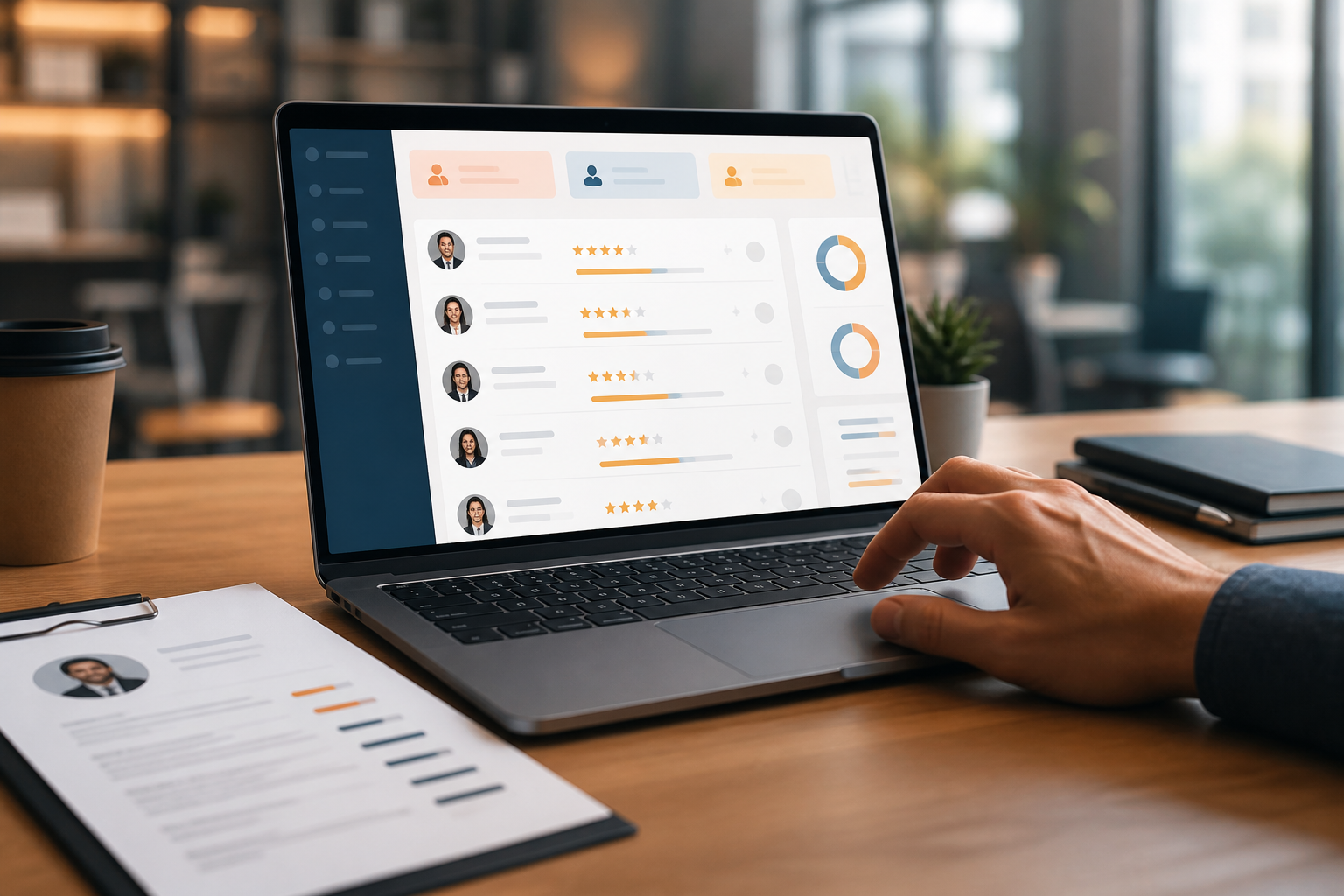
Situation: Workday is a major enterprise software company whose human capital management tools are used by employers for HR workflows, including recruiting-related processes. In the United States, a job applicant, Derek Mobley, brought legal claims alleging that Workday’s screening tools contributed to discriminatory outcomes across job applications. The case drew attention because it questioned whether an HR technology vendor could be treated as playing a role in employment decisions.
The move: The controversy pushed the real issue into the open: AI vendors and employers cannot hide behind the phrase “the algorithm did it.” When a tool screens, ranks, recommends, or filters candidates, it must be examined for job relevance, bias, explainability, and human oversight. Employers using such tools still need clear criteria, audit trails, and accountability.
The lesson: The primary driver of risk is not AI itself - it is high-stakes automation without enough transparency and governance. Supporting drivers include historical bias in training data, weak validation of job-related criteria, over-reliance by recruiters, and unclear accountability between vendor and employer.
So what: Workday is memorable because it proves the central boundary of this topic: HR AI is not just an efficiency tool. Once it influences opportunity, it becomes an ethical, legal, and trust system.
How AI Changes the Boundary Between HR Help and HR Harm
By 2026, the HR question is no longer “Should we use AI?” It is “Where should AI sit in the decision architecture?” Three shifts matter most.
1. From HR automation to HR copilots
AI is moving from simple workflow automation to copilots that draft job descriptions, summarise employee feedback, create interview questions, and generate policy answers. This helps HR teams move faster, but it also creates a new review burden: HR must verify accuracy, tone, legal sensitivity, and fairness before sending anything to employees or candidates.
2. From annual workforce planning to live skills intelligence
Companies are increasingly building skills taxonomies and using AI to infer skill gaps from roles, projects, learning records, and internal mobility data. This is useful for redeployment and reskilling. The danger is labelling employees too narrowly - for example, assuming someone has low potential because their current role data is limited.
3. From visible decisions to invisible influence
The riskiest AI is not always a dramatic “AI fired me” scenario. Often, it is invisible influence: who gets nudged toward a course, who appears in a recruiter search, who is flagged as flight risk, who is excluded from a shortlist. HR must audit not only final decisions but also recommendation pathways.
Use NotebookLM or Claude to prepare for interviews: upload a company annual report, its careers page, and one article on its HR tech initiatives. Ask: “Map where AI could help this company’s HR function, where it must not decide, and what safeguards CHROs should demand.” Then convert the answer into a green-amber-red framework.
Interview Relevance
“Our company wants to use AI in recruitment, performance management, and employee engagement. Where would you allow AI, and where would you draw the line?”
Use this sentence if you get stuck: “The line is not between AI and no AI; the line is between AI as evidence and AI as authority.”
Common Mistake
The biggest mistake is giving a one-sided answer - either “AI will transform HR completely” or “AI is too risky for HR.” This costs candidates because HR is a people function with business pressure and ethical risk together. The fix: always classify use cases by task structure, decision stakes, explainability, and human accountability.