
Why AI Literacy Matters in Finance
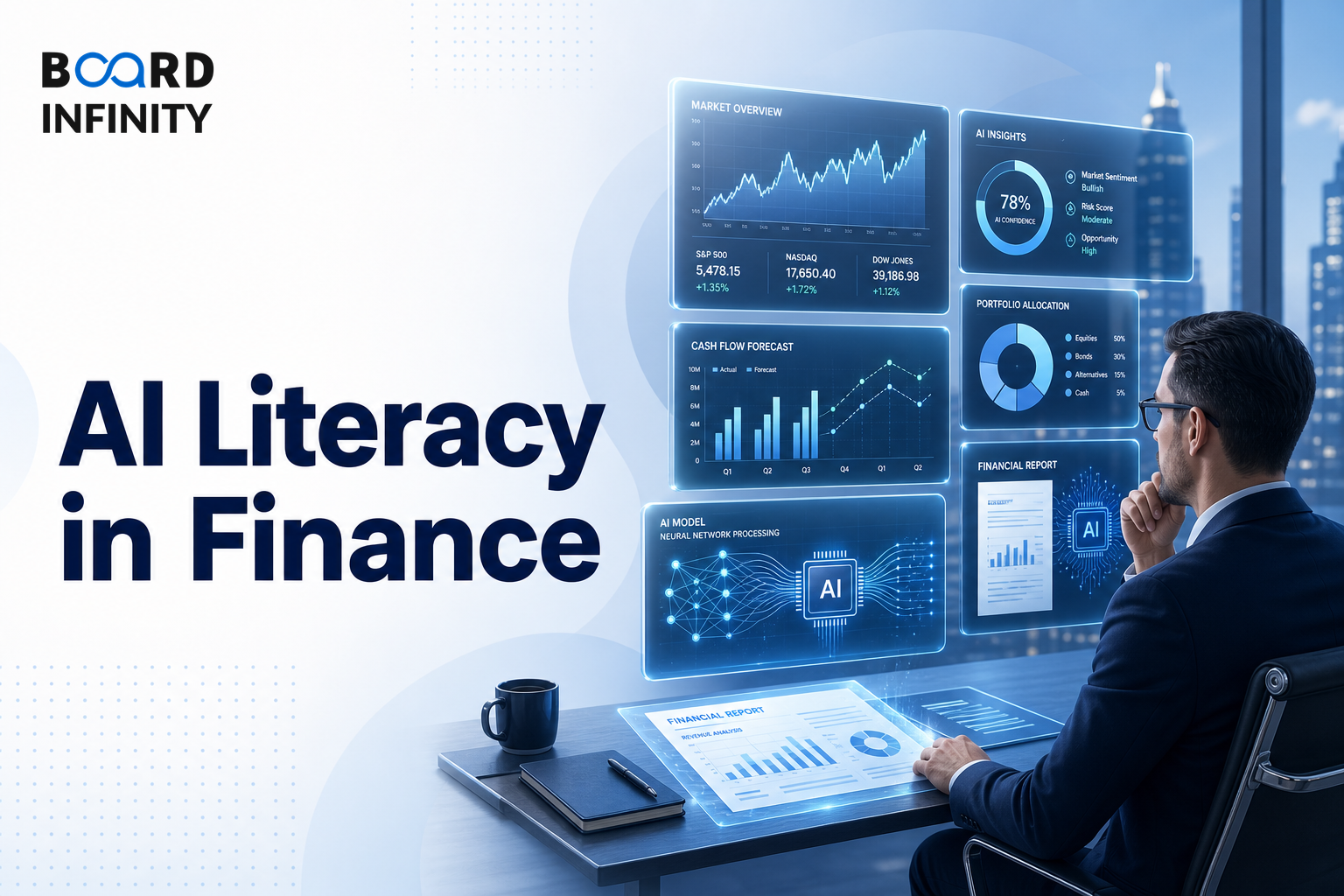
Artificial Intelligence is reshaping every function in finance - from algorithmic trading to credit underwriting, research automation, and regulatory compliance. For interviews, the important point is not just knowing that AI exists, but explaining why finance professionals who understand and leverage AI tools will have a decisive productivity advantage in the coming decade.
- Artificial Intelligence is reshaping every function in finance - from algorithmic trading to credit underwriting, research automation, and regulatory compliance.
- Finance professionals who understand and leverage AI tools will have a decisive productivity advantage in the coming decade.
- 65%+ of global financial services firms are using AI/ML in production systems.
- JPMorgan's AI investment is $2 billion+ per year and it employs 2,000+ AI/ML engineers.
- Indian banks AI adoption is visible through HDFC Bank's EVA chatbot handling 100M+ queries and ICICI Bank's AI fraud detection catching 95%+ fraudulent transactions.
- 80% of equity research functions are expected to be partially automated by AI by 2027.
- Algorithm-driven orders are now 50%+ of NSE cash market volumes.
The Big Picture
Artificial Intelligence is not a single-use tool in finance. It is already visible across trading, banking, research, and compliance, which is why AI literacy matters as a career-critical productivity advantage for finance professionals.
HDFC Bank's EVA chatbot handles 100M+ queries; ICICI Bank's AI fraud detection catches 95%+ fraudulent transactions. The strategic point is clear: AI literacy is not theoretical in finance - it is already connected to productivity, scale, and risk control in banking.
Why AI Literacy Matters in Finance
Artificial Intelligence is reshaping every function in finance - from algorithmic trading to credit underwriting, research automation, and regulatory compliance. This makes AI literacy a practical skill, not just a technology trend.
Finance professionals who understand and leverage AI tools will have a decisive productivity advantage in the coming decade. The strongest way to explain this in an interview is to connect the idea to real adoption across financial services firms, banks, research teams, and markets.
Adoption Across Finance Functions
The adoption statistics show that AI is already embedded in production systems and finance workflows. 65%+ of global financial services firms are using AI/ML in production systems, while JPMorgan's AI investment is $2 billion+ per year and it employs 2,000+ AI/ML engineers.
In Indian banking, HDFC Bank's EVA chatbot handles 100M+ queries and ICICI Bank's AI fraud detection catches 95%+ fraudulent transactions. In research and markets, 80% of equity research functions are expected to be partially automated by AI by 2027, and algorithm-driven orders now account for 50%+ of NSE cash market volumes.
Where AI Is Reshaping Finance
AI literacy matters because the impact is spread across multiple finance functions. In algorithmic trading, SEBI registered 50+ algo trading platforms, and algorithm-driven orders now represent 50%+ of NSE cash market volumes.
In credit underwriting, AI adoption is visible in banking use cases. In research automation, 80% of equity research functions are expected to be partially automated by AI by 2027. In regulatory compliance, AI is part of the broader shift toward production systems across global financial services firms.
AI for Your Finance Career
Three AI tools every finance student should master before placement season: (1) ChatGPT/Claude - for drafting financial memos, debugging Python/Excel, and practicing interview Q&A; (2) Python + pandas - for financial data analysis, even basic screener.in data manipulation sets you apart; (3) Bloomberg/Refinitiv - if your campus has access, use it daily.
These skills signal readiness for Day 1 productivity. That is the core career argument: AI literacy helps a finance professional move faster across analysis, documentation, research, and interview preparation.
Structuring a Why AI Literacy Matters in Finance Interview Answer
"Why does AI literacy matter for finance professionals today?"
The best answers do not describe AI as a vague buzzword. They connect AI literacy to finance functions, adoption statistics, named institutions, and Day 1 productivity.
The most frequent error is treating AI literacy as a generic technology trend instead of a finance productivity advantage. That costs points because the stronger answer should connect algorithmic trading, credit underwriting, research automation, and regulatory compliance with real adoption statistics from JPMorgan, HDFC Bank, ICICI Bank, Goldman Sachs, and NSE.
Conclusion
AI literacy matters in finance because Artificial Intelligence is already reshaping core functions and rewarding professionals who can leverage it for productivity. The final takeaway is simple: know the use cases, know the statistics, and show how AI readiness translates into finance career readiness.