
Conflict Resolution: The Thomas-Kilmann Model Explained
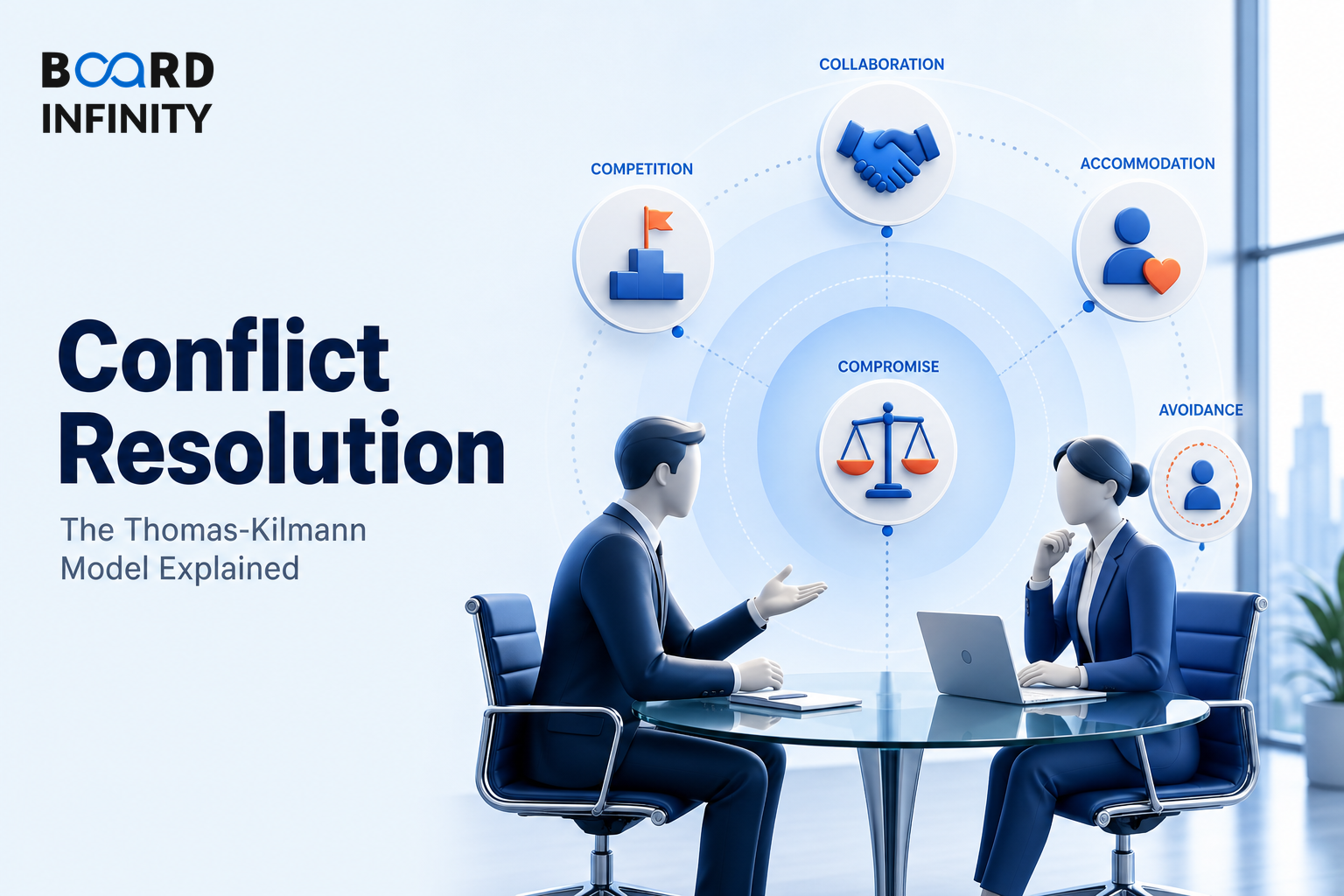
After grievance and discipline, the next practical question is how an HRBP should respond before a workplace disagreement becomes a formal case. The Thomas-Kilmann Conflict Mode Instrument gives a structured way to choose a conflict-handling mode based on assertiveness, cooperativeness, and workplace context. In interviews, it helps you show that you can shift your approach consciously instead of treating every conflict the same way.
- The Thomas-Kilmann Conflict Mode Instrument (TKI) identifies five conflict-handling modes based on two dimensions: assertiveness and cooperativeness.
- Assertiveness means how much you push for your own needs.
- Cooperativeness means how much you consider others' needs.
- The five conflict modes are Competing, Collaborating, Compromising, Avoiding, and Accommodating.
- Understanding your default mode - and when to consciously shift - is a core HRBP competency.
- HRBP default for interpersonal disputes: Collaborating, or win-win.
- Competing is appropriate only for ethical/legal non-negotiables where you cannot compromise.
How the Thomas-Kilmann Model Fits Workplace Conflict Resolution
The Thomas-Kilmann Conflict Mode Instrument is useful because it separates conflict handling into two dimensions: how strongly you push for your own needs and how much you consider others' needs. That makes it practical for HRBPs because the right response depends on whether the issue is urgent, important, relationship-sensitive, policy-linked, or better handled through structured dialogue.
The Thomas-Kilmann Conflict Mode Instrument (TKI) identifies five conflict-handling modes based on two dimensions: assertiveness (how much you push for your own needs) and cooperativeness (how much you consider others' needs).
The Five Conflict-Handling Modes
Each TKI mode is useful in a different workplace context. The key is not to label one mode as universally right, but to understand your default mode and consciously shift when the situation demands it.
Competing
Competing is high assertiveness and low cooperativeness. It is used for emergency decisions, ethical non-negotiables, and when you must enforce a policy.
It should not be used for routine disagreements, when relationship matters more than the issue, or when you might be wrong. For HRBPs, this distinction matters because competing is appropriate only for ethical/legal non-negotiables where you cannot compromise.
Collaborating
Collaborating is high assertiveness and high cooperativeness. It is used for complex problems needing creative solutions, when both parties' concerns are important, and for sustained relationships.
It should not be used when quick decisions are needed, when the issue is trivial, or when trust is low. For interpersonal disputes, the HRBP default is typically Collaborating because it aims for a win-win resolution.
Compromising
Compromising is medium assertiveness and medium cooperativeness. It is used under time pressure, when power is equal, when a pragmatic, acceptable solution is needed, or for temporary resolution.
It should not be used when one party is clearly right or when the issue is too important to split the difference. In interviews, this is a useful nuance because compromise can sound balanced, but it is not always the right answer.
Avoiding
Avoiding is low assertiveness and low cooperativeness. It is used when the issue is trivial, when you need time to prepare, when preserving relationship outweighs the issue, or when others can resolve it better.
It should not be used when the issue is important, when avoidance will make it worse, or when others expect you to act. This mode is not automatically negative, but it becomes risky when inaction escalates the conflict.
Accommodating
Accommodating is low assertiveness and high cooperativeness. It is used when the issue matters more to the other party, when preserving harmony, when you realise you are wrong, or as a long-term relationship investment.
It should not be used when your concerns are legitimate and important, when accommodating will be seen as weakness, or when it creates an unhealthy precedent. For HRBPs, the mistake is to preserve harmony in a way that weakens fairness or creates repeat issues.
Workplace Mediation
When direct conflict resolution fails, mediation involves a neutral third party, internal or external mediator, who facilitates structured dialogue between conflicting parties. The mediator does not decide the outcome - they help parties reach a mutually acceptable resolution.
In India, mediation is increasingly used as an alternative to formal disciplinary proceedings for interpersonal conflicts. The process is intake, pre-mediation meetings with each party, joint session, agreement, and follow-up.
Structuring a Conflict Resolution Interview Answer
"Tell me about a time you resolved a conflict between two team members."
Do not present one conflict style as always correct. Show that you understand the situation, choose a mode based on assertiveness and cooperativeness, and shift when the workplace context changes.
The most frequent error is treating collaboration as the answer to every conflict. It costs points because TKI is about choosing the right mode for the context - for example, competing is appropriate for ethical/legal non-negotiables, while avoiding may be valid when the issue is trivial or you need time to prepare.
Conclusion
The Thomas-Kilmann model helps HRBPs handle conflict by mapping each situation across assertiveness and cooperativeness. The core takeaway is to understand your default mode, then consciously shift to the mode that fits the issue, relationship, urgency, and workplace context.