
Psychological Safety: The Foundation of High Performance
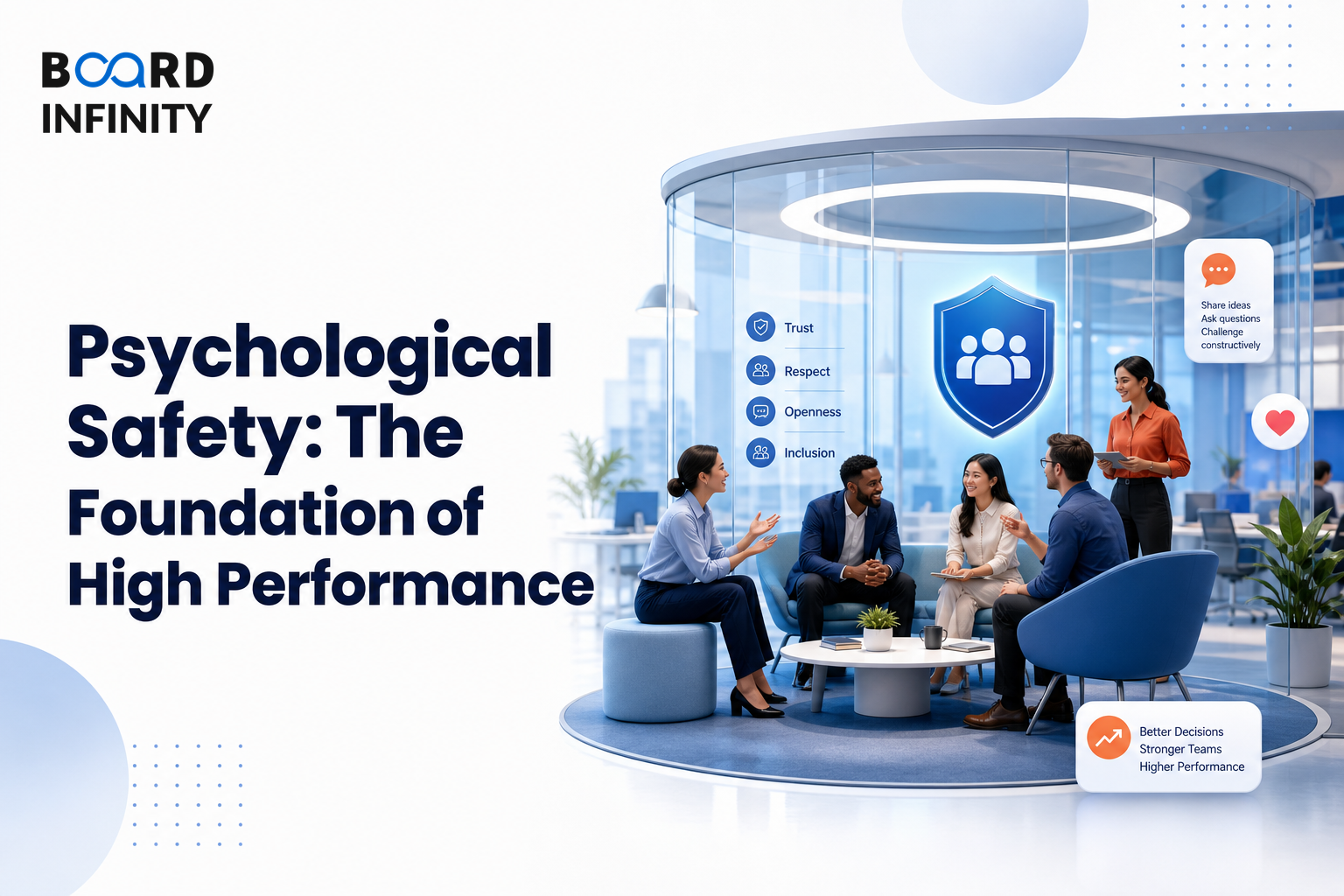
Conflict resolution shows how teams handle disagreement after it surfaces; psychological safety answers the earlier question of whether people feel safe enough to surface it at all. For interviews, this matters because it connects employee relations directly to measurable team effectiveness, innovation, learning from mistakes, and high performance.
- Amy Edmondson of Harvard Business School defines psychological safety as "a shared belief that the team is safe for interpersonal risk-taking."
- It is not about being comfortable or conflict-free - it is about creating an environment where people can speak up, challenge the status quo, admit mistakes, and raise concerns without fear of punishment or humiliation.
- Google's two-year Project Aristotle (2015) studied 180 teams to identify what makes a team effective.
- Google found that psychological safety was the single most important factor - more important than individual talent, resources, or management style.
- Teams with high psychological safety had higher revenue, higher customer satisfaction ratings, and were twice as likely to be rated effective by Google executives.
- The finding: "Who is on the team matters less than how the team works together."
- Psychological safety can be built through speaking up, intellectual risk-taking, interpersonal trust, and inclusion of voice.
Psychological safety works as a team condition: it shapes whether members speak up, propose ideas, trust colleagues, and feel heard. It can be understood through four dimensions - speaking up, intellectual risk-taking, interpersonal trust, and inclusion of voice - each with a measurement approach and manager behaviour that helps build it.
What Psychological Safety Means
Amy Edmondson of Harvard Business School defines psychological safety as "a shared belief that the team is safe for interpersonal risk-taking." It is not about being comfortable or conflict-free - it is about creating an environment where people can speak up, challenge the status quo, admit mistakes, and raise concerns without fear of punishment or humiliation.
Psychological safety is "a shared belief that the team is safe for interpersonal risk-taking."
Why Psychological Safety Matters for High Performance
Google's two-year Project Aristotle (2015) studied 180 teams to identify what makes a team effective. They found that psychological safety was the single most important factor - more important than individual talent, resources, or management style.
Teams with high psychological safety had higher revenue, higher customer satisfaction ratings, and were twice as likely to be rated effective by Google executives. The finding: "Who is on the team matters less than how the team works together."
Google's two-year Project Aristotle (2015) studied 180 teams to identify what makes a team effective. They found that psychological safety was the single most important factor - more important than individual talent, resources, or management style. Teams with high psychological safety had higher revenue, higher customer satisfaction ratings, and were twice as likely to be rated effective by Google executives. The strategic so what is clear: "Who is on the team matters less than how the team works together."
Dimensions, Measurement, and How to Build It
The four dimensions below make psychological safety practical rather than abstract. Each dimension links a team behaviour to a measurement approach and a way managers can build it.
Structuring a Psychological Safety Interview Answer
"How would you define psychological safety and explain why it matters for team effectiveness?"
The strongest answer treats psychological safety as measurable team behaviour, not as a vague culture statement. Anchor the answer in Google Project Aristotle and then show how to measure and build it.
The most frequent error is presenting psychological safety as comfort, harmony, or absence of conflict. That misses the core idea: it is about creating an environment where people can speak up, challenge the status quo, admit mistakes, and raise concerns without fear of punishment or humiliation.
Conclusion
Psychological safety is the foundation of high performance because it enables teams to speak up, take intellectual risks, trust colleagues, and include every voice. The final takeaway for interviews is simple: who is on the team matters less than how the team works together.