
The Future of Work: Trends Reshaping HR by 2030
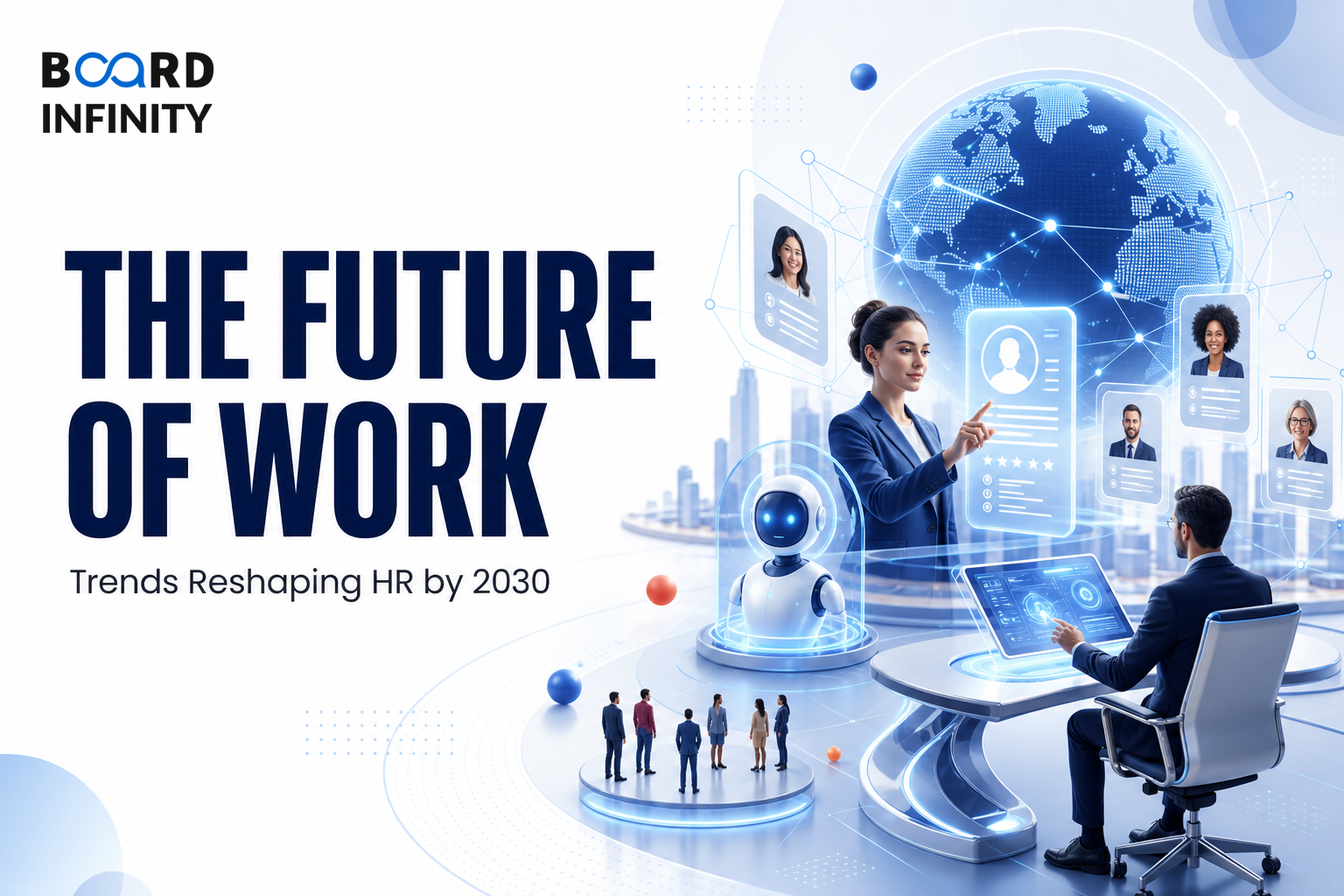
After understanding Managing the Gig Workforce: What HR Needs to Know, the next question is how work itself is changing by 2030. The future of work matters in interviews because it connects hiring, skills, remote work, automation, internal mobility and reskilling into one HR Business Partner (HRBP) agenda.
- The future of work is being shaped by five converging forces: AI and automation displacing routine cognitive work; skills-based hiring replacing credential-based hiring; the normalisation of hybrid and remote work post-COVID; demographic shifts; and the rise of the skills-based organisation.
- Skills-based organisations mean hiring based on skills, not degrees; internal mobility via skill matching.
- Internal talent marketplace means a platform for employees to take projects, gigs, and roles internally before external hiring.
- Remote-first means default to remote work; office for collaboration, not routine work.
- AI job displacement requires reskilling at scale; identify roles at risk; proactive talent transition planning.
- The World Economic Forum's Future of Jobs Report 2023 found that 44% of workers' core skills will be disrupted in the next five years.
Big Picture: Five HR Shifts Reshaping Work
The future of work is being shaped by five converging forces. For HRBPs, the implication is a shift from hiring and managing roles to continuously mapping, redeploying, and reskilling skills.
The future of work is being shaped by five converging forces: AI and automation displacing routine cognitive work; skills-based hiring replacing credential-based hiring; the normalisation of hybrid and remote work post-COVID; demographic shifts (aging workforce in developed markets, youth bulge in India); and the rise of the skills-based organisation.
Skills-Based Organisations
Skills-based organisations mean hiring based on skills, not degrees; internal mobility via skill matching. Infosys has a skills taxonomy of 600+ skills, and TCS has the iGnite skills platform.
For an HRBP, the implication is to build skills inventory; create internal talent marketplace; redesign JDs. This makes skills the unit of planning, rather than only job titles or credentials.
Internal Talent Marketplace
An internal talent marketplace is a platform for employees to take projects, gigs, and roles internally before external hiring. Unilever FLEX is a global early adopter; India adoption remains limited.
The HRBP implication is to deploy platform; change manager mindset from 'hoarding' to 'sharing' talent. This is especially important when internal mobility via skill matching becomes central to the skills-based organisation.
Four-Day Work Week
The four-day work week is described as 80% pay, 100% productivity, 100% commitment - piloted in UK, Iceland, Japan. In India, there has been pilot in some Indian startups, including Myglamm trial; it is not widespread.
The HRBP implication is to research productivity metrics carefully; not applicable to all roles. The key HR lens is not presence, but whether productivity metrics support the model.
Remote-First Work
Remote-first means default to remote work; office for collaboration, not routine work. Freshworks and Zoho have partial adoption; most MNCs are hybrid.
The HRBP implication is to design for outcomes, not presence; manager effectiveness for distributed teams. This connects directly to the normalisation of hybrid and remote work post-COVID.
AI Job Displacement
AI job displacement is one of the major forces shaping work by 2030. The source trend states that 44% of workers' skills are disrupted by 2030 (WEF); 85 million jobs displaced but 97 million new jobs created.
In India, IT services automation is beginning; BPO is at highest risk. The HRBP implication is reskilling at scale; identify roles at risk; proactive talent transition planning.
World Economic Forum: The Skills Disruption
The World Economic Forum's Future of Jobs Report 2023 found that 44% of workers' core skills will be disrupted in the next five years.
The fastest-growing job categories are AI and machine learning specialists, sustainability specialists, business intelligence analysts, and cybersecurity professionals. The fastest-declining: data entry, accounting clerks, bank tellers, and postal service clerks.
For India, this creates both risk (large BPO and data entry workforce) and opportunity (world's largest English-speaking AI-trainable talent pool).
What This Means for HRBPs
Across these trends, the HRBP role becomes a skills, mobility and reskilling role. The same pattern repeats across the five shifts: understand the work, map the skills, redeploy talent internally where possible, and plan transitions before displacement becomes a crisis.
- Skills-based organisations: Build skills inventory; create internal talent marketplace; redesign JDs.
- Internal talent marketplace: Deploy platform; change manager mindset from 'hoarding' to 'sharing' talent.
- Four-day work week: Research productivity metrics carefully; not applicable to all roles.
- Remote-first: Design for outcomes, not presence; manager effectiveness for distributed teams.
- AI job displacement: Reskilling at scale; identify roles at risk; proactive talent transition planning.
Structuring a The Future of Work Interview Answer
"What are the key future of work trends reshaping HR by 2030, and what should an HRBP do about them?"
Do not answer this as a list of buzzwords. Speak with facts and frameworks, and connect every trend to a clear HRBP implication.
The most frequent error is treating the future of work as only remote work or only AI. That misses the full set of converging forces and fails to show how HRBPs must build skills inventory, enable internal mobility, redesign JDs, and plan reskilling at scale.
Conclusion
The future of work by 2030 is a shift from role-based HR to skills-based HR. The strongest interview answer shows how AI displacement, skills-based hiring, hybrid work, demographic shifts and skills-based organisations change what HRBPs must measure, redesign and reskill.