
The Post-Pandemic Psychological Contract: HRBP Framework for Rebuilding Trust
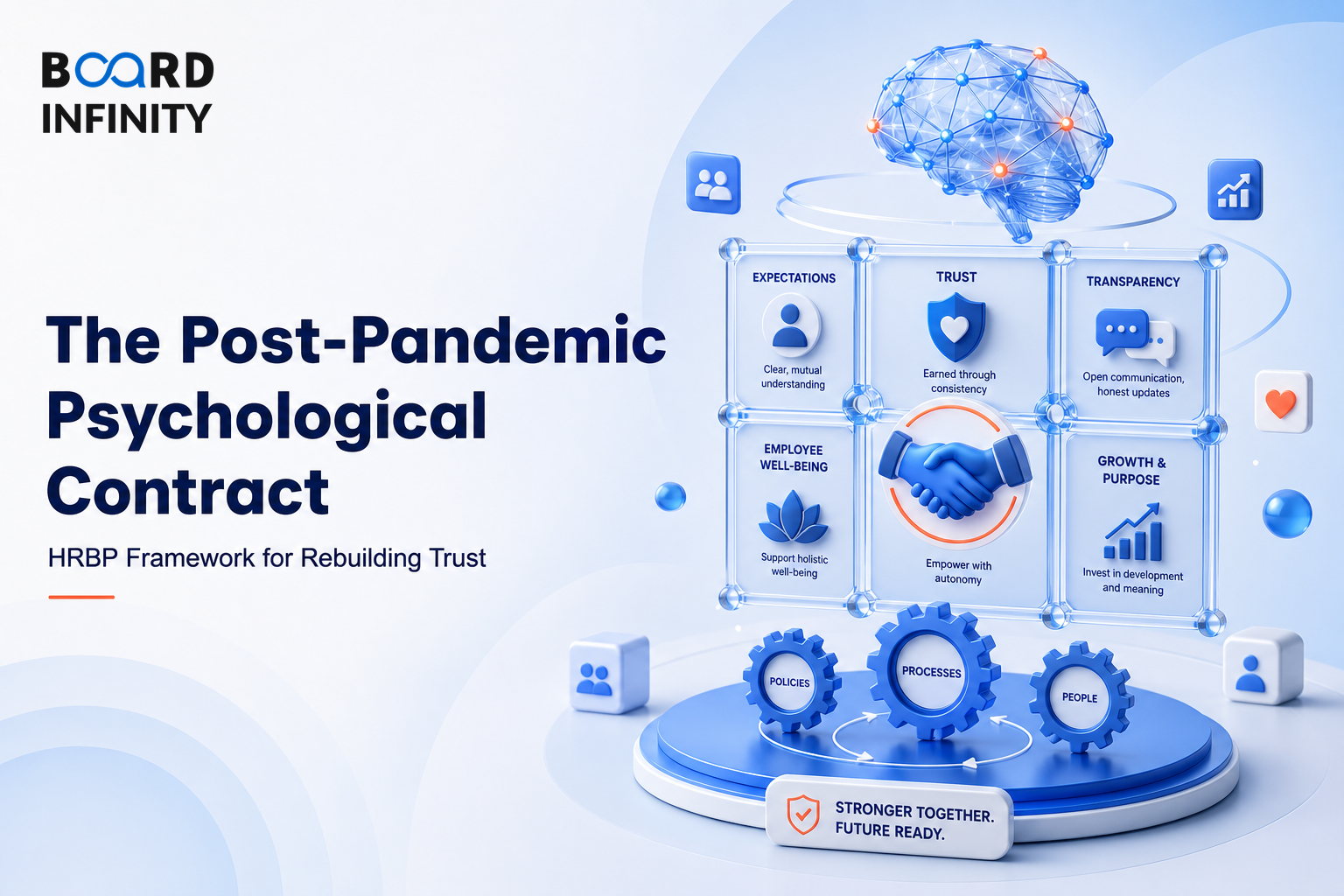
After looking at The Future of Work: Trends Reshaping HR by 2030, the next question is how the employee-employer deal has already changed since 2020. The psychological contract - the unwritten set of mutual expectations between employer and employee - has undergone a fundamental renegotiation since 2020. In interviews, this matters because attrition, disengagement, and quiet quitting are often symptoms of a violated psychological contract, not just isolated employee behaviour.
- The psychological contract is the unwritten set of mutual expectations between employer and employee.
- The pandemic did not just change where people work; it changed what people expect from work, what they are willing to tolerate, and what they demand in return for commitment.
- HR professionals who fail to recognise this shift will see it manifest as attrition, disengagement, and quiet quitting.
- Employees no longer trade loyalty for job security. They trade excellence for growth, flexibility, and authenticity.
- India's post-pandemic psychological contract has been shaped by mass layoff trauma, moonlighting and side-hustle culture, and return-to-office resistance.
- HRBPs can rebuild the psychological contract through five actions: Listen, Acknowledge, Renegotiate, Deliver, and Monitor.
- The question for HR is not whether to renegotiate, but how quickly and how genuinely.
The Post-Pandemic Psychological Contract
The pandemic did not just change where people work; it changed what people expect from work, what they are willing to tolerate, and what they demand in return for commitment. The big shift is from a loyalty-for-security contract to a new deal where employees expect growth, flexibility, and authenticity.
The comparison below shows how the pre-pandemic and post-pandemic expectations differ across seven dimensions, and what each shift implies for HR.
Indian IT companies TCS, Infosys, and HCL mandated return-to-office through 2023-24, facing significant pushback. Attrition data shows employees with remote/hybrid options had 15-20% lower voluntary attrition. The resistance is not laziness - it is a renegotiated contract: "You showed me work can happen from anywhere; now you can't un-show me that."
The post-pandemic psychological contract is fundamentally different: employees no longer trade loyalty for job security. They trade excellence for growth, flexibility, and authenticity.
The Indian Context: Layoff Trauma and Trust Erosion
India's post-pandemic psychological contract has been shaped by two additional forces that Western frameworks often understate.
- Mass layoff trauma (2022-24): The Indian tech industry experienced multiple waves of layoffs - Byju's, Swiggy, Ola, and several startups laid off thousands with minimal notice. Employees watched colleagues escorted out after years of "we are a family" rhetoric. This has created a generation of Indian professionals who fundamentally distrust employer loyalty promises. The psychological contract for this cohort is transactional: "I will deliver excellence, but I will also always have a Plan B." HR must acknowledge this reality rather than pretending the old loyalty contract still holds.
- Moonlighting and side-hustle culture: The pandemic normalised remote work, which enabled moonlighting, meaning working multiple jobs simultaneously. Companies like Wipro and Infosys publicly condemned and terminated moonlighting employees. But the underlying signal is clear: employees are diversifying income risk because they no longer trust a single employer to guarantee stability. Rather than policing behaviour, forward-thinking HR leaders reframe: make the primary role so compelling - in growth, compensation, and flexibility - that moonlighting becomes unnecessary.
- Return-to-office resistance: Indian IT companies TCS, Infosys, HCL mandated return-to-office through 2023-24, facing significant pushback. Attrition data shows employees with remote/hybrid options had 15-20% lower voluntary attrition. The resistance is not laziness - it is a renegotiated contract: "You showed me work can happen from anywhere; now you can't un-show me that."
Rebuilding the Psychological Contract: A Framework for HRBPs
The HRBP's role is to help leadership understand: the old contract is dead. The question is not whether to renegotiate, but how quickly and how genuinely.
Organisations that acknowledge this shift and redesign their people practices accordingly will attract and retain the best talent. Those that try to restore the pre-pandemic contract will face a slow, steady exodus of their most capable people - because the best talent always has the most options.
Note: All figures are illustrative/approximate and for educational purposes only.
Structuring a Cross Interview Answer
"How should an HRBP rebuild the post-pandemic psychological contract in an Indian IT company facing return-to-office resistance and trust erosion?"
The strongest answer does not treat attrition, disengagement, moonlighting, or return-to-office pushback as separate problems. Link them back to a violated psychological contract and show how HR can renegotiate the deal visibly and measurably.
The most frequent error is pretending the old loyalty contract still holds. That costs points because the post-pandemic contract is transactional for many employees: "I will deliver excellence, but I will also always have a Plan B."
Conclusion
The post-pandemic psychological contract has changed the basic employee-employer deal. HRBPs who recognise the shift from loyalty and job security to excellence, growth, flexibility, and authenticity can help organisations rebuild trust before attrition, disengagement, and quiet quitting become the visible symptoms.