
Distribution Channel Levels Explained: Reach vs Control
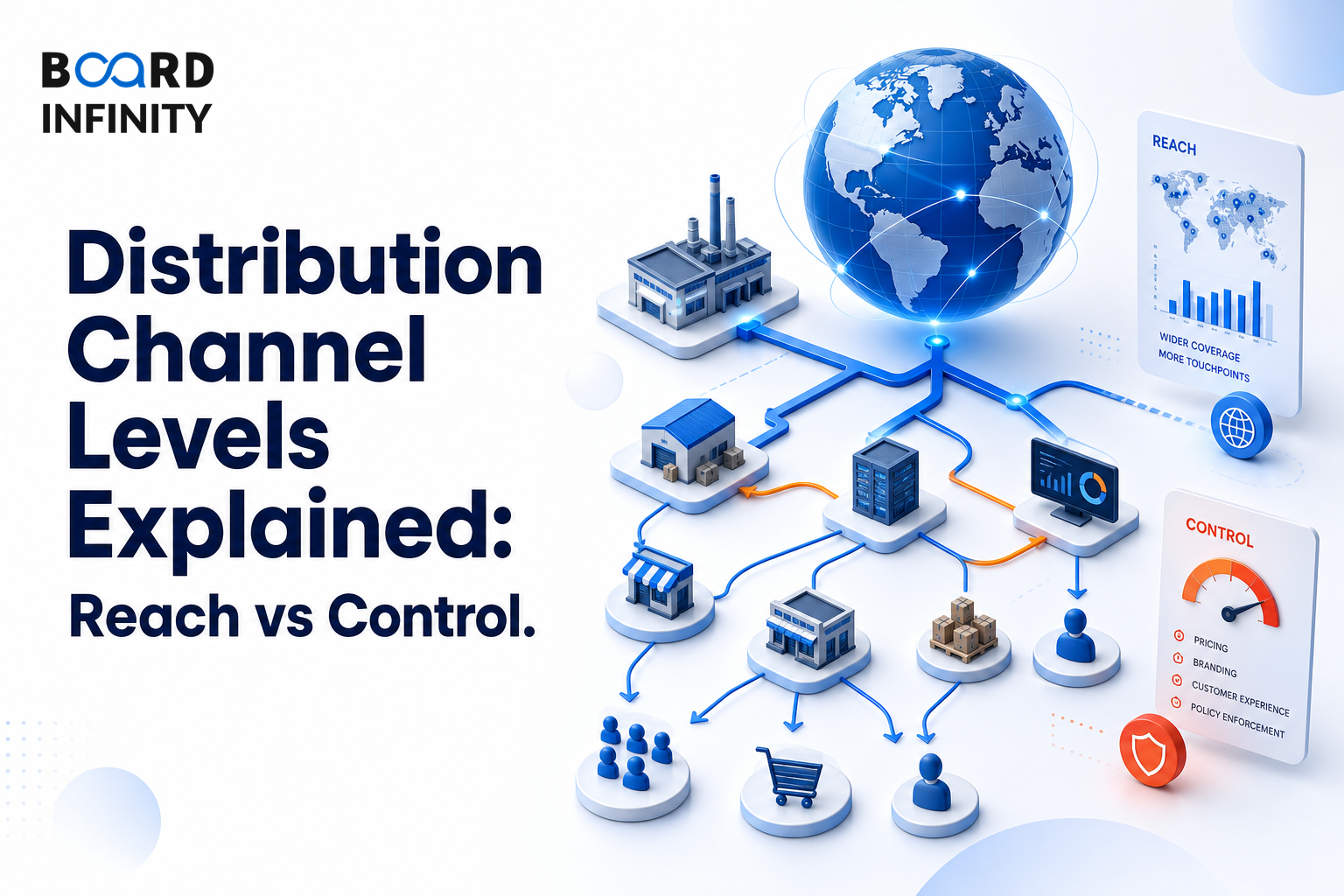
Distribution strategy determines how widely a product is made available. After choosing intensive, selective or exclusive distribution, the next question is how many intermediaries sit between the manufacturer and consumer. Channel levels answer that question, and in interviews they help explain the core reach-versus-control trade-off behind D2C brands, FMCG standard models and rural networks.
- Channel levels describe the number of intermediaries between manufacturer and consumer.
- L0 (Direct) is Manufacturer → Consumer, used by D2C brands (Mamaearth) and factory outlets for high margin, full control, limited reach.
- L1 is Manufacturer → Retailer → Consumer, with examples like Dell online and Apple Stores for moderate control, selective reach.
- L2 is Manufacturer → Distributor → Retailer → Consumer, used by most FMCG products (HUL, ITC) for broad reach, shared margin, standard model.
- L3 is Manufacturer → C&F → Distributor → Retailer → Consumer, used in rural FMCG distribution for maximum reach, lowest per-unit margin.
- As channel levels increase, manufacturers lose control over pricing, display, and customer experience - but gain reach.
- The D2C revolution is essentially brands moving from L2/L3 to L0.
The Big Picture: Reach Versus Control
Channel levels describe the number of intermediaries between manufacturer and consumer. As channel levels increase, manufacturers lose control over pricing, display, and customer experience - but gain reach. The D2C revolution is essentially brands moving from L2/L3 to L0.
Channel levels describe the number of intermediaries between manufacturer and consumer.
How to Read Each Channel Level
Each level is defined by the channel structure between the manufacturer and the consumer. The higher the level, the more intermediaries are present in the route to market.
- L0 (Direct): Manufacturer → Consumer. Examples include D2C brands (Mamaearth) and factory outlets. The use case is high margin, full control, limited reach.
- L1: Manufacturer → Retailer → Consumer. Examples include Dell online and Apple Stores. The use case is moderate control, selective reach.
- L2: Manufacturer → Distributor → Retailer → Consumer. Examples include most FMCG products (HUL, ITC). The use case is broad reach, shared margin, standard model.
- L3: Manufacturer → C&F → Distributor → Retailer → Consumer. The example is rural FMCG distribution. The use case is maximum reach, lowest per-unit margin.
Why Channel Levels Matter
The central idea is the trade-off between reach and control. As channel levels increase, manufacturers lose control over pricing, display, and customer experience - but gain reach.
This is why L0 suits high margin, full control models with limited reach, while L3 suits rural FMCG distribution where maximum reach is the priority. L2 is the standard model for most FMCG products such as HUL and ITC, where broad reach comes with shared margin.
D2C Movement Across Levels
D2C means direct to consumer, and L0 is the direct channel level where the manufacturer sells to the consumer. The D2C revolution is essentially brands moving from L2/L3 to L0.
Mamaearth is an example of a D2C brand in L0. Compared with L2 or L3 models, the L0 route gives high margin and full control, but the use case also notes limited reach.
Structuring a Distribution Channel Levels Explained Interview Answer
"For an FMCG company like HUL or ITC, how do channel levels affect reach, margin and control?"
Do not present L0 as automatically better than L2 or L3. The right answer is to frame the trade-off: high control and margin at lower levels versus broad or maximum reach at higher levels.
The most frequent error is treating channel levels as a quality ranking instead of a count of intermediaries. This costs points because the interviewer is testing whether you can explain the reach-versus-control trade-off: manufacturers lose control over pricing, display, and customer experience - but gain reach.
Conclusion
Distribution channel levels show how a product moves from manufacturer to consumer and how each additional intermediary changes margin, control, and reach. The core takeaway is simple: lower levels give more control, while higher levels create broader reach.