
Distribution Strategies: Intensive, Selective and Exclusive
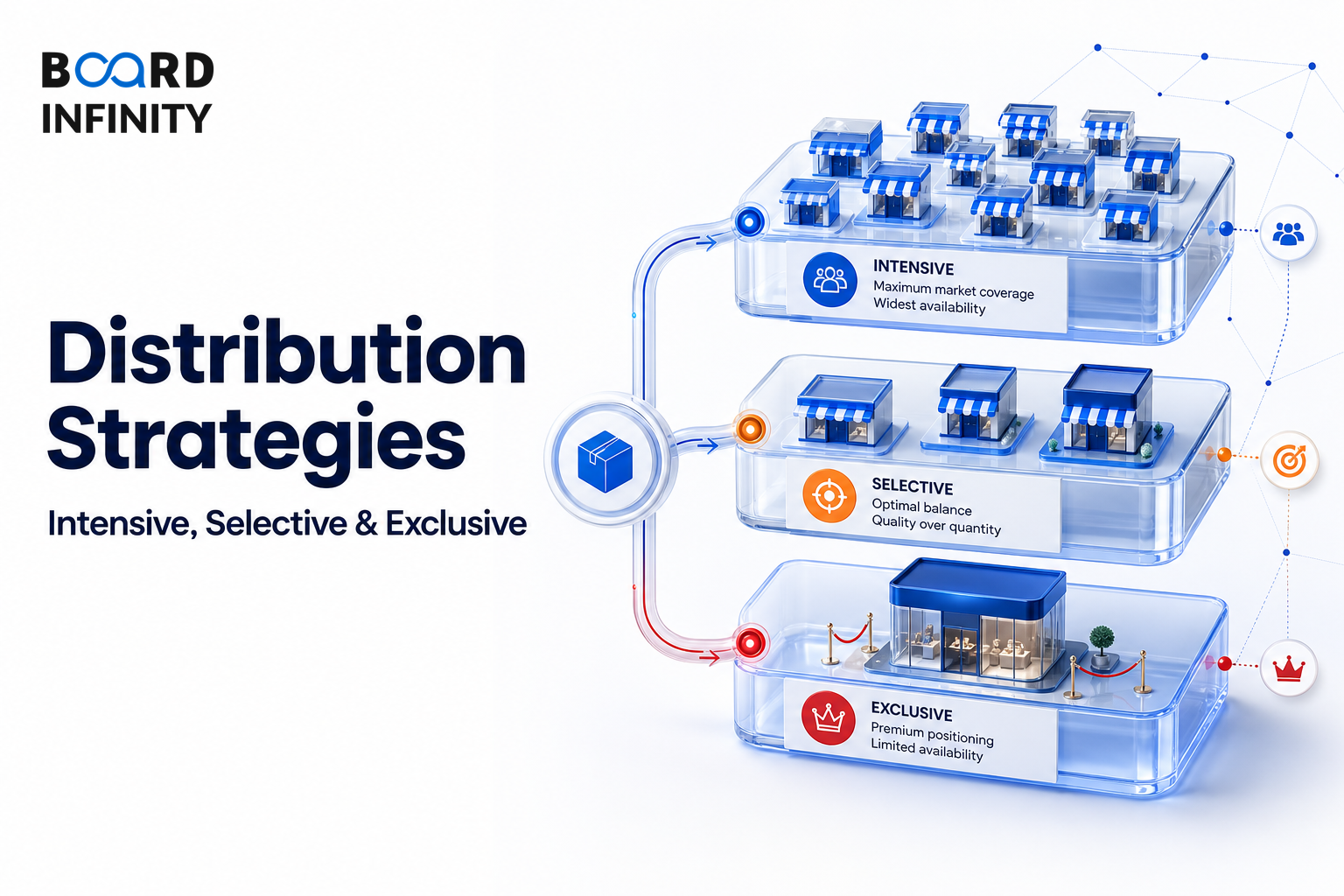
Distribution strategy determines how widely a product is made available. In interviews, this matters because the choice is not just about reach - it depends on the product category, brand positioning, and target market. A strong answer frames distribution intensity as a strategic choice that directly impacts pricing power, brand perception, and channel conflict.
- Distribution strategy determines how widely a product is made available.
- The choice depends on the product category, brand positioning, and target market.
- Intensive distribution means maximum outlets - be everywhere the consumer shops. It prioritises availability over exclusivity.
- Selective distribution uses limited, carefully chosen outlets that align with brand image and provide a quality experience.
- Exclusive distribution uses a single outlet per territory. It creates scarcity, premium positioning, and deep retailer commitment.
- The choice of distribution strategy directly impacts pricing power, brand perception, and channel conflict.
- Premium brands using intensive distribution risk diluting their brand equity.
Distribution Intensity at a Glance
Distribution strategy determines how widely a product is made available. The choice depends on the product category, brand positioning, and target market.
Distribution strategy determines how widely a product is made available.
Intensive Distribution
Intensive distribution means maximum outlets - be everywhere the consumer shops. It prioritises availability over exclusivity.
This strategy fits products where wide availability is central to the purchase decision. Coca-Cola, Parle-G, and Maggi are examples of products associated with intensive distribution.
Selective Distribution
Selective distribution means limited, carefully chosen outlets that align with brand image and provide a quality experience.
This strategy balances reach with control. Nike, Samsung, and Titan are examples where selected outlets help support brand image and a quality experience.
Exclusive Distribution
Exclusive distribution means a single outlet per territory. It creates scarcity, premium positioning, and deep retailer commitment.
This strategy fits brands where scarcity and premium positioning are central to the offer. Louis Vuitton, Rolex, and Tesla are examples associated with exclusive distribution.
Strategic Trade-Offs in Distribution Strategy
The choice of distribution strategy directly impacts pricing power, brand perception, and channel conflict. Intensive distribution prioritises availability over exclusivity, while selective and exclusive distribution place greater emphasis on brand image, quality experience, scarcity, premium positioning, and retailer commitment.
The key risk is mismatch. Premium brands using intensive distribution risk diluting their brand equity.
Structuring a Distribution Strategies Interview Answer
"How would you choose between intensive, selective and exclusive distribution for a product?"
Do not treat distribution as only a reach decision. Frame it as a choice that depends on product category, brand positioning, and target market.
The most frequent error is recommending maximum outlets for every product. Premium brands using intensive distribution risk diluting their brand equity, so the answer must balance availability with brand positioning, pricing power, and channel conflict.
Conclusion
Distribution strategy determines how widely a product is made available, but the right choice depends on the product category, brand positioning, and target market. The final takeaway is simple: intensive, selective, and exclusive distribution are strategic choices that shape pricing power, brand perception, and channel conflict.