
Energy, Utilities & the Renewable Transition
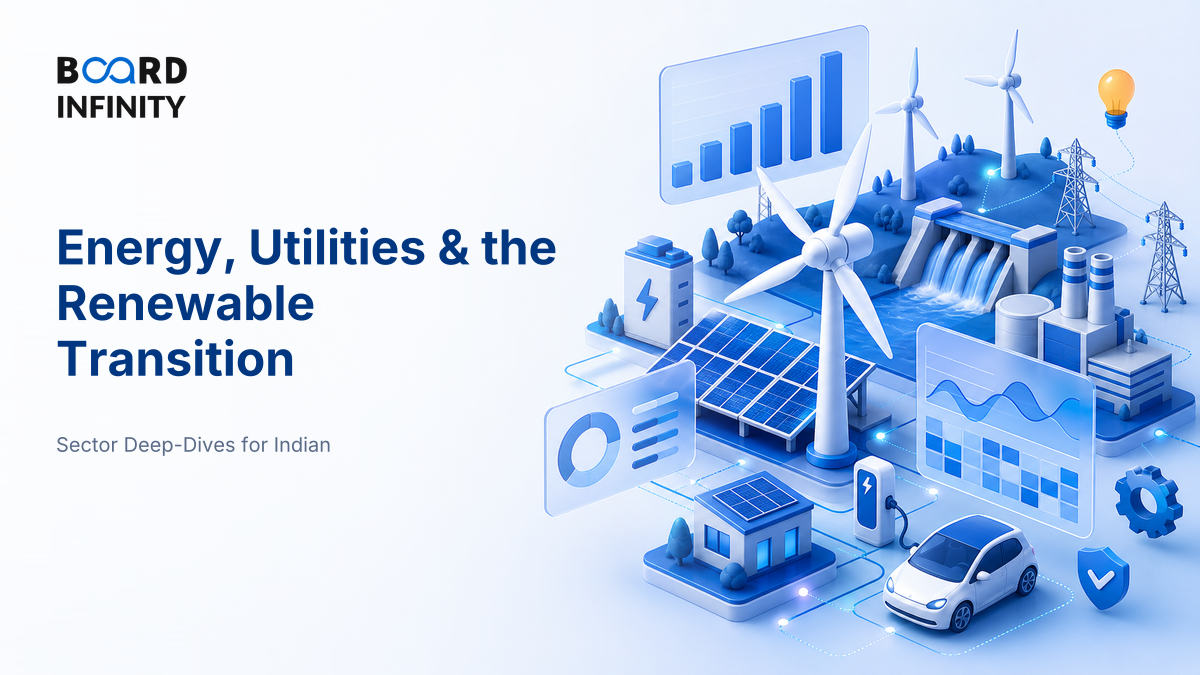
One power system was built for giant coal stations sending electricity one way to passive consumers. The new system is being rebuilt around solar parks, rooftop panels, batteries, pumped storage, electric vehicles and consumers who can also become producers.
- Energy transition means shifting from fossil-heavy, centralized energy to cleaner, electrified, flexible and lower-carbon systems.
- Utilities are not only generators. The value chain runs from fuel and generation to transmission, distribution, retail and energy services.
- The core tension is reliability versus decarbonization versus affordability. A good answer never optimizes only one.
- Renewables change economics. Fuel cost falls, upfront capital rises, intermittency appears and storage or grid flexibility becomes valuable.
- India-specific mechanics matter: discom health, open access, CERC/SERC regulation, renewable purchase obligations, grid evacuation and payment risk.
- Best interview lens: map the value chain, identify regulation, compare unit economics, test reliability and name the transition bottleneck.
- Most common trap: saying “renewables are cheaper, so transition is easy.” Cheap generation is not the same as reliable delivered power.
Big Picture - The Industry Is Moving From One-Way Power to Flexible Power
Think of the renewable transition as a system redesign, not just a fuel switch. The old utility model optimized large plants, long-term contracts and predictable demand. The new model must coordinate variable generation, storage, flexible demand, real-time data and financially stressed distribution companies.
Core Explanation - How the Energy and Utilities System Actually Works
The energy sector looks complex because it mixes engineering, regulation, finance and politics. Simplify it into one value chain: produce energy, move it, sell it and balance the system every second.
Generation creates electricity from coal, gas, hydro, nuclear, solar, wind or biomass. Renewable projects usually have low operating fuel cost but high upfront capital cost, so financing and utilization matter.
Transmission moves bulk power over high-voltage lines. It is a natural monopoly: duplicating networks is inefficient, so regulation and long-term planning dominate.
Distribution delivers power to end users. In India, this is often the most important business issue because distribution companies, or discoms, face technical losses, billing leakage, collection issues, tariff politics and payment delays.
Retail and energy services include selling electricity, rooftop solar, EV charging, smart meters, demand response and energy efficiency. This is where customer data and new business models enter.
The Renewable Transition Trade-Off - Clean, Reliable and Affordable
Energy strategy is a three-corner problem. If a candidate speaks only about sustainability, the answer sounds incomplete. A CEO, regulator or consultant must ask: will the system stay reliable, can customers afford it and can investors earn enough to keep building assets?
The hard part is that solar and wind are variable renewable energy. They generate when the sun shines or wind blows, not automatically when demand peaks. That is why storage, forecasting, flexible thermal capacity, transmission planning and demand response become central to the transition.
Business Models in Energy - Where Companies Make Money
Do not treat “energy company” as one business model. A merchant generator, a regulated transmission owner and a rooftop solar installer face very different risks.
Regulated networks earn allowed returns for building and maintaining grid assets. Independent power producers earn through power purchase agreements or merchant sales. Retail and service companies earn from customer acquisition, equipment, financing, software and maintenance.
For market-entry or strategy cases, first identify whether the opportunity is regulated infrastructure, competitive generation, distributed energy or services. Then evaluate capital intensity, policy risk, customer economics and route to market. If the case is about entering a new renewable segment, use an entry-mode lens such as organic build, partnership, joint venture or acquisition.
Key Metrics to Track in Energy and Utilities
Use metrics that connect engineering performance to business performance. A good interview answer names both operating reliability and financial viability.
Worked Example - A Simple LCOE Calculation
Suppose a hypothetical solar project has capital cost of ₹1,000 crore. If annualized capital recovery is 10 percent, annual capital cost is ₹100 crore. Add fixed operations and maintenance of ₹20 crore. If annual generation is 350 million kWh, then:
LCOE = (₹100 crore + ₹20 crore) / 350 million kWh = ₹3.43 per kWh.
The interview insight is not the arithmetic alone. You must ask whether this ₹3.43 is delivered at the right time, with grid access, no curtailment, acceptable payment risk and enough return for lenders and equity investors.
Definitions You Should Be Able to Say Cleanly
- Energy transition: the shift from fossil-heavy energy systems to cleaner, electrified, flexible and lower-carbon energy supply and use.
- Utility: a licensed provider of essential network services such as electricity, gas or water, usually under regulated obligations.
- Renewable energy: energy from naturally replenished sources such as solar, wind, hydro, biomass and geothermal.
- Grid flexibility: the ability to balance supply and demand despite variability, outages and price swings.
- LCOE: average electricity cost over an asset life, including capital, operating cost and generation volume.
Case Study - Greenko and the Move From Renewable Power to Dispatchable Power
Greenko shows why the next renewable advantage is not just building solar and wind capacity, but making clean power available when customers need it.
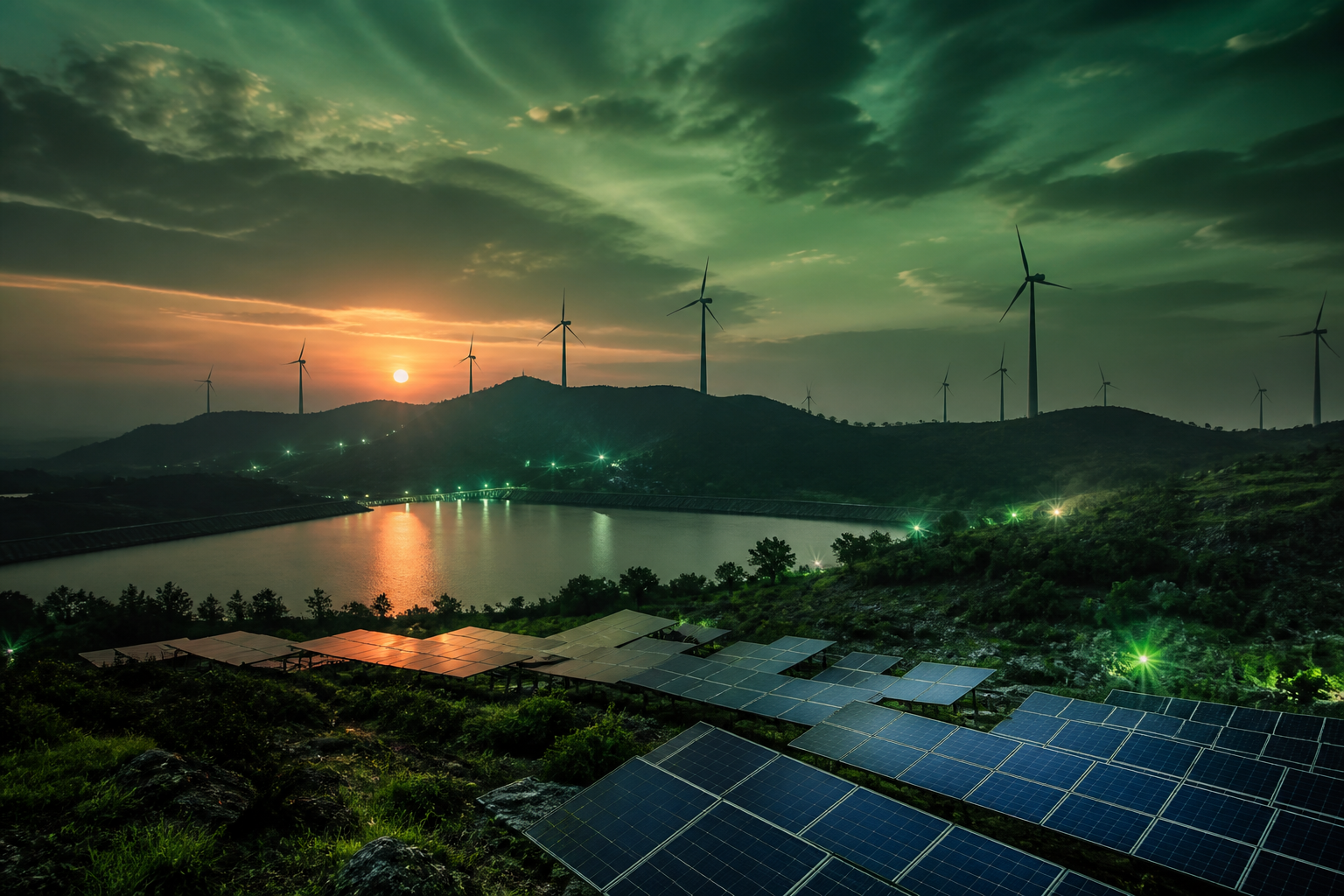
Situation: Early renewable growth rewarded companies that could secure land, capital, grid connectivity and power purchase agreements. But as more solar and wind entered the grid, the harder customer question became: can renewable power be supplied reliably during peak demand, not just when generation is available?
The move: Greenko built its strategy around combining renewable generation with large-scale storage, especially pumped storage, to offer firmer clean power. The primary driver is storage-led dispatchability: renewable energy generated at one time can be shifted to another time. Supporting drivers include a large renewable asset base, project development capability, grid-integration know-how and demand from industrial customers seeking cleaner power without sacrificing reliability.
The lesson: In the renewable transition, the winning offer moves from “cheap green electrons” to “reliable clean energy solutions.” This is the difference between generation capacity and customer-grade power.
A shallow answer says Greenko benefits because renewables are growing. A strong answer says Greenko is positioned where the bottleneck is moving: from renewable generation to reliable, financeable, dispatchable clean supply.
How AI Changes Energy, Utilities & the Renewable Transition
1. Better forecasting for variable renewables: AI models improve short-term solar, wind and demand forecasting using weather, consumption and grid data. This helps utilities schedule backup, reduce imbalance penalties and plan storage dispatch.
2. Smarter grids and predictive maintenance: Utilities can use machine learning to detect transformer stress, theft patterns, outage risk and vegetation-related faults before they become service failures. This matters because reliability metrics like SAIDI and SAIFI directly affect customers and regulators.
3. Portfolio optimization: AI can help decide when to charge a battery, discharge storage, buy from the market, sell into peak demand or curtail generation. The commercial edge is not “AI magic”; it is better decisions across thousands of small operational choices.
Load this lesson, a target company annual report and recent energy-policy notes into NotebookLM. Ask it to generate five likely interview questions on the company's generation mix, regulatory risk, renewable strategy and working-capital pressure. Then practise the answers aloud using AI as a mock interviewer.
Interview Relevance
“A power company wants to grow in renewables in India. How would you evaluate the opportunity?”
If the interviewer pushes on competition, do not only list players. Explain why barriers differ by segment: land access, grid connectivity, capital cost, regulatory approvals, technology capability and customer relationships. For that deeper lens, revise competitive landscape and barriers to entry.
Use the phrase “delivered reliable cost,” not just “generation cost.” It signals that you understand grid charges, timing, storage, curtailment and payment risk.
Common Mistake
The mistake is treating the renewable transition as a simple replacement of coal with solar or wind. That costs candidates because it ignores intermittency, distribution losses, grid bottlenecks, financing and regulation. One-line fix: always answer with the triangle of clean, reliable and affordable power.