
Financial Technology & Digital Payments
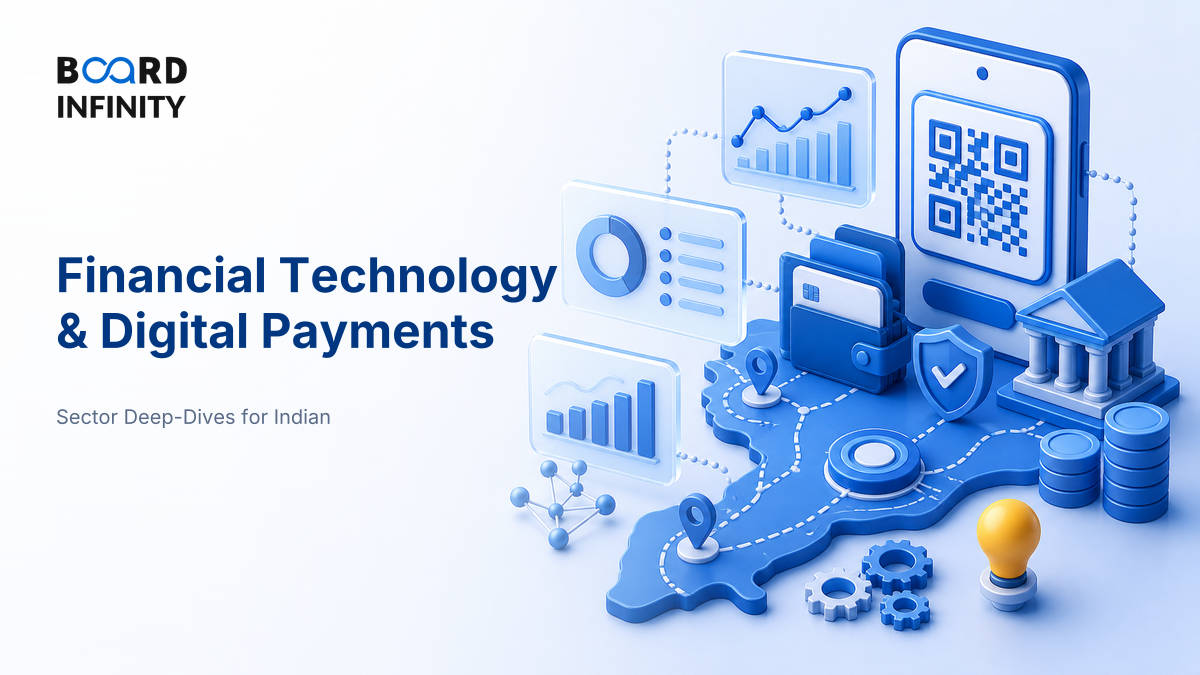
A vegetable seller scans a QR code, a customer pays from a bank account on a phone, and the money appears as a confirmation before the next customer steps forward. What looks like a simple beep is actually a dense stack of banks, apps, switches, fraud engines, regulation, settlement, and trust working in seconds.
- FinTech is technology-led innovation in financial services - not just apps, but new ways to acquire, underwrite, move, secure and serve money.
- Digital payments convert a payment instruction into authorization, clearing and settlement without physical cash.
- The core payment stack is: customer interface - payment rail - bank or wallet account - risk and compliance - settlement.
- Payment businesses win through trust, acceptance, low failure rates, distribution, regulatory compliance and unit economics - not just cashback.
- Revenue models include MDR or merchant fees, interchange, subscription/SaaS fees, float where permitted, cross-sell, lending, and data-led value-added services.
- In India, UPI matters because it made real-time account-to-account payments interoperable across banks and apps through NPCI's payment infrastructure.
- The interview trap: calling fintech a “technology industry” and ignoring regulation, risk, fraud, capital, and settlement.
Big Picture: Digital Payments Are a Trust Machine
A digital payment is not “money moving instantly.” It is a sequence of messages, checks and obligations that makes two parties believe the transaction is valid, final and usable. The cleanest mental model is a five-layer stack.
For interviews, this stack helps you avoid shallow answers. A fintech app may look like a product company, but it behaves like a regulated network business: it needs adoption on both sides, high uptime, low fraud, strong compliance and a path to profitable transactions.
Core Explanation: How FinTech and Digital Payments Actually Work
Financial technology covers any technology-enabled redesign of a financial service: payments, lending, wealth, insurance, banking infrastructure, risk, compliance and embedded finance. Digital payments are one of its most visible use cases because the product is used frequently and creates rich transaction data.
A digital payment typically has three economic actors: the payer, the payee and the network or platform that enables trust between them. Around them sit banks, card networks, payment aggregators, gateways, regulators, fraud engines and settlement systems.
The Digital Payments Value Chain
Use this value chain when asked to “explain the payments business.” It turns a broad topic into a structured answer.
The MBA insight: every layer can become a business. A gateway monetizes checkout reliability. A fraud-tech firm monetizes risk reduction. A neobank monetizes experience and cross-sell. A payment network monetizes reach and rules. A lending fintech monetizes data-driven credit decisions.
Payment Rails: Do Not Mix Them Up
A payment rail is the infrastructure and rule system through which payment instructions travel. Different rails solve different jobs.
India-specific point: UPI is operated by the National Payments Corporation of India, and NPCI describes UPI as a system that powers multiple bank accounts into a single mobile application with features such as seamless fund routing and merchant payments (NPCI UPI product overview).
Business Models in FinTech and Payments
Fintech companies rarely survive on “more users” alone. They need a monetization path that fits regulation, customer willingness to pay, and transaction economics.
If you want to analyze fintech competition well, treat it like a network market with regulatory barriers, switching costs and trust-based moats. The natural next framework is Competitive Landscape & Barriers to Entry, especially for evaluating payment gateways, wallets and lending apps.
Key Metrics to Track in Digital Payments
Metrics in payments must cover both growth and trust. A payments company can show huge transaction volume and still be weak if authorization rates, fraud loss or unit economics are poor.
Notice the trade-off: tighter fraud controls can reduce losses but may also reject genuine customers. Better fintech operators optimize the portfolio, not one metric in isolation.
Definitions You Can Say in One Breath
- FinTech: Technology-enabled innovation that changes how financial services are designed, delivered, priced or controlled.
- Digital payment: A non-cash payment where the instruction, authentication and processing happen through electronic systems.
- Payment gateway: A technology layer that captures, routes and secures payment information between merchant, customer and payment processors.
- Payment aggregator: A regulated intermediary that enables merchants to accept payments without each merchant integrating separately with every payment provider.
- UPI: India's interoperable real-time payment system for bank-account-based transfers through participating apps and banks.
The Financial Stability Board uses FinTech to refer to technology-enabled innovation in financial services with implications for business models, applications, processes and products (Financial Stability Board on FinTech).
Case Study: PhonePe and the UPI Flywheel in India
PhonePe shows how a fintech app can build scale on an open public payment rail by winning distribution, merchant acceptance and daily-use trust.
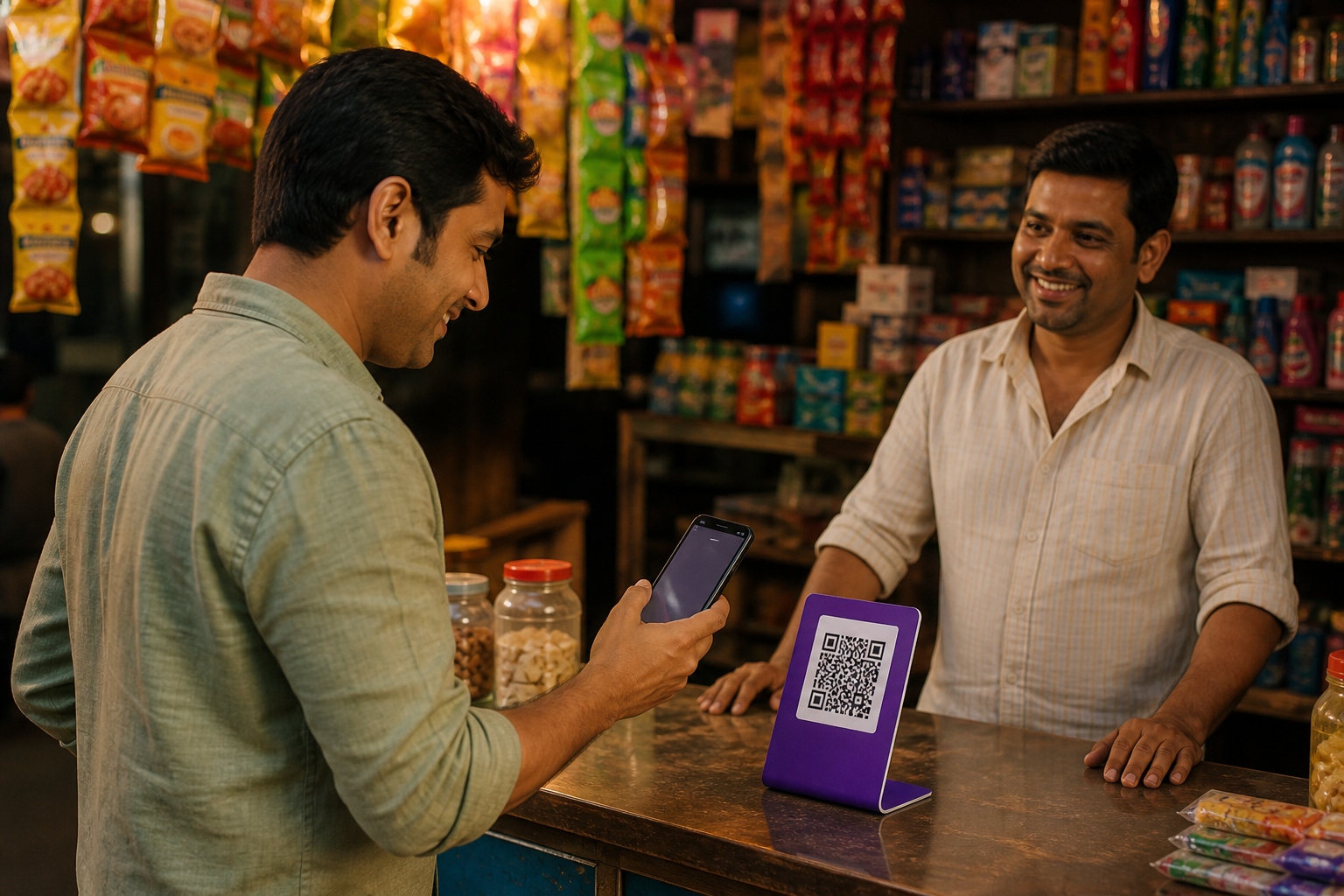
Situation. India already had banks, cards and wallets, but everyday low-value payments were still heavily cash-led in many offline contexts. UPI changed the underlying infrastructure by enabling interoperable real-time bank-account-based payments through participating apps and banks, as described by NPCI in its UPI product overview (NPCI UPI product overview).
The move. PhonePe's strategic play was not “build a payment app” in isolation. It rode an open rail and focused on app experience, QR-led merchant acceptance, bank-account linking, reliability, cashback-led early adoption, and later broader financial-services adjacency. The primary driver was UPI's interoperable network effect: users could pay across banks and apps. Supporting drivers were offline merchant QR visibility, simple onboarding, repeated daily-use occasions and ecosystem trust in bank-backed payments.
Outcome and lesson. PhonePe became one of India's most visible UPI apps because it solved both sides of the network: consumers needed a fast app they trusted, and merchants needed acceptance without heavy hardware. The broader UPI system's monthly transaction statistics are published by NPCI and show how large and frequent the rail has become over time (NPCI UPI product statistics).
Strategic so what: in fintech, the winning company is rarely the one with only the slickest app. It is the one that aligns product experience, infrastructure access, acceptance, compliance, trust and monetization.
How AI Changes Financial Technology & Digital Payments
AI is not a generic add-on in fintech. It changes the speed and quality of decisions where money, identity and risk meet.
One practical workflow: before a fintech interview, load the company's annual report, product pages and regulator updates into NotebookLM. Ask it to generate likely questions on revenue model, regulatory risk, payment economics and competition; then practise aloud using AI as a mock interviewer.
Interview Relevance
“A digital payments company has growing users and transaction volume but is still loss-making. How would you diagnose the business?”
Say this line if you get stuck: “I will separate the payment rail, the customer interface and the monetization layer, because each has different economics and risks.” It instantly sounds structured.
If the interviewer turns this into a profitability case, use Contribution Margin & Break-Even Analysis in Cases to quantify whether each transaction creates or destroys value.
Common Mistake
The mistake: saying “fintech wins through better technology” and stopping there. That answer fails because payments are regulated trust networks, not just software products. Fix: always cover five lenses - customer experience, network acceptance, unit economics, risk controls and regulation.