
Trade-off: Equity vs Debt Financing, and What Flips the Answer
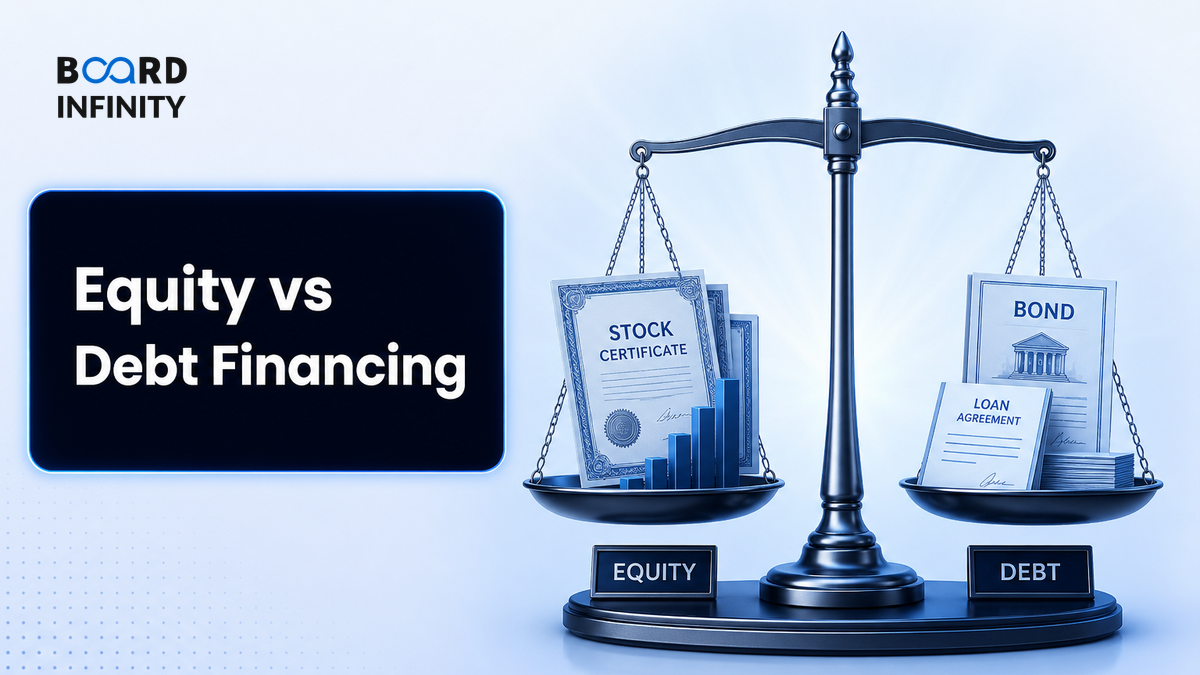
A CFO does not choose between debt and equity in a spreadsheet alone. The real tension appears when the business needs cash now, interest rates are not friendly, existing owners hate dilution, and one wrong funding choice can either save the company or trap it.
- Debt is cheaper when cash flows are stable because interest is contractual, tax-deductible, and does not dilute ownership.
- Equity is safer when cash flows are uncertain because there is no fixed repayment burden, but ownership and control get diluted.
- The clean test is not “which is cheaper?” It is “can the business safely service debt through a bad cycle?”
- Use five checks: purpose of funds, cash-flow certainty, debt capacity, control dilution, and market timing.
- Debt becomes dangerous when interest cover, DSCR, or net debt/EBITDA move into stress territory.
- Equity becomes attractive when the company is loss-making, asset-light, high-growth, distressed, or raising strategic capital.
- The answer flips when risk, timing, covenants, ownership goals, or capital-market conditions change.
Big Picture: Financing Is a Ladder, Not a Coin Toss
Think of financing as climbing a capital ladder. The lower rungs preserve ownership but need predictable cash flows. The higher rungs are more flexible in distress or high growth, but they cost control.
Core Explanation: The Trade-off Behind Debt vs Equity
Debt financing raises capital through contractual obligations to pay interest and repay principal.
Equity financing raises capital by selling ownership claims that receive residual cash flows after contractual obligations.
The corporate-finance intuition is simple: debt adds value through a tax shield and discipline, but too much debt creates distress risk. Equity avoids fixed repayments, but it dilutes ownership and may signal that existing owners believe the shares are expensive.
A useful mental formula is:
Value with debt = unlevered firm value + tax shield - expected distress costs - agency and information costs.
So the answer flips when any part of that formula changes.
When Debt Is the Better Answer
Debt usually wins when the business has enough predictable cash flow to service interest even in a downturn.
So what: debt is not “bad”. It is powerful when the business model can carry fixed obligations without losing strategic flexibility.
When Equity Is the Better Answer
Equity usually wins when the company needs flexibility more than cheap capital.
So what: equity is expensive in ownership terms, but it can be the cheapest form of survival when debt would destroy flexibility.
The Five Things That Flip the Answer
Key Ratios to Track Before You Recommend Debt
If the question has numbers, do not answer with adjectives. Anchor your recommendation in a few solvency and return metrics.
Worked Example: Same Company, Different Answer
Assume an Indian manufacturing company needs ₹100 crore for capacity expansion.
- Current EBIT: ₹100 crore
- Tax rate: 25%
- Existing shares: 10 crore
- Project adds EBIT: ₹25 crore
- Debt option: borrow ₹100 crore at 10% interest
- Equity option: issue 2 crore new shares to raise ₹100 crore
First-pass answer: debt looks better for EPS because the project return is higher than the cost of debt and there is no dilution.
What flips it: if project EBIT is uncertain, if the company already has heavy debt, or if a downturn can push interest coverage below comfort levels, equity may be better despite lower EPS. Interviews reward this second layer.
Definitions You Should Be Able to Say Cleanly
Debt financing: Capital raised through contractual obligations to pay interest and repay principal.
Equity financing: Capital raised by selling ownership claims that receive residual cash flows after obligations.
WACC: The weighted average return required by debt and equity providers after tax.
Financial distress: The cost and constraint created when obligations threaten operating flexibility or default.
Modigliani and Miller showed that in perfect markets capital structure does not change firm value. In real markets, taxes, distress costs, agency issues, and information asymmetry make the debt-equity choice matter.
Case Study: Vodafone Idea and the Financing Choice Under Stress
Vodafone Idea shows why a company may choose equity even when dilution is painful: debt capacity can become the binding constraint.

Situation: India’s telecom market became intensely competitive after Reliance Jio’s entry. Vodafone Idea faced high network investment needs, subscriber pressure, and a heavy debt and statutory-dues burden. This was not a simple “raise cheaper debt” situation because additional borrowing could worsen distress risk.
The move: In 2023, the Government of India converted about ₹16,133 crore of accrued interest on deferred dues into equity, becoming a major shareholder. In 2024, Vodafone Idea raised ₹18,000 crore through a follow-on public offer to support network expansion and operational requirements.
Primary driver: debt capacity was constrained. Equity was chosen because the company needed breathing room and fresh capital without adding immediate fixed repayment pressure.
Supporting drivers: the move was supported by regulatory continuity, promoter and market participation, the need for 4G and 5G investment, and the strategic importance of remaining a viable third private telecom operator in India.
Outcome or lesson: the fundraise improved financial breathing space, but equity alone cannot fix operating economics. The business still needs better ARPU, subscriber retention, network quality, and execution. That is the interview-quality insight: financing gives time; strategy must convert that time into cash flows.
How AI Changes Equity vs Debt Financing
AI does not replace capital-structure judgment, but it changes the speed and quality of analysis in three concrete ways.
- Scenario modelling becomes faster: finance teams can simulate interest-rate shocks, demand drops, covenant breaches, and refinancing risk across hundreds of cases instead of one base-case spreadsheet.
- Credit underwriting becomes more data-rich: lenders increasingly use transaction data, GST-style business data, bank statements, and ML-based risk models to price debt for SMEs and startups.
- Equity storytelling becomes sharper: LLMs can summarise investor concerns from annual reports, earnings calls, credit rating notes, and peer filings, helping companies shape their equity narrative honestly.
Load a company’s annual report, investor presentation, and latest credit-rating note into NotebookLM. Ask: “Should this company prefer debt or equity for a ₹500 crore expansion? Extract the ratios, risks, and three conditions that would flip the recommendation.”
Interview Relevance
“A fast-growing EV components company needs ₹200 crore for expansion. Should it raise debt or equity? What factors would change your answer?”
Use this sentence: “I would choose debt only if downside cash flows still cover interest and repayments; otherwise equity is expensive but safer.”
Common Mistake
The mistake is saying “debt is better because it is cheaper” without checking repayment capacity. It costs candidates because interviewers know the cheapest capital can become the most expensive if it triggers distress. One-line fix: always test debt with cash-flow downside and coverage ratios before comparing dilution.
What to Revise Next
Next, revise the adjacent capital-allocation trade-offs: Trade-off: Growth vs Profitability, Judged on Cash and Cohorts; then move to Trade-off: Dividend vs Buyback and Organic vs Acquired Growth. Together, these topics help you answer not just “how to raise money,” but “where to deploy it and how to return it.”