
Flow, Pull & Levelling Production
At 6 a.m., an Indian kirana does not want a mountain of milk sachets. It wants the right crates arriving in a tight rhythm, before customers walk in, before the product loses freshness, and without blocking the aisle.
That small scene captures the whole logic of lean production: make work flow, let demand pull the next step, and level the rhythm so the system does not swing between panic and idleness.
- Flow means work moves smoothly through value-adding steps with minimal waiting, batching and rework.
- Pull means upstream work is triggered by downstream consumption, not by a forecast pushed into every process.
- Levelling, or heijunka, smooths volume and product mix so demand variation does not become shop-floor chaos.
- The operating sequence is: understand demand, calculate takt, set a pacemaker, cap WIP, replenish through pull signals, and level the schedule.
- The enemy is not only downtime - it is hidden waiting, overproduction and large batches, the same waste family covered in The Seven Wastes and How to Spot Them on Site.
- Pull does not mean “make only after final customer order” in every industry; it means produce or replenish when the next process signals need.
- In interviews, explain flow, pull and levelling as one system, not three isolated Japanese lean words.
The Big Picture: Flow, Pull and Levelling Are One Operating System
Think of a factory, kitchen, warehouse or service desk as a river. Flow removes rocks in the river. Pull prevents upstream teams from flooding the river. Levelling prevents the river from becoming a storm one hour and dry the next.
The three ideas reinforce each other. Flow without pull can simply move overproduction faster. Pull without levelling can create nervous, unstable replenishment. Levelling without flow creates a beautiful plan that the process cannot execute.
Core Explanation: The Three Parts and How They Fit
1. Flow - Make Work Move Instead of Making Piles
Flow is the movement of material, information or work through the process with minimum interruption. In a good flow system, the next step is ready, the required input is available, and defects are detected early instead of travelling downstream.
In a poor flow system, each workstation looks busy, but the customer order is mostly waiting - waiting in a queue, waiting for inspection, waiting for a batch, waiting for approval, or waiting for transport.
A hospital pharmacy can fill prescriptions in large batches every few hours, or it can organise work so prescriptions move through verification, picking, checking and dispatch in a near-continuous stream. The second system feels less “efficient” locally because people cannot hide behind big piles, but it is better for the patient because lead time and error discovery improve.
2. Pull - Let the Next Process Signal the Previous One
Pull means upstream activity starts because downstream consumption creates a signal. The signal may be a kanban card, an empty bin, a digital reorder point, a supermarket slot, or an electronic production instruction.
The practical idea is simple: do not produce merely because a machine is free. Produce because a real downstream need has appeared. For card rules, two-bin systems and replenishment logic, revise Kanban and Pull-Based Replenishment after this lesson.
3. Levelling - Smooth the Workload Before It Hits the Floor
Levelling production means smoothing both volume and mix over a short planning horizon. Instead of making all Product A on Monday, all Product B on Tuesday and all Product C on Wednesday, a levelled system may repeat a smaller A-B-C pattern across the day.
This reduces stress on labour, suppliers, machines, inspection and dispatch. But levelling only works if batch sizes can fall. If changeovers are slow, teams will resist levelling because every product switch feels expensive. That is why Quick Changeover and Total Productive Maintenance is a natural prerequisite.
The Practical Framework: How to Design Flow, Pull and Levelling
Use this as your interview-ready implementation sequence. It works for a factory line, service operation, warehouse picking process, restaurant kitchen or claims-processing team.
The key phrase is “flow where you can, pull where you must.” If two steps can be connected directly, do it. If distance, machine constraints or supplier boundaries prevent direct flow, use a pull loop.
Metrics That Prove Flow Is Actually Improving
Do not say “we improved flow” without measures. The interviewer will trust you more if you can name the metric, formula and interpretation. Benchmarks vary by industry, so use these as practical operating targets, not universal laws.
Worked Example: WIP Caps Reduce Lead Time
Suppose a service cell completes 40 applications per hour. Its average lead time is 3 hours. Using the operations relationship WIP = throughput × lead time, average WIP is:
40 applications/hour × 3 hours = 120 applications in process.
If the team caps WIP at 80 applications and maintains throughput at 40 per hour, expected lead time becomes:
80 ÷ 40 = 2 hours.
The lesson is powerful: pull does not magically make people faster. It reduces excess WIP, which reduces waiting, which reduces lead time.
Definitions You Can Say in One Breath
- Just-in-Time: Make only what is needed, when it is needed, and in the amount needed, as described by Toyota Production System.
- Flow: Work moves through value-adding steps with minimal waiting, batching, transport, rework or interruption.
- Pull: Upstream work is triggered by downstream consumption or a replenishment signal.
- Levelling: Production volume and mix are smoothed to create a stable, repeatable operating rhythm.
- Takt time: Available production time divided by customer demand in the same period.
Indian Example: Amul and the Discipline of Daily Flow
A useful Indian mental model is Amul’s dairy world: fresh milk cannot wait like steel inventory, and demand for milk, curd, butter and ice cream must be served through daily collection, processing, cold-chain movement and retail replenishment. Amul’s cooperative dairy model is described on its official about page.
The primary driver is perishability - the product forces rhythm. Supporting drivers include chilling infrastructure, standardised collection routines, packaging discipline, route planning and retailer replenishment. The “so what” is simple: when the product punishes delay, flow and levelling stop being lean jargon and become survival logic.
Zara: The Full Framework in One Fashion Business
Zara shows how a fashion retailer can use fast information flow, smaller batches and disciplined replenishment to respond to demand without betting everything on one seasonal forecast.
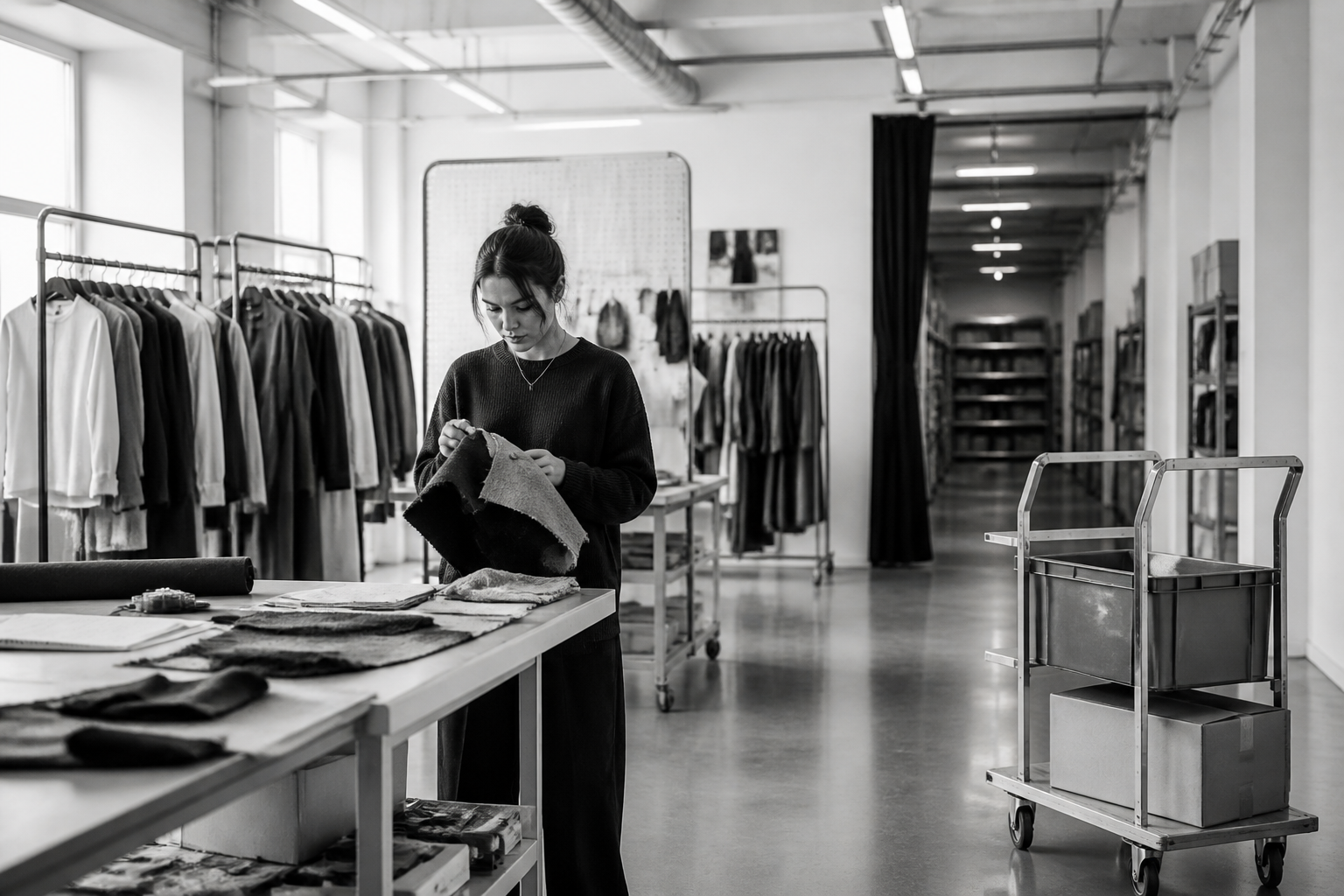
Situation: Fashion demand is uncertain. A design that looks promising before the season may fail in stores, while another may suddenly gain traction. Traditional apparel supply chains often commit large volumes early, creating markdown risk if the forecast is wrong.
The move: Zara’s parent company Inditex describes a model built around customer focus, integrated store and online operations, and a responsive supply chain in its annual reports. Operationally, the lesson is not “Zara is fast” in one vague sentence. The primary driver is rapid demand feedback from stores and digital channels. Supporting drivers include smaller production commitments, frequent replenishment, proximity sourcing for selected items, tight coordination between design and operations, and disciplined store-level inventory control.
Outcome or lesson: Zara demonstrates that pull and levelling can coexist. Stores signal what is moving, the system replenishes in controlled quantities, and production avoids betting the entire season on one large batch. The strategic lesson for interviews: responsiveness is a system design choice, not just a marketing claim.
A shallow answer says, “Zara is successful because it is fast.” A complete answer says, “Zara’s speed comes chiefly from rapid demand feedback, supported by smaller batches, supply-chain proximity, cross-functional coordination and disciplined replenishment.”
How AI Changes Flow, Pull & Levelling Production
AI does not replace lean basics. It makes weak flow visible faster and helps planners react without creating nervous schedules.
- AI demand sensing: Machine-learning models combine orders, seasonality, promotions, weather, search trends or store signals to improve short-term demand visibility. This helps levelling because the plan is based on fresher signals, not only monthly forecasts.
- Dynamic scheduling: AI-enabled planning tools can test machine capacity, material availability, labour constraints and changeover sequences before releasing work. The risk is over-optimisation - a beautiful schedule still fails if standard work and discipline are weak.
- Computer vision and IoT flow monitoring: Cameras, sensors and scanners can detect queue build-up, blocked aisles, missed takt and abnormal waiting. This turns flow problems into visible signals instead of supervisor intuition.
Use NotebookLM or ChatGPT before an operations interview: load the company’s annual report, a plant/process description and this lesson, then ask, “Where could flow, pull and levelling apply in this company’s operations? Give me a 90-second interview answer with metrics.”
Interview Relevance
“Explain flow, pull and levelling production. How would you apply them to reduce lead time in a manufacturing or service process?”
If the interviewer gives you a messy process, draw a simple left-to-right value stream first. Then ask: “Where is work waiting, where is work being pushed, and where is demand uneven?” That instantly structures your answer.
Common Mistake
The biggest mistake is treating pull as “no production until the final customer orders.” That is too simplistic and often wrong. The fix: say pull means upstream replenishment is triggered by downstream consumption, while levelling uses average demand to create a stable rhythm.