
Nykaa: Content-Led Commerce Explained
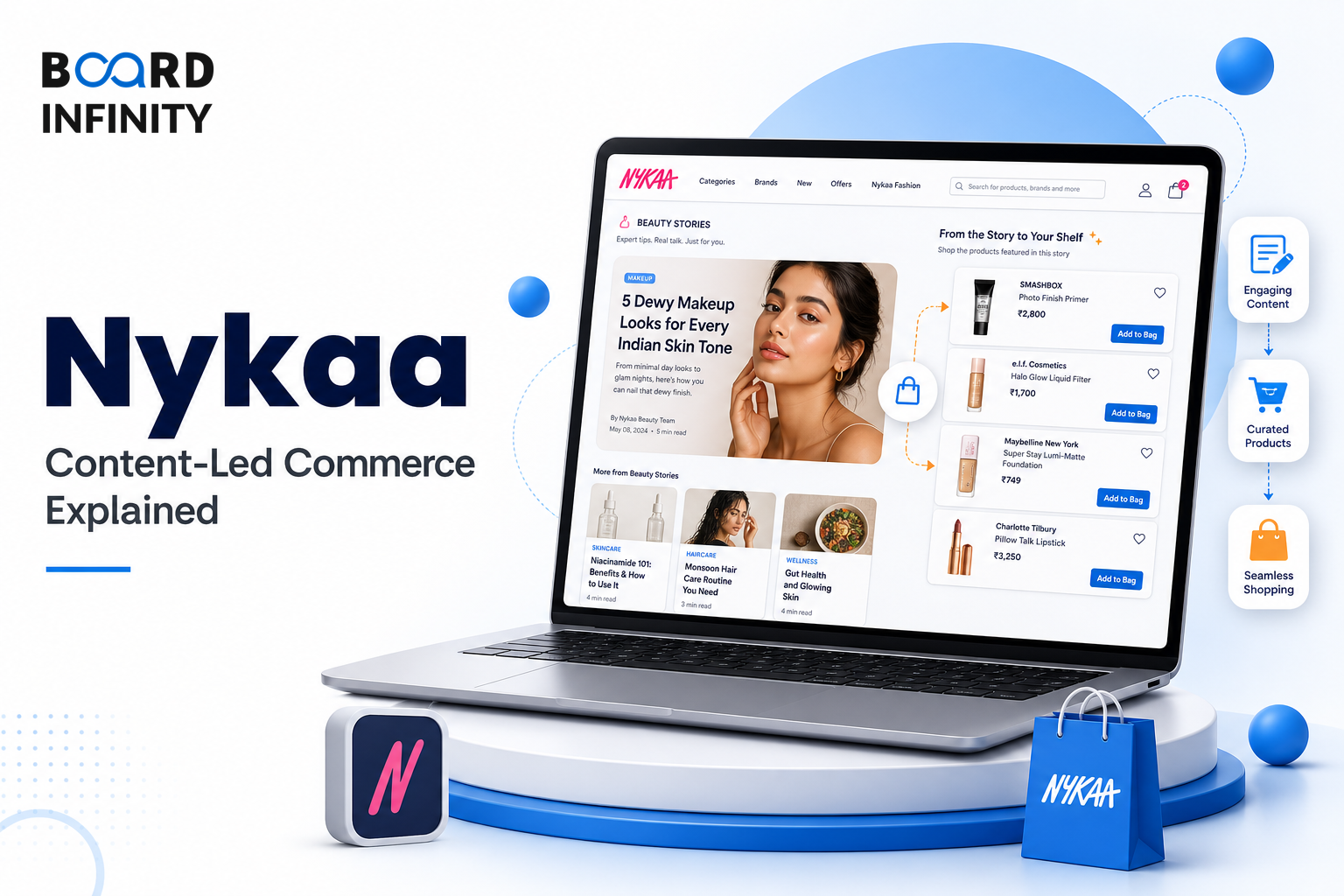
Amul showed how consistent, culturally relevant content can build more brand equity than ₹100 Cr TV campaigns. Nykaa answers the next interview question: how does content turn into commerce when consumers need education before purchase? This matters in interviews because Nykaa is a sharp case for content-led commerce, influencer trust, community reviews, private labels, and omnichannel touchpoints.
- Nykaa launched in 2012 as an online beauty retailer and IPO'd in 2021 at a ~₹53,000 Cr valuation.
- In a market dominated by offline beauty counters, Nykaa's differentiator was content + curation.
- Nykaa's content team produced 1,000+ pieces/month through YouTube tutorials, blog posts, and beauty guides.
- The influencer ecosystem used beauty mega-influencers for awareness, micro-influencers for authenticity, and employee creators.
- Private labels such as Nykaa Cosmetics and Kay Beauty contributed 10%+ of revenue and created a reason to shop on Nykaa.
- Nykaa opened 150+ retail stores in malls across India because beauty needs touch-and-try.
- The core interview lesson is: Educate → Trust → Transact → Retain, not Advertise → Transact.
Company Context
Nykaa launched in 2012 as an online beauty retailer and IPO'd in 2021 at a ~₹53,000 Cr valuation. In a market dominated by offline beauty counters, Nykaa's differentiator was content + curation.
The big picture is that Nykaa did not treat beauty as a simple online catalogue business. It used education-first content, influencer credibility, user reviews, private labels, and offline retail stores to move consumers from discovery to trust to purchase to repeat commerce.
In categories where consumers need education before purchase (beauty, health, financial products, technology), content-led commerce beats performance-only strategies. The funnel goes: Educate → Trust → Transact → Retain, not Advertise → Transact.
Why Content-Led Discovery Worked
Nykaa used YouTube tutorials, blog posts, and beauty guides to educate Indian consumers about beauty products. This built trust before asking for the sale.
The content engine mattered because beauty purchases require trust, tutorials, and peer recommendations. The insight was to build a content engine first, commerce second.
Influencer Ecosystem and Trust
Nykaa's influencer ecosystem was a tiered program: beauty mega-influencers for awareness + micro-influencers for authenticity + employee creators. This created a flywheel: content → discovery → purchase → review → more content.
In an interview answer, this is the bridge between awareness and conversion. Influencers help with discovery, while reviews and community help reduce purchase anxiety closer to the transaction.
Private Labels as a Commerce Advantage
Nykaa Cosmetics and Kay Beauty, the Katrina Kaif partnership, became 10%+ of revenue. These private labels had higher margins than third-party brands and were exclusive to Nykaa, creating a reason to shop there.
This makes private labels more than just products. They convert the trust built through content into owned commerce where Nykaa has stronger control over margins and exclusivity.
Omnichannel Expansion
Nykaa opened 150+ Nykaa retail stores in malls across India. Beauty needs touch-and-try; offline stores build trust and serve as marketing for the online platform.
This is the key nuance: Nykaa's model was not online-only. The offline touchpoint supported the online platform by helping consumers experience products and trust the brand.
Community Building and Reviews
Nykaa Network was a beauty community forum, and user reviews appeared on every product page. User-generated reviews reduced purchase anxiety, while community created loyalty.
This is why the model goes beyond content production. Once customers review products, the same reviews feed the next customer's discovery and trust journey.
Key Metrics
- Revenue: ₹6,385 Cr (FY24); growing at ~25% YoY
- Active customers: 32M+ annual transacting customers
- Repeat rate: >40% of orders from repeat customers
- Content impact: Nykaa's YouTube channel has 2M+ subscribers; their blog gets 10M+ monthly visits
How the Nykaa Funnel Works
Situation: In a market dominated by offline beauty counters, Nykaa launched as an online beauty retailer.
Problem: Consumers needed education before purchase, especially in beauty where trust, tutorials, and peer recommendations matter.
Framework: The funnel goes: Educate → Trust → Transact → Retain, not Advertise → Transact.
Decision: Nykaa built content-led discovery, a tiered influencer ecosystem, private labels, omnichannel expansion, and community reviews.
Outcome: Revenue reached ₹6,385 Cr in FY24, active customers crossed 32M+ annual transacting customers, and >40% of orders came from repeat customers.
Learning: In categories where consumers need education before purchase, content-led commerce beats performance-only strategies.
Structuring a Nykaa Interview Answer
"How did Nykaa use content-led commerce to build trust and repeat purchases in beauty?"
Do not frame Nykaa as Advertise → Transact. Frame it as Educate → Trust → Transact → Retain, and then connect each strategy pillar to that funnel.
The most frequent error is treating Nykaa as only an online beauty retailer or a performance-marketing story. That misses the core point: content + curation built trust before the sale, and reviews, community, private labels, and stores helped turn discovery into repeat commerce.
Conclusion
Nykaa shows that in categories where consumers need education before purchase, content-led commerce can beat performance-only strategies. The final takeaway is simple: build trust before asking for the sale.